

North London Renovation Projects: Why Rot Checks Should Happen Before New Finishes
Renovation work often starts with what is visible. Walls are stripped, old flooring is removed and plans are made for kitchens, bathrooms or new finishes. Yet some of the most important problems may be hidden behind those surfaces.

Why you can trust our content
At a glance
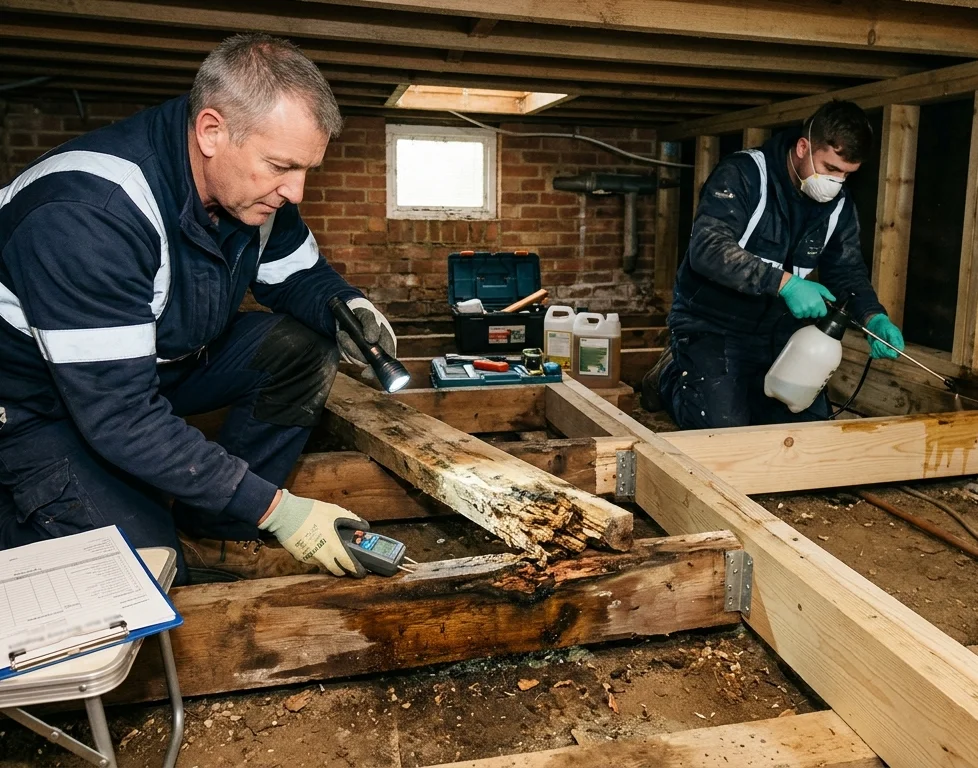
Timber affected by rot can remain concealed beneath flooring, behind plaster, around skirting boards or close to areas that have experienced prolonged moisture. If new finishes are installed before the timber has been checked, an underlying problem may only become apparent once the renovation is already complete.
For North London homeowners, checking vulnerable timber early can therefore be a practical part of renovation planning. It can help distinguish between sound materials, moisture-related deterioration and areas requiring specialist attention.
If you are preparing a property for refurbishment and have concerns about damaged or damp timber, contact Anke Damp Proofing for advice before new finishes are installed.
Why Should Timber Be Checked Before Renovation Work Begins?
Rot needs suitable conditions to develop, with moisture being one of the most important factors. Where timber has remained damp for an extended period, fungal decay can weaken it and affect its ability to perform its intended function.
During renovation, previously concealed areas become accessible. This creates a useful opportunity to inspect timber before it is covered again.
Checks can be particularly important around:
- Ground-floor timber floors
- Joists and floorboards
- Skirting boards
- Window frames and reveals
- Roof timbers
- Areas beside external walls
- Timber close to plumbing
- Previously damp or poorly ventilated spaces
- Cellars, basements and lower-ground areas
A renovation is often the easiest time to investigate these locations because floorboards, plaster and fittings may already be coming out.
Leaving the inspection until after new flooring, plastering or joinery has been installed can make access more difficult and potentially increase the disruption involved in any later repair.
What Is the Difference Between Wet Rot and Dry Rot?
Wet rot and dry rot are both forms of fungal timber decay, but they behave differently and should not automatically be treated in the same way.
Wet rot generally requires persistently damp timber and tends to remain closely associated with the source of moisture. Dry rot can be more concerning because the fungus can spread through a building under suitable conditions and may affect timber that is not immediately adjacent to the original moisture source.
The visible signs can overlap, which is why identifying the type of decay should not be based solely on appearance.
| Issue | Wet rot | Dry rot |
| Main requirement | Persistently damp timber | Moisture and suitable environmental conditions |
| Typical signs | Softened, darkened or deteriorated timber | Cracking, cuboidal timber decay and fungal growth may occur |
| Spread | Often associated with the affected damp area | Can spread beyond the original moisture source |
| Investigation | Find and address moisture source | Identify extent, moisture conditions and affected timber |
| Treatment | Depends on extent and cause | Specialist assessment and appropriate remedial work |
The table provides a general guide rather than a diagnosis. Timber problems should be assessed according to the individual building and conditions present.
Could Rot Be Hidden Behind New Plaster, Flooring or Joinery?
Yes. Renovation can expose areas that have not been accessible for years, but it can also conceal them again if work progresses too quickly.
A floorboard may look acceptable from above while the joists beneath have suffered deterioration. Similarly, timber behind skirting or around an old window opening may have been exposed to moisture without obvious signs from the finished side.
Before closing walls or installing new finishes, consider whether the exposed structure should be inspected.
Warning signs worth investigating include:
- Timber that feels unusually soft when appropriately assessed
- Dark staining or unusual discolouration
- A persistent damp or musty smell
- Crumbling or cracked timber
- Evidence of fungal growth
- Previous leaks or water ingress
- Repeated damp staining
- Areas where ventilation has historically been poor
A renovation schedule should allow time for these checks rather than assuming every exposed timber element is ready to cover.
What best describes you?

Homeowner

Tenant

Management/Lettings Agent

Potential Buyer

Other
It just takes 60 Second
And then you can book a free consultation
When Should Rot Checks Take Place During a Renovation?
The ideal point depends on the scope of the project, but inspection should generally happen after relevant finishes have been removed and before new materials permanently conceal vulnerable areas.
For example, during a ground-floor renovation, floor coverings can be removed first. The condition of accessible boards and supporting timbers can then be considered before new flooring is fitted.
Likewise, if a wall has been stripped because of previous moisture problems, it may be sensible to inspect exposed timber before plasterboard, plaster or joinery is installed.
This approach does not mean stopping every renovation to inspect every piece of timber. It means giving particular attention to locations where moisture history, visible deterioration or building defects suggest a higher risk.
If your refurbishment has uncovered suspicious timber, our team can help assess the situation and explain whether further investigation or dry rot treatment north london may be appropriate.
What Happens If Dry Rot Is Found?
The first step is establishing the extent of the problem and the conditions that allowed it to develop.
Simply replacing visibly damaged timber without addressing the moisture conditions may not provide a lasting solution. The investigation should consider both affected materials and the surrounding environment.
Depending on the findings, remedial work may involve:
- Identifying and addressing the source of excess moisture.
- Determining how far timber deterioration extends.
- Removing timber that cannot be retained safely or effectively.
- Treating appropriate surrounding areas where required.
- Replacing affected timber with suitable materials.
- Allowing areas to dry appropriately.
- Rechecking vulnerable locations before new finishes are installed.
The exact approach depends on the building, the type and extent of decay, and the cause of the moisture.
Why Is Finding the Moisture Source So Important?
Rot is strongly linked to moisture conditions. If the reason timber became damp remains unresolved, newly repaired or replacement materials may be exposed to the same problem.
Possible moisture sources include leaking plumbing, defective gutters, damaged external masonry, roof problems, poor drainage, condensation or moisture entering through parts of the building envelope.
This is why dry rot repair services north london should not be viewed simply as a timber replacement exercise. A suitable investigation should consider why the deterioration occurred as well as which materials have been affected.
For renovation projects, this distinction matters. A builder may be able to replace a damaged joist, but determining the underlying moisture problem may require a more specialist assessment.
Can a Typical Renovation Reveal a Rot Problem?
Consider a Victorian terrace undergoing a major ground-floor refurbishment. The owners plan to install a new kitchen, replace the flooring and redecorate the adjoining rooms.
Once the old floor covering is removed, several timber areas appear darker than expected. There is also a history of a minor plumbing leak near the kitchen.
Rather than proceeding directly with the new floor, the affected area is assessed. The investigation identifies localised timber deterioration associated with previous moisture exposure. The affected materials are dealt with, the moisture issue is addressed and the area is checked before the renovation continues.
The key benefit is timing. The problem was discovered while access was available, rather than after a new kitchen and finished floor had made investigation significantly more disruptive.
Does Every Damaged Timber Area Need Replacing?
No. Replacement should depend on the condition of the timber, the extent of deterioration and whether it can remain suitable for its intended purpose.
Some timber may have surface staining without significant structural deterioration. Other areas may have suffered substantial decay and require replacement.
This is one reason visual appearance alone should not determine the scope of work. A dark patch does not automatically mean timber needs to be removed, just as apparently minor deterioration should not automatically be dismissed.
Where timber forms part of the structure, the assessment should be appropriately cautious.
What Should Homeowners Ask Before Covering the Timber Again?
Before new plaster, flooring or joinery is installed, homeowners can ask a few straightforward questions:
- Has previously affected timber been inspected?
- Is there evidence of current or historic moisture?
- Has the source of moisture been identified?
- Is there any confirmed fungal decay?
- Which timber needs treatment or replacement?
- Has the affected area been allowed to dry appropriately?
- Are there photographs or records of the condition before it was covered?
- Does any further monitoring or investigation make sense?
Having these questions answered can make the renovation process more predictable.
It is also useful to keep photographs taken during the stripped-out stage. Once new finishes are installed, those areas may no longer be visible to the homeowner.
Why Is Early Rot Detection Valuable for Renovation Budgets?
Discovering timber deterioration after a renovation is finished can create additional costs. Flooring may need to be lifted, fitted kitchens may need partial removal and newly decorated areas could require access again.
Early discovery does not guarantee that repairs will be inexpensive, but it provides greater opportunity to plan the work alongside the wider refurbishment.
For homeowners considering dry rot treatment north london, obtaining a clear assessment before committing to final finishes can also help distinguish essential remedial work from cosmetic renovation.
Check Before You Cover
Renovation creates a valuable opportunity to inspect timber that may have been hidden for years. If moisture has affected floors, walls, windows or other timber elements, dealing with the issue before new finishes are installed can prevent avoidable disruption later.
The priority should always be understanding the cause, establishing the extent of any decay and choosing proportionate remedial work. With the right checks at the right stage, homeowners can move forward with refurbishment knowing that vulnerable areas have not simply been covered over.
If you have uncovered damaged timber during a North London renovation, contact Anke Damp Proofing for practical guidance. Our team can help you understand whether dry rot repair services north london or further investigation is appropriate before your new finishes go in.
Related articles

What best describes you?
Homeowner
Tenant
Management/Lettings Agent
Potential Buyer
Other
At a glance
Timber affected by rot can remain concealed beneath flooring, behind plaster, around skirting boards or close to areas that have experienced prolonged moisture. If new finishes are installed before the timber has been checked, an underlying problem may only become apparent once the renovation is already complete.
For North London homeowners, checking vulnerable timber early can therefore be a practical part of renovation planning. It can help distinguish between sound materials, moisture-related deterioration and areas requiring specialist attention.
If you are preparing a property for refurbishment and have concerns about damaged or damp timber, contact Anke Damp Proofing for advice before new finishes are installed.
Why Should Timber Be Checked Before Renovation Work Begins?
Rot needs suitable conditions to develop, with moisture being one of the most important factors. Where timber has remained damp for an extended period, fungal decay can weaken it and affect its ability to perform its intended function.
During renovation, previously concealed areas become accessible. This creates a useful opportunity to inspect timber before it is covered again.
Checks can be particularly important around:
- Ground-floor timber floors
- Joists and floorboards
- Skirting boards
- Window frames and reveals
- Roof timbers
- Areas beside external walls
- Timber close to plumbing
- Previously damp or poorly ventilated spaces
- Cellars, basements and lower-ground areas
A renovation is often the easiest time to investigate these locations because floorboards, plaster and fittings may already be coming out.
Leaving the inspection until after new flooring, plastering or joinery has been installed can make access more difficult and potentially increase the disruption involved in any later repair.
What Is the Difference Between Wet Rot and Dry Rot?
Wet rot and dry rot are both forms of fungal timber decay, but they behave differently and should not automatically be treated in the same way.
Wet rot generally requires persistently damp timber and tends to remain closely associated with the source of moisture. Dry rot can be more concerning because the fungus can spread through a building under suitable conditions and may affect timber that is not immediately adjacent to the original moisture source.
The visible signs can overlap, which is why identifying the type of decay should not be based solely on appearance.
| Issue | Wet rot | Dry rot |
| Main requirement | Persistently damp timber | Moisture and suitable environmental conditions |
| Typical signs | Softened, darkened or deteriorated timber | Cracking, cuboidal timber decay and fungal growth may occur |
| Spread | Often associated with the affected damp area | Can spread beyond the original moisture source |
| Investigation | Find and address moisture source | Identify extent, moisture conditions and affected timber |
| Treatment | Depends on extent and cause | Specialist assessment and appropriate remedial work |
The table provides a general guide rather than a diagnosis. Timber problems should be assessed according to the individual building and conditions present.
Could Rot Be Hidden Behind New Plaster, Flooring or Joinery?
Yes. Renovation can expose areas that have not been accessible for years, but it can also conceal them again if work progresses too quickly.
A floorboard may look acceptable from above while the joists beneath have suffered deterioration. Similarly, timber behind skirting or around an old window opening may have been exposed to moisture without obvious signs from the finished side.
Before closing walls or installing new finishes, consider whether the exposed structure should be inspected.
Warning signs worth investigating include:
- Timber that feels unusually soft when appropriately assessed
- Dark staining or unusual discolouration
- A persistent damp or musty smell
- Crumbling or cracked timber
- Evidence of fungal growth
- Previous leaks or water ingress
- Repeated damp staining
- Areas where ventilation has historically been poor
A renovation schedule should allow time for these checks rather than assuming every exposed timber element is ready to cover.
What best describes you?
Homeowner
Tenant
Management/Lettings Agent
Potential Buyer
Other
It just takes 60 Second
And then you can book a free consultation
When Should Rot Checks Take Place During a Renovation?
The ideal point depends on the scope of the project, but inspection should generally happen after relevant finishes have been removed and before new materials permanently conceal vulnerable areas.
For example, during a ground-floor renovation, floor coverings can be removed first. The condition of accessible boards and supporting timbers can then be considered before new flooring is fitted.
Likewise, if a wall has been stripped because of previous moisture problems, it may be sensible to inspect exposed timber before plasterboard, plaster or joinery is installed.
This approach does not mean stopping every renovation to inspect every piece of timber. It means giving particular attention to locations where moisture history, visible deterioration or building defects suggest a higher risk.
If your refurbishment has uncovered suspicious timber, our team can help assess the situation and explain whether further investigation or dry rot treatment north london may be appropriate.
What Happens If Dry Rot Is Found?
The first step is establishing the extent of the problem and the conditions that allowed it to develop.
Simply replacing visibly damaged timber without addressing the moisture conditions may not provide a lasting solution. The investigation should consider both affected materials and the surrounding environment.
Depending on the findings, remedial work may involve:
- Identifying and addressing the source of excess moisture.
- Determining how far timber deterioration extends.
- Removing timber that cannot be retained safely or effectively.
- Treating appropriate surrounding areas where required.
- Replacing affected timber with suitable materials.
- Allowing areas to dry appropriately.
- Rechecking vulnerable locations before new finishes are installed.
The exact approach depends on the building, the type and extent of decay, and the cause of the moisture.
Why Is Finding the Moisture Source So Important?
Rot is strongly linked to moisture conditions. If the reason timber became damp remains unresolved, newly repaired or replacement materials may be exposed to the same problem.
Possible moisture sources include leaking plumbing, defective gutters, damaged external masonry, roof problems, poor drainage, condensation or moisture entering through parts of the building envelope.
This is why dry rot repair services north london should not be viewed simply as a timber replacement exercise. A suitable investigation should consider why the deterioration occurred as well as which materials have been affected.
For renovation projects, this distinction matters. A builder may be able to replace a damaged joist, but determining the underlying moisture problem may require a more specialist assessment.
Can a Typical Renovation Reveal a Rot Problem?
Consider a Victorian terrace undergoing a major ground-floor refurbishment. The owners plan to install a new kitchen, replace the flooring and redecorate the adjoining rooms.
Once the old floor covering is removed, several timber areas appear darker than expected. There is also a history of a minor plumbing leak near the kitchen.
Rather than proceeding directly with the new floor, the affected area is assessed. The investigation identifies localised timber deterioration associated with previous moisture exposure. The affected materials are dealt with, the moisture issue is addressed and the area is checked before the renovation continues.
The key benefit is timing. The problem was discovered while access was available, rather than after a new kitchen and finished floor had made investigation significantly more disruptive.
Does Every Damaged Timber Area Need Replacing?
No. Replacement should depend on the condition of the timber, the extent of deterioration and whether it can remain suitable for its intended purpose.
Some timber may have surface staining without significant structural deterioration. Other areas may have suffered substantial decay and require replacement.
This is one reason visual appearance alone should not determine the scope of work. A dark patch does not automatically mean timber needs to be removed, just as apparently minor deterioration should not automatically be dismissed.
Where timber forms part of the structure, the assessment should be appropriately cautious.
What Should Homeowners Ask Before Covering the Timber Again?
Before new plaster, flooring or joinery is installed, homeowners can ask a few straightforward questions:
- Has previously affected timber been inspected?
- Is there evidence of current or historic moisture?
- Has the source of moisture been identified?
- Is there any confirmed fungal decay?
- Which timber needs treatment or replacement?
- Has the affected area been allowed to dry appropriately?
- Are there photographs or records of the condition before it was covered?
- Does any further monitoring or investigation make sense?
Having these questions answered can make the renovation process more predictable.
It is also useful to keep photographs taken during the stripped-out stage. Once new finishes are installed, those areas may no longer be visible to the homeowner.
Why Is Early Rot Detection Valuable for Renovation Budgets?
Discovering timber deterioration after a renovation is finished can create additional costs. Flooring may need to be lifted, fitted kitchens may need partial removal and newly decorated areas could require access again.
Early discovery does not guarantee that repairs will be inexpensive, but it provides greater opportunity to plan the work alongside the wider refurbishment.
For homeowners considering dry rot treatment north london, obtaining a clear assessment before committing to final finishes can also help distinguish essential remedial work from cosmetic renovation.
Check Before You Cover
Renovation creates a valuable opportunity to inspect timber that may have been hidden for years. If moisture has affected floors, walls, windows or other timber elements, dealing with the issue before new finishes are installed can prevent avoidable disruption later.
The priority should always be understanding the cause, establishing the extent of any decay and choosing proportionate remedial work. With the right checks at the right stage, homeowners can move forward with refurbishment knowing that vulnerable areas have not simply been covered over.
If you have uncovered damaged timber during a North London renovation, contact Anke Damp Proofing for practical guidance. Our team can help you understand whether dry rot repair services north london or further investigation is appropriate before your new finishes go in.
Related articles
What best describes you?
Homeowner
Tenant
Management/Lettings Agent
Potential Buyer