

West London Buyers’ Surveys Flagged Damp: What to Do Before Renegotiating
For a buyer, it can create uncertainty about repair costs, the seriousness of the problem and whether the agreed price…

Why you can trust our content
At a glance
For a buyer, it can create uncertainty about repair costs, the seriousness of the problem and whether the agreed price still reflects the property’s condition.
A survey mentioning damp does not necessarily mean that extensive remedial work is required. Surveyors may identify signs of moisture and recommend further investigation without confirming the exact cause.
Before renegotiating the price, it is therefore worth establishing what the report actually says, which areas are affected and whether a specialist assessment is needed.
If a buyer’s survey has raised concerns about damp, contact Anke Damp Proofing for practical guidance on the next steps before making decisions about remedial work.
What Does a Damp Warning in a Property Survey Actually Mean?
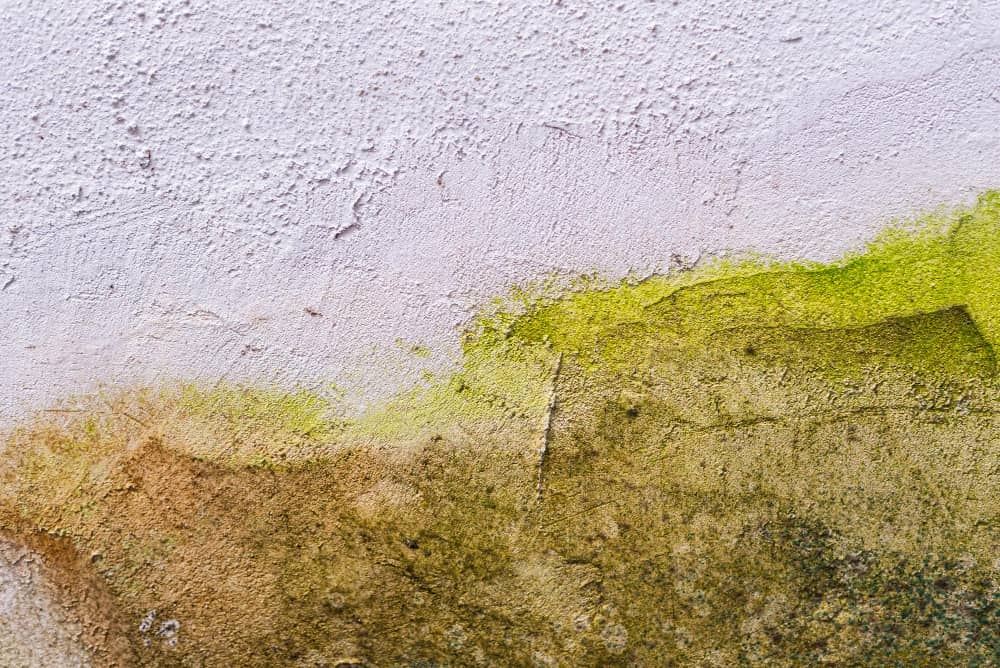
A survey can identify visible staining, mould, damaged finishes, elevated moisture readings or other signs that may warrant investigation.
However, a survey is not always intended to provide a detailed diagnosis of every damp-related defect. Depending on the type of survey and the circumstances, the report may recommend further specialist investigation.
Read the wording carefully. There is an important difference between:
- A confirmed defect
- Visible evidence requiring investigation
- A suspected cause
- A recommendation for specialist assessment
- An assumption that further work may be necessary
This distinction matters during negotiations. A vague reference to damp should not automatically be treated as proof of a major building defect.
Should You Get a Specialist Damp Survey Before Renegotiating?
In many cases, obtaining more information before agreeing to a price reduction can be sensible.
A damp survey west london property owners arrange after receiving a survey concern can provide a more focused assessment of the affected areas and help clarify what is happening.
The purpose should be to establish the likely cause, extent and appropriate response. It should not simply be used to produce a document supporting one side of a negotiation.
If you are the seller, an independent assessment can help you understand what the buyer’s survey has identified. If you are the buyer, additional investigation can help establish whether the issue is minor, localised or more extensive.
What Should You Check in the Survey Report First?
Before arranging work or discussing a new price, identify exactly what the survey has flagged.
Look for:
- The rooms or elevations affected
- The type of damp or moisture suspected
- Whether moisture readings were taken
- Whether the survey confirms a cause
- Any mention of damaged plaster or timber
- Recommendations for further investigation
- Suggested remedial work
- Any comments about urgency
- Limitations stated by the surveyor
Also check whether the survey refers to damp as a possibility rather than a confirmed diagnosis.
A recommendation for further investigation is not the same as a quotation for repairs. The likely cost cannot be assessed accurately until the problem itself is understood.
Can Damp Affect the Price of a West London Property?
It can, particularly if the buyer believes significant remedial work will be required.
A buyer may factor several things into their decision, including the potential repair cost, disruption, uncertainty and risk of discovering additional defects.
However, the presence of damp does not automatically justify a large price reduction. The appropriate response depends on the nature and extent of the problem.
For example, localised moisture associated with a defective external detail could require a relatively straightforward repair. More extensive moisture affecting several parts of a building may need a broader investigation and remedial strategy.
This is why damp proofing west london should be considered in response to an identified cause rather than simply because a survey contains the word “damp”.
What best describes you?

Homeowner

Tenant

Management/Lettings Agent

Potential Buyer

Other
It just takes 60 Second
And then you can book a free consultation
What Should Sellers Do Before Agreeing to a Reduction?
If you are selling and the buyer has raised a damp concern, avoid agreeing to a substantial reduction before establishing what work is actually required.
A sensible process is:
- Review the relevant survey section.
- Identify the affected areas.
- Check records of previous damp-related work.
- Arrange appropriate specialist advice if necessary.
- Establish the likely cause.
- Obtain a suitable remedial recommendation.
- Request a clear quotation where work is required.
- Use the information to have a more informed discussion with the buyer.
This does not mean every seller should complete remedial work before exchange. In some situations, the buyer may prefer to carry out their own works after completion.
The important point is that both parties should understand the issue rather than negotiating based on an uncertain assumption.
If you need help understanding a damp concern raised during a property transaction, our team can assess the affected areas and explain whether damp proofing west london may be appropriate.
What If You Are the Buyer?
Buyers should also avoid assuming that a survey reference to damp means the property has a serious structural problem.
Start by understanding the survey’s limitations and recommendations. If further investigation has been advised, consider obtaining specialist input before making a final decision.
Useful questions include:
- Where exactly is the moisture?
- Is the cause confirmed?
- Is the problem active?
- Has there been previous remedial work?
- Is timber affected?
- Is the issue related to condensation or building fabric?
- What work is actually required?
- How disruptive is the proposed repair?
- What is the likely cost?
If the seller has already obtained a report, review it carefully rather than relying only on a verbal explanation.
Could Previous Damp Treatment Change the Situation?
Yes. A property may have had damp-related work carried out years earlier, and this history can be relevant when interpreting a new survey.
For example, a wall may contain evidence of previous treatment while current moisture is being caused by a completely different issue. Alternatively, an earlier repair may have been successful but left historic staining or decorative damage.
Ask for any available documentation, including invoices, reports, guarantees and photographs.
Previous records do not necessarily remove the need for a new assessment, but they can provide useful background.
What Does a Damp Survey Usually Investigate?
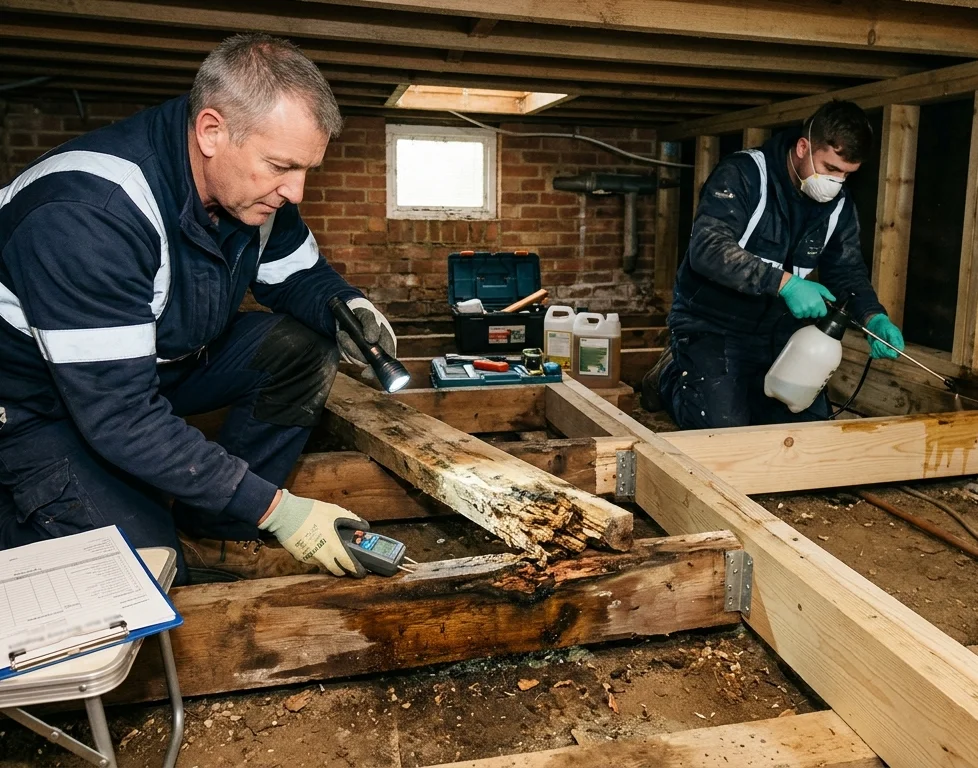
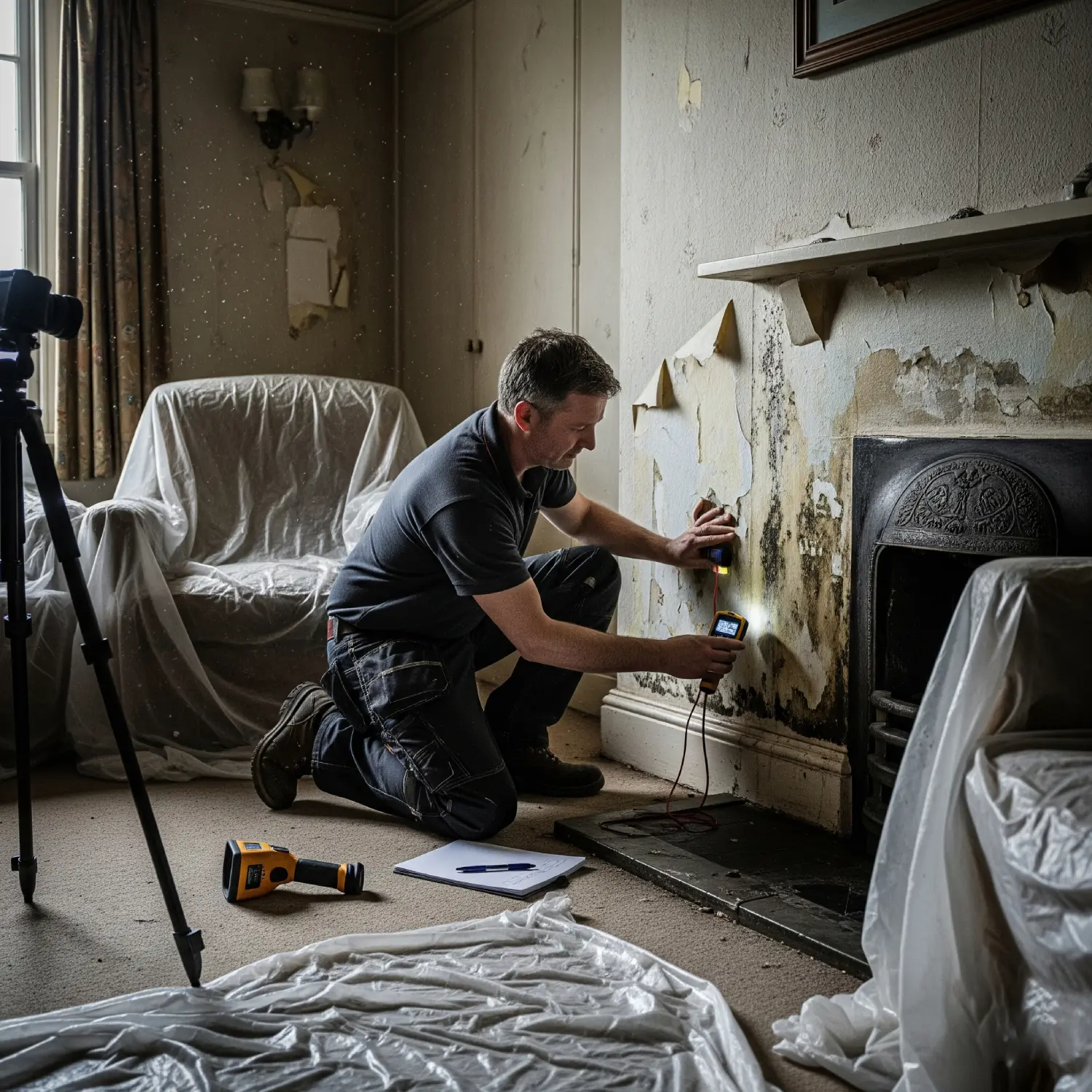
A specialist assessment may consider visible symptoms, moisture patterns and potential causes.
Depending on the property, this could involve looking at:
| Area | What may be considered |
| Internal walls | Staining, salts, mould and moisture |
| External walls | Defects, exposure and potential water entry |
| Windows | Seals, condensation and surrounding finishes |
| Roof and rainwater goods | Possible leaks or water discharge issues |
| Plumbing | Evidence of leaks near affected areas |
| Lower walls | Moisture patterns and construction |
| Timber | Signs of deterioration where accessible |
The purpose is to build a more complete picture of the problem.
A damp survey west london arranged specifically to investigate the survey finding may therefore be useful when the original report cannot establish the precise cause.
A Typical West London Property Transaction
Imagine a buyer has agreed to purchase a period terraced property. Their survey identifies damp staining on a ground-floor wall and recommends specialist investigation.
The buyer asks for a substantial reduction, assuming that extensive damp proofing will be necessary. Rather than accepting or rejecting the request immediately, the seller arranges a specialist assessment.
The assessment finds that the visible problem is associated with a localised external defect rather than widespread moisture movement. The recommended repair is consequently more limited than initially feared.
Both parties now have clearer information. The seller can decide whether to complete the repair before the sale, while the buyer can make a decision based on a better understanding of the actual problem.
This is the value of investigating first. It replaces assumption with evidence.
Does Every Surveyed Damp Problem Need Damp Proofing?
No. Damp can have many causes, and the correct solution depends on what is actually happening.
Potential causes include condensation, leaking plumbing, defective gutters, damaged pointing, water entering through external walls and other building defects.
Some issues may be resolved through repairs to the source of moisture rather than a dedicated damp proofing system.
Where specialist remedial work is required, damp proofing west london should be specified according to the property’s construction and moisture conditions.
Choosing a treatment simply because a survey has identified damp could result in unnecessary work.
When Should You Obtain a Quote?
A quotation is most useful after the problem has been adequately investigated.
If the survey already provides a clear diagnosis and scope, a quotation may be straightforward. If it recommends further investigation, that step should generally come first.
When reviewing a quote, check what is included. Preparation, removal of damaged finishes, treatment, repairs and reinstatement may not all be covered by the same contractor.
It is also sensible to compare quotations based on the proposed solution and scope rather than price alone.
Where appropriate, damp proof companies west london can provide further guidance on remedial options, but the work should always be linked to an identified moisture problem.
Get the Facts Before You Negotiate
A damp reference in a property survey can sound alarming, but it should not automatically lead to a major price reduction or an assumption that extensive work is required.
The most useful first step is to understand exactly what has been identified. Where the cause or extent is uncertain, specialist investigation can provide clearer information about the condition of the property and the work, if any, that is needed.
If a West London property survey has raised damp concerns, contact Anke Damp Proofing for practical, property-specific guidance. Understanding the issue before negotiating can help both buyers and sellers make more informed decisions.
Related articles

What best describes you?
Homeowner
Tenant
Management/Lettings Agent
Potential Buyer
Other
At a glance
For a buyer, it can create uncertainty about repair costs, the seriousness of the problem and whether the agreed price still reflects the property’s condition.
A survey mentioning damp does not necessarily mean that extensive remedial work is required. Surveyors may identify signs of moisture and recommend further investigation without confirming the exact cause.
Before renegotiating the price, it is therefore worth establishing what the report actually says, which areas are affected and whether a specialist assessment is needed.
If a buyer’s survey has raised concerns about damp, contact Anke Damp Proofing for practical guidance on the next steps before making decisions about remedial work.
What Does a Damp Warning in a Property Survey Actually Mean?
A survey can identify visible staining, mould, damaged finishes, elevated moisture readings or other signs that may warrant investigation.
However, a survey is not always intended to provide a detailed diagnosis of every damp-related defect. Depending on the type of survey and the circumstances, the report may recommend further specialist investigation.
Read the wording carefully. There is an important difference between:
- A confirmed defect
- Visible evidence requiring investigation
- A suspected cause
- A recommendation for specialist assessment
- An assumption that further work may be necessary
This distinction matters during negotiations. A vague reference to damp should not automatically be treated as proof of a major building defect.
Should You Get a Specialist Damp Survey Before Renegotiating?
In many cases, obtaining more information before agreeing to a price reduction can be sensible.
A damp survey west london property owners arrange after receiving a survey concern can provide a more focused assessment of the affected areas and help clarify what is happening.
The purpose should be to establish the likely cause, extent and appropriate response. It should not simply be used to produce a document supporting one side of a negotiation.
If you are the seller, an independent assessment can help you understand what the buyer’s survey has identified. If you are the buyer, additional investigation can help establish whether the issue is minor, localised or more extensive.
What Should You Check in the Survey Report First?
Before arranging work or discussing a new price, identify exactly what the survey has flagged.
Look for:
- The rooms or elevations affected
- The type of damp or moisture suspected
- Whether moisture readings were taken
- Whether the survey confirms a cause
- Any mention of damaged plaster or timber
- Recommendations for further investigation
- Suggested remedial work
- Any comments about urgency
- Limitations stated by the surveyor
Also check whether the survey refers to damp as a possibility rather than a confirmed diagnosis.
A recommendation for further investigation is not the same as a quotation for repairs. The likely cost cannot be assessed accurately until the problem itself is understood.
Can Damp Affect the Price of a West London Property?
It can, particularly if the buyer believes significant remedial work will be required.
A buyer may factor several things into their decision, including the potential repair cost, disruption, uncertainty and risk of discovering additional defects.
However, the presence of damp does not automatically justify a large price reduction. The appropriate response depends on the nature and extent of the problem.
For example, localised moisture associated with a defective external detail could require a relatively straightforward repair. More extensive moisture affecting several parts of a building may need a broader investigation and remedial strategy.
This is why damp proofing west london should be considered in response to an identified cause rather than simply because a survey contains the word “damp”.
What best describes you?
Homeowner
Tenant
Management/Lettings Agent
Potential Buyer
Other
It just takes 60 Second
And then you can book a free consultation
What Should Sellers Do Before Agreeing to a Reduction?
If you are selling and the buyer has raised a damp concern, avoid agreeing to a substantial reduction before establishing what work is actually required.
A sensible process is:
- Review the relevant survey section.
- Identify the affected areas.
- Check records of previous damp-related work.
- Arrange appropriate specialist advice if necessary.
- Establish the likely cause.
- Obtain a suitable remedial recommendation.
- Request a clear quotation where work is required.
- Use the information to have a more informed discussion with the buyer.
This does not mean every seller should complete remedial work before exchange. In some situations, the buyer may prefer to carry out their own works after completion.
The important point is that both parties should understand the issue rather than negotiating based on an uncertain assumption.
If you need help understanding a damp concern raised during a property transaction, our team can assess the affected areas and explain whether damp proofing west london may be appropriate.
What If You Are the Buyer?
Buyers should also avoid assuming that a survey reference to damp means the property has a serious structural problem.
Start by understanding the survey’s limitations and recommendations. If further investigation has been advised, consider obtaining specialist input before making a final decision.
Useful questions include:
- Where exactly is the moisture?
- Is the cause confirmed?
- Is the problem active?
- Has there been previous remedial work?
- Is timber affected?
- Is the issue related to condensation or building fabric?
- What work is actually required?
- How disruptive is the proposed repair?
- What is the likely cost?
If the seller has already obtained a report, review it carefully rather than relying only on a verbal explanation.
Could Previous Damp Treatment Change the Situation?
Yes. A property may have had damp-related work carried out years earlier, and this history can be relevant when interpreting a new survey.
For example, a wall may contain evidence of previous treatment while current moisture is being caused by a completely different issue. Alternatively, an earlier repair may have been successful but left historic staining or decorative damage.
Ask for any available documentation, including invoices, reports, guarantees and photographs.
Previous records do not necessarily remove the need for a new assessment, but they can provide useful background.
What Does a Damp Survey Usually Investigate?
A specialist assessment may consider visible symptoms, moisture patterns and potential causes.
Depending on the property, this could involve looking at:
| Area | What may be considered |
| Internal walls | Staining, salts, mould and moisture |
| External walls | Defects, exposure and potential water entry |
| Windows | Seals, condensation and surrounding finishes |
| Roof and rainwater goods | Possible leaks or water discharge issues |
| Plumbing | Evidence of leaks near affected areas |
| Lower walls | Moisture patterns and construction |
| Timber | Signs of deterioration where accessible |
The purpose is to build a more complete picture of the problem.
A damp survey west london arranged specifically to investigate the survey finding may therefore be useful when the original report cannot establish the precise cause.
A Typical West London Property Transaction
Imagine a buyer has agreed to purchase a period terraced property. Their survey identifies damp staining on a ground-floor wall and recommends specialist investigation.
The buyer asks for a substantial reduction, assuming that extensive damp proofing will be necessary. Rather than accepting or rejecting the request immediately, the seller arranges a specialist assessment.
The assessment finds that the visible problem is associated with a localised external defect rather than widespread moisture movement. The recommended repair is consequently more limited than initially feared.
Both parties now have clearer information. The seller can decide whether to complete the repair before the sale, while the buyer can make a decision based on a better understanding of the actual problem.
This is the value of investigating first. It replaces assumption with evidence.
Does Every Surveyed Damp Problem Need Damp Proofing?
No. Damp can have many causes, and the correct solution depends on what is actually happening.
Potential causes include condensation, leaking plumbing, defective gutters, damaged pointing, water entering through external walls and other building defects.
Some issues may be resolved through repairs to the source of moisture rather than a dedicated damp proofing system.
Where specialist remedial work is required, damp proofing west london should be specified according to the property’s construction and moisture conditions.
Choosing a treatment simply because a survey has identified damp could result in unnecessary work.
When Should You Obtain a Quote?
A quotation is most useful after the problem has been adequately investigated.
If the survey already provides a clear diagnosis and scope, a quotation may be straightforward. If it recommends further investigation, that step should generally come first.
When reviewing a quote, check what is included. Preparation, removal of damaged finishes, treatment, repairs and reinstatement may not all be covered by the same contractor.
It is also sensible to compare quotations based on the proposed solution and scope rather than price alone.
Where appropriate, damp proof companies west london can provide further guidance on remedial options, but the work should always be linked to an identified moisture problem.
Get the Facts Before You Negotiate
A damp reference in a property survey can sound alarming, but it should not automatically lead to a major price reduction or an assumption that extensive work is required.
The most useful first step is to understand exactly what has been identified. Where the cause or extent is uncertain, specialist investigation can provide clearer information about the condition of the property and the work, if any, that is needed.
If a West London property survey has raised damp concerns, contact Anke Damp Proofing for practical, property-specific guidance. Understanding the issue before negotiating can help both buyers and sellers make more informed decisions.
Related articles
What best describes you?
Homeowner
Tenant
Management/Lettings Agent
Potential Buyer