

West London Refits: Checking Hidden Timber Before Kitchens, Floors and Joinery
Why Should Hidden Timber Be Checked Before a Property Refitting?

Why you can trust our content
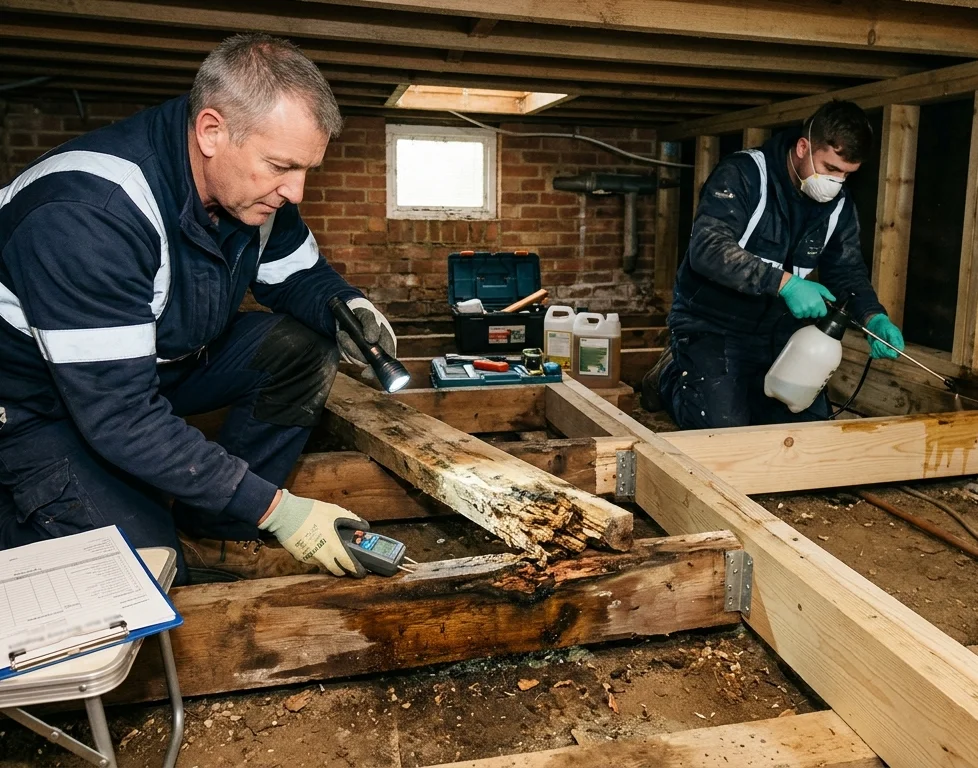
At a glance
A major refit can transform an older property. New kitchens, replacement flooring, fitted storage and bespoke joinery can make rooms feel completely different.
But before these finishes go in, it is worth considering what lies underneath them. Timber can deteriorate gradually where it has been exposed to leaks, damp masonry, poor ventilation or other moisture sources. Some of the affected areas may have been hidden behind old flooring, skirting, plaster or kitchen units for years.
Once a new kitchen or floor has been installed, investigating a concealed timber problem can become much more disruptive. Checking vulnerable areas during the stripped-out stage gives homeowners a better opportunity to identify problems while access is still available.
If you are preparing a West London property for a major refit and have uncovered damaged timber, contact Anke Damp Proofing for practical advice before the new finishes are installed.
Which Timber Areas Are Most Important to Inspect?
There is no need to assume that every piece of timber in a property is affected by rot. The priority should be areas with a history of moisture, visible deterioration or conditions that could have allowed fungal decay to develop.
During a refit, pay particular attention to:
- Timber floor joists
- Floorboards
- Skirting boards
- Window frames and surrounding timber
- Timber beside external walls
- Areas around kitchens and bathrooms
- Timber close to plumbing
- Roof timbers where relevant
- Previously damp sections
- Areas behind old fitted furniture
Flooring removal can be especially revealing. A floor that looks perfectly acceptable from above may conceal deterioration underneath.
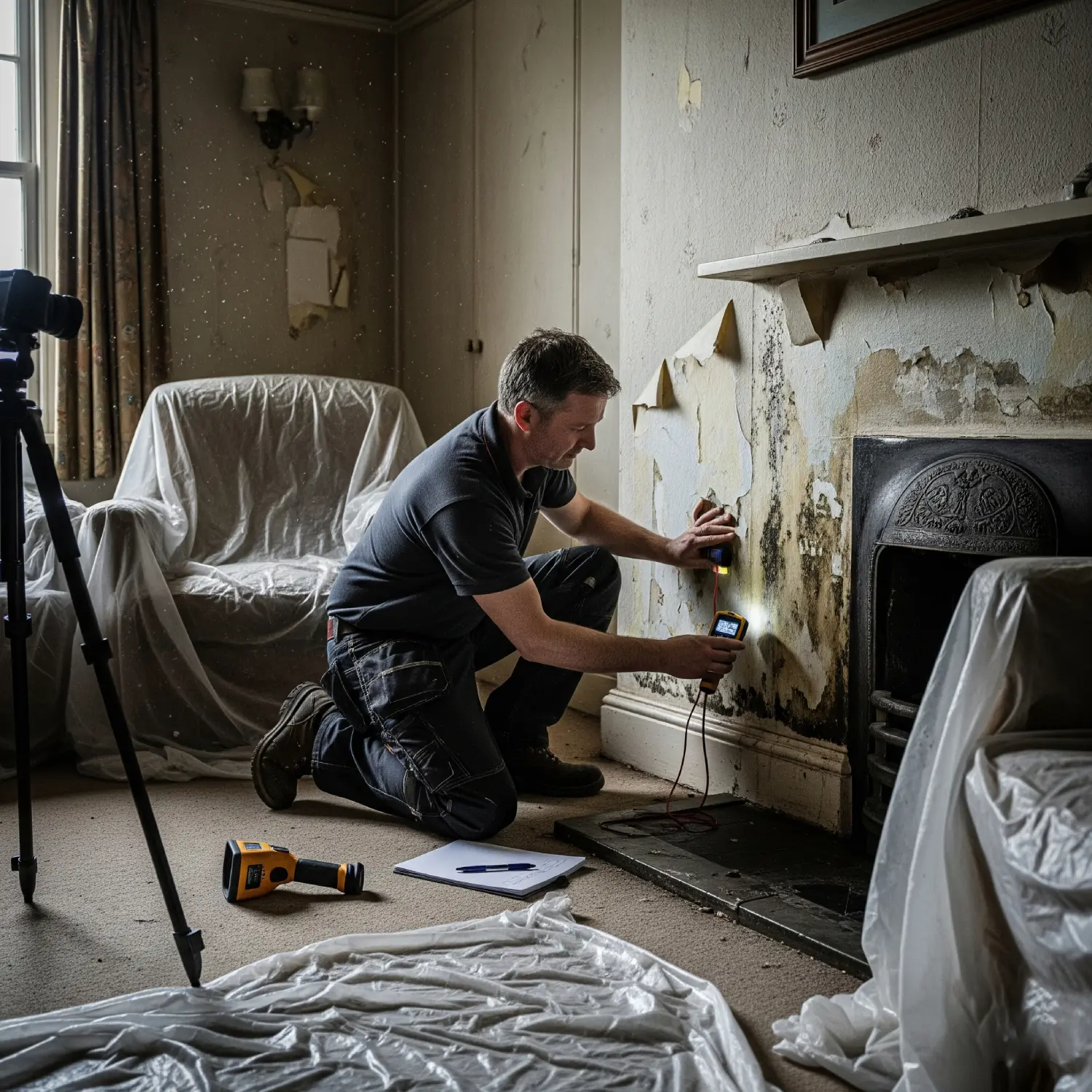
Likewise, removing kitchen units may expose walls and timber that have previously been affected by plumbing leaks or condensation.
What Signs Could Indicate Timber Decay?
Timber deterioration can take several forms, and appearance alone is not enough to establish the cause.
Possible warning signs include:
- Unusual dark staining
- Timber that appears softened or weakened
- Cracking or changes in texture
- Crumbling sections
- Fungal growth
- Persistent musty smells
- Evidence of previous water leaks
- Damp masonry next to timber
- Repeated staining around the same area
Historic staining does not necessarily mean active rot. Conversely, a relatively small visible defect may deserve closer investigation if the timber has been exposed to moisture for an extended period.
The surrounding conditions are therefore important.
What Is the Difference Between Wet Rot and Dry Rot?
Wet rot is generally associated with timber remaining damp for a prolonged period. Its development is often closely linked to the moisture source.
Dry rot is also associated with moisture but can behave differently within a building. Under suitable conditions, it can spread and affect timber beyond the location where the original moisture problem was identified.
| Timber issue | Common association | What needs consideration |
| Wet rot | Persistently damp timber | Source and duration of moisture |
| Dry rot | Moisture and suitable environmental conditions | Extent of fungal decay and moisture conditions |
| Historic staining | Previous moisture exposure | Whether deterioration remains active |
| Physical damage | Impact, wear or construction defects | Condition and intended use |
| Insect damage | Wood-boring insects | Type and extent of damage |
This table is intended as a general guide. A specialist assessment is needed where the condition of timber is uncertain.
Could a New Kitchen Hide a Timber Problem?
Yes. Kitchens contain multiple potential moisture sources, including sinks, appliances, plumbing connections and drainage.
A small leak that has gone unnoticed can expose nearby timber to moisture over time. If the affected area is behind fitted units, the problem may remain hidden until the kitchen is removed.
This is one reason kitchen refits provide a useful opportunity to inspect the surrounding area.
Before new cabinets are fitted, consider whether:
- Previous leaks have affected the wall or floor
- Plumbing connections show signs of past leakage
- Timber near the sink area is deteriorated
- The wall behind the old units has moisture staining
- The floor beneath appliances has been exposed to water
- Ventilation has historically been poor
If something looks unusual, investigate it before covering the area again.
What best describes you?

Homeowner

Tenant

Management/Lettings Agent

Potential Buyer

Other
It just takes 60 Second
And then you can book a free consultation
When Should Timber Checks Take Place During a Refit?
The most practical time is generally after relevant finishes have been removed and before new installations permanently restrict access.
For example, if an old kitchen is being removed, the exposed wall and floor area can be checked before new units are installed.
Similarly, when old flooring is lifted, accessible joists and boards can be inspected before the replacement floor is fitted.
A sensible sequence is:
- Strip out old finishes.
- Identify areas with a history of damp or leaks.
- Inspect exposed timber.
- Establish whether deterioration is present.
- Investigate moisture sources.
- Complete necessary remedial work.
- Check affected areas before closing them.
- Proceed with the new installation.
This does not need to delay every project. It simply means making timber condition part of the planning process.
If your refit has revealed suspicious timber, our team can assess the affected area and explain whether dry rot treatment west london may be appropriate.
What Happens If Dry Rot Is Found?
The correct response depends on the extent of the problem and the conditions that allowed it to develop.
An investigation should consider affected timber as well as nearby areas and possible moisture sources. If conditions remain suitable for fungal growth, simply replacing one visibly damaged piece may not resolve the wider issue.
Depending on the findings, dry rot repair services west london may involve:
- Identifying and addressing the moisture source
- Determining the extent of timber deterioration
- Removing unsuitable timber
- Treating appropriate surrounding areas
- Replacing affected timber
- Improving relevant moisture conditions
- Checking the area before new finishes are installed
The scope should be based on evidence rather than assuming that every nearby timber element needs removal.
Why Is the Moisture Source Important?
Timber decay is closely connected with moisture conditions. If a leak, water ingress or other moisture problem continues, repaired timber can remain vulnerable.
Possible sources include:
- Leaking plumbing
- Damaged gutters
- Roof defects
- External wall problems
- Poor drainage
- Defective window details
- Condensation
- Previous flooding
The appropriate response will depend on the building and the specific source.
This is why dry rot repair services west london should consider more than the visibly affected timber. Understanding why the material became damp is an important part of planning lasting remedial work.
Can Rot Be Found Under Existing Flooring?
Yes. Floor structures can conceal deterioration for long periods, especially in older properties.
Warning signs may include unusual smells, springy or uneven flooring, staining around edges or visible deterioration once floor coverings are removed.
However, a floor that feels uneven does not automatically mean that rot is present. Movement can have several causes.
If flooring is already being removed as part of the refit, this is an ideal time to consider whether accessible timber requires inspection.
Discovering a problem at this stage is generally easier to manage than finding it after a new floor has been fitted.
A Typical West London Refit Scenario
Consider a period terrace where the owners are replacing the kitchen and ground-floor flooring. The existing kitchen has been in place for many years and there is a history of a minor leak beneath the sink.
Once the cabinets and flooring are removed, a section of timber near the kitchen wall appears darker and softer than surrounding material.
Rather than fitting the new kitchen immediately, the area is investigated. The assessment establishes the condition of the timber and identifies the moisture source. Appropriate work is then completed before the new floor and units are installed.
The project can continue without having to remove newly fitted finishes later.
This illustrates why early investigation can be valuable even when the original problem appears relatively minor.
Should Damaged Timber Always Be Replaced?
No. Replacement depends on the degree of deterioration and the role of the timber within the building.
Some timber may have superficial staining or limited damage while retaining adequate integrity. Other material may have deteriorated to a point where replacement is necessary.
A specialist assessment can help distinguish between these situations.
Where work is required, dry rot treatment west london should be proportionate to the extent of decay and the conditions present.
Avoid making decisions based solely on colour or appearance.
How Can Early Checks Help Control Refit Costs?
Hidden timber problems can become more expensive to address when discovered after a kitchen, floor or joinery has been installed.
Access may require removing new units, lifting newly fitted flooring or opening decorated walls. This can add labour, materials and delays to the project.
By checking exposed areas before installation, homeowners can identify potential problems while the property is already in a stripped-out condition.
The cost of dry rot repair services west london will vary according to the extent of deterioration, accessibility and remedial work required. An early assessment can therefore help provide more realistic information for the renovation budget.
Who Should Assess Suspected Timber Rot?
Where the condition of timber is uncertain, it is sensible to seek advice from professionals with experience in timber decay and moisture-related building problems.
Local dry rot experts west london can assess accessible areas, consider the surrounding moisture conditions and explain what further investigation or remedial work may be appropriate.
This is particularly useful when the timber forms part of a floor, wall or other important building element.
Get the Facts Before You Negotiate
A property refit is about more than visible finishes. It is also an opportunity to inspect the parts of the building that have been hidden behind old flooring, kitchens, skirting and joinery.
Where moisture has been present, checking vulnerable timber before covering it again can help identify deterioration early and reduce the risk of disruptive repairs later.
If you are planning a West London refit and have concerns about hidden timber, contact Anke Damp Proofing for practical guidance. Our team can help establish whether dry rot repair services west london or further investigation is appropriate before your new finishes are installed.
Related articles


What best describes you?
Homeowner
Tenant
Management/Lettings Agent
Potential Buyer
Other
At a glance
A major refit can transform an older property. New kitchens, replacement flooring, fitted storage and bespoke joinery can make rooms feel completely different.
But before these finishes go in, it is worth considering what lies underneath them. Timber can deteriorate gradually where it has been exposed to leaks, damp masonry, poor ventilation or other moisture sources. Some of the affected areas may have been hidden behind old flooring, skirting, plaster or kitchen units for years.
Once a new kitchen or floor has been installed, investigating a concealed timber problem can become much more disruptive. Checking vulnerable areas during the stripped-out stage gives homeowners a better opportunity to identify problems while access is still available.
If you are preparing a West London property for a major refit and have uncovered damaged timber, contact Anke Damp Proofing for practical advice before the new finishes are installed.
Which Timber Areas Are Most Important to Inspect?
There is no need to assume that every piece of timber in a property is affected by rot. The priority should be areas with a history of moisture, visible deterioration or conditions that could have allowed fungal decay to develop.
During a refit, pay particular attention to:
- Timber floor joists
- Floorboards
- Skirting boards
- Window frames and surrounding timber
- Timber beside external walls
- Areas around kitchens and bathrooms
- Timber close to plumbing
- Roof timbers where relevant
- Previously damp sections
- Areas behind old fitted furniture
Flooring removal can be especially revealing. A floor that looks perfectly acceptable from above may conceal deterioration underneath.
Likewise, removing kitchen units may expose walls and timber that have previously been affected by plumbing leaks or condensation.
What Signs Could Indicate Timber Decay?
Timber deterioration can take several forms, and appearance alone is not enough to establish the cause.
Possible warning signs include:
- Unusual dark staining
- Timber that appears softened or weakened
- Cracking or changes in texture
- Crumbling sections
- Fungal growth
- Persistent musty smells
- Evidence of previous water leaks
- Damp masonry next to timber
- Repeated staining around the same area
Historic staining does not necessarily mean active rot. Conversely, a relatively small visible defect may deserve closer investigation if the timber has been exposed to moisture for an extended period.
The surrounding conditions are therefore important.
What Is the Difference Between Wet Rot and Dry Rot?
Wet rot is generally associated with timber remaining damp for a prolonged period. Its development is often closely linked to the moisture source.
Dry rot is also associated with moisture but can behave differently within a building. Under suitable conditions, it can spread and affect timber beyond the location where the original moisture problem was identified.
| Timber issue | Common association | What needs consideration |
| Wet rot | Persistently damp timber | Source and duration of moisture |
| Dry rot | Moisture and suitable environmental conditions | Extent of fungal decay and moisture conditions |
| Historic staining | Previous moisture exposure | Whether deterioration remains active |
| Physical damage | Impact, wear or construction defects | Condition and intended use |
| Insect damage | Wood-boring insects | Type and extent of damage |
This table is intended as a general guide. A specialist assessment is needed where the condition of timber is uncertain.
Could a New Kitchen Hide a Timber Problem?
Yes. Kitchens contain multiple potential moisture sources, including sinks, appliances, plumbing connections and drainage.
A small leak that has gone unnoticed can expose nearby timber to moisture over time. If the affected area is behind fitted units, the problem may remain hidden until the kitchen is removed.
This is one reason kitchen refits provide a useful opportunity to inspect the surrounding area.
Before new cabinets are fitted, consider whether:
- Previous leaks have affected the wall or floor
- Plumbing connections show signs of past leakage
- Timber near the sink area is deteriorated
- The wall behind the old units has moisture staining
- The floor beneath appliances has been exposed to water
- Ventilation has historically been poor
If something looks unusual, investigate it before covering the area again.
What best describes you?
Homeowner
Tenant
Management/Lettings Agent
Potential Buyer
Other
It just takes 60 Second
And then you can book a free consultation
When Should Timber Checks Take Place During a Refit?
The most practical time is generally after relevant finishes have been removed and before new installations permanently restrict access.
For example, if an old kitchen is being removed, the exposed wall and floor area can be checked before new units are installed.
Similarly, when old flooring is lifted, accessible joists and boards can be inspected before the replacement floor is fitted.
A sensible sequence is:
- Strip out old finishes.
- Identify areas with a history of damp or leaks.
- Inspect exposed timber.
- Establish whether deterioration is present.
- Investigate moisture sources.
- Complete necessary remedial work.
- Check affected areas before closing them.
- Proceed with the new installation.
This does not need to delay every project. It simply means making timber condition part of the planning process.
If your refit has revealed suspicious timber, our team can assess the affected area and explain whether dry rot treatment west london may be appropriate.
What Happens If Dry Rot Is Found?
The correct response depends on the extent of the problem and the conditions that allowed it to develop.
An investigation should consider affected timber as well as nearby areas and possible moisture sources. If conditions remain suitable for fungal growth, simply replacing one visibly damaged piece may not resolve the wider issue.
Depending on the findings, dry rot repair services west london may involve:
- Identifying and addressing the moisture source
- Determining the extent of timber deterioration
- Removing unsuitable timber
- Treating appropriate surrounding areas
- Replacing affected timber
- Improving relevant moisture conditions
- Checking the area before new finishes are installed
The scope should be based on evidence rather than assuming that every nearby timber element needs removal.
Why Is the Moisture Source Important?
Timber decay is closely connected with moisture conditions. If a leak, water ingress or other moisture problem continues, repaired timber can remain vulnerable.
Possible sources include:
- Leaking plumbing
- Damaged gutters
- Roof defects
- External wall problems
- Poor drainage
- Defective window details
- Condensation
- Previous flooding
The appropriate response will depend on the building and the specific source.
This is why dry rot repair services west london should consider more than the visibly affected timber. Understanding why the material became damp is an important part of planning lasting remedial work.
Can Rot Be Found Under Existing Flooring?
Yes. Floor structures can conceal deterioration for long periods, especially in older properties.
Warning signs may include unusual smells, springy or uneven flooring, staining around edges or visible deterioration once floor coverings are removed.
However, a floor that feels uneven does not automatically mean that rot is present. Movement can have several causes.
If flooring is already being removed as part of the refit, this is an ideal time to consider whether accessible timber requires inspection.
Discovering a problem at this stage is generally easier to manage than finding it after a new floor has been fitted.
A Typical West London Refit Scenario
Consider a period terrace where the owners are replacing the kitchen and ground-floor flooring. The existing kitchen has been in place for many years and there is a history of a minor leak beneath the sink.
Once the cabinets and flooring are removed, a section of timber near the kitchen wall appears darker and softer than surrounding material.
Rather than fitting the new kitchen immediately, the area is investigated. The assessment establishes the condition of the timber and identifies the moisture source. Appropriate work is then completed before the new floor and units are installed.
The project can continue without having to remove newly fitted finishes later.
This illustrates why early investigation can be valuable even when the original problem appears relatively minor.
Should Damaged Timber Always Be Replaced?
No. Replacement depends on the degree of deterioration and the role of the timber within the building.
Some timber may have superficial staining or limited damage while retaining adequate integrity. Other material may have deteriorated to a point where replacement is necessary.
A specialist assessment can help distinguish between these situations.
Where work is required, dry rot treatment west london should be proportionate to the extent of decay and the conditions present.
Avoid making decisions based solely on colour or appearance.
How Can Early Checks Help Control Refit Costs?
Hidden timber problems can become more expensive to address when discovered after a kitchen, floor or joinery has been installed.
Access may require removing new units, lifting newly fitted flooring or opening decorated walls. This can add labour, materials and delays to the project.
By checking exposed areas before installation, homeowners can identify potential problems while the property is already in a stripped-out condition.
The cost of dry rot repair services west london will vary according to the extent of deterioration, accessibility and remedial work required. An early assessment can therefore help provide more realistic information for the renovation budget.
Who Should Assess Suspected Timber Rot?
Where the condition of timber is uncertain, it is sensible to seek advice from professionals with experience in timber decay and moisture-related building problems.
Local dry rot experts west london can assess accessible areas, consider the surrounding moisture conditions and explain what further investigation or remedial work may be appropriate.
This is particularly useful when the timber forms part of a floor, wall or other important building element.
Get the Facts Before You Negotiate
A property refit is about more than visible finishes. It is also an opportunity to inspect the parts of the building that have been hidden behind old flooring, kitchens, skirting and joinery.
Where moisture has been present, checking vulnerable timber before covering it again can help identify deterioration early and reduce the risk of disruptive repairs later.
If you are planning a West London refit and have concerns about hidden timber, contact Anke Damp Proofing for practical guidance. Our team can help establish whether dry rot repair services west london or further investigation is appropriate before your new finishes are installed.
Related articles
What best describes you?
Homeowner
Tenant
Management/Lettings Agent
Potential Buyer