North London Damp Proofing Decisions: What Survey Evidence Helps You Choose
Damp can be frustrating because the visible signs rarely tell the whole story. A patch of staining, peeling paint or a musty smell may suggest a straightforward moisture problem, but the underlying cause could be quite different.

Why you can trust our content
At a glance
Rising damp, penetrating damp, condensation and plumbing leaks can all produce symptoms that appear similar at first glance.
That is why good survey evidence matters before any treatment is agreed. A useful assessment should explain what has been found, why it is happening and what work, if any, is appropriate. For homeowners comparing damp proofing options, understanding the evidence behind a recommendation can make the decision much clearer.
If you are unsure what the signs around your property mean, contact Anke Damp Proofing to discuss the next appropriate step rather than committing to treatment based on symptoms alone.
What Should a Damp Survey Actually Tell You?
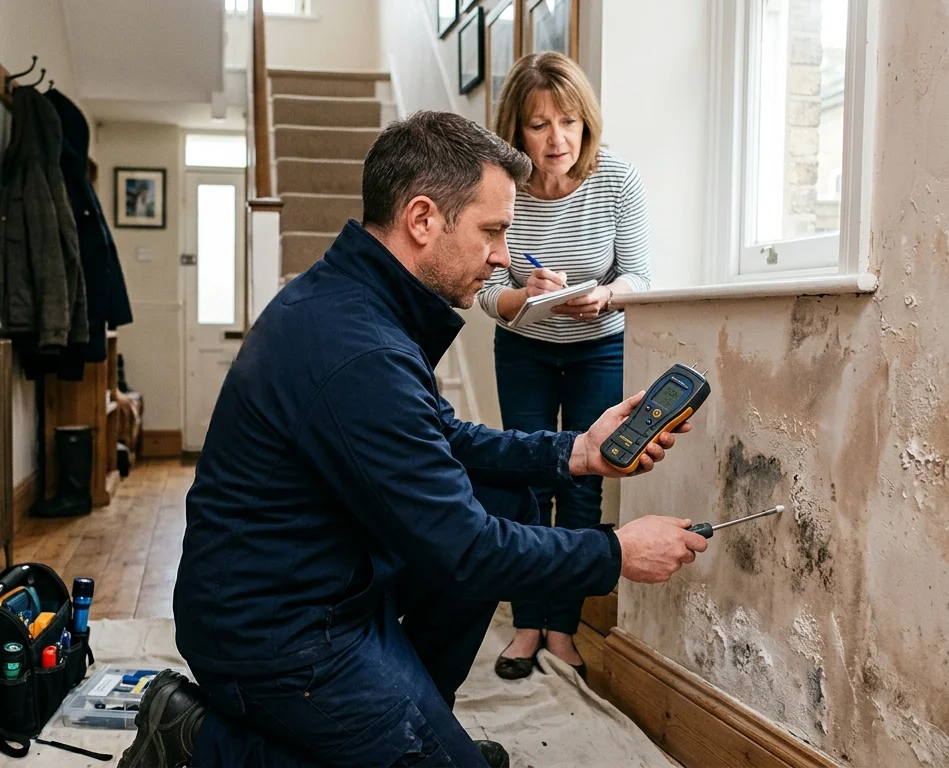
A damp survey should do more than confirm that moisture is present. Moisture readings are useful, but they need to be considered alongside the construction, condition and location of the affected area.
A well-prepared assessment should help answer questions such as:
- Where has moisture been detected?
- How extensive is the affected area?
- Is the pattern consistent with rising, penetrating or condensation-related damp?
- Could rainwater goods, external defects or plumbing be contributing?
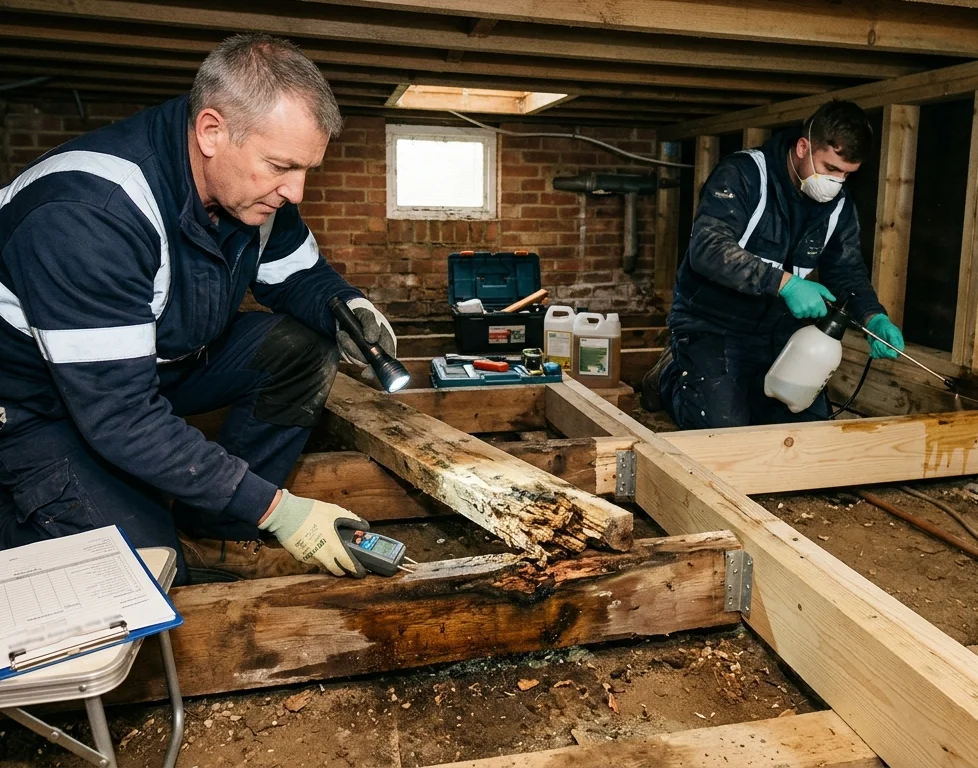
- Are timber elements showing signs of deterioration?
- Is there evidence that previous remedial work has failed or become defective?
- What work is actually recommended?
The important point is context. A high moisture reading on its own does not automatically identify the source of damp. The surveyor should interpret the findings rather than simply presenting a series of measurements.
Why Does Survey Evidence Matter Before Choosing Treatment?
The right treatment depends on the cause of the problem. If water is entering through a defective external wall, for example, installing an internal damp proofing system without addressing the external defect may leave the underlying issue unresolved.
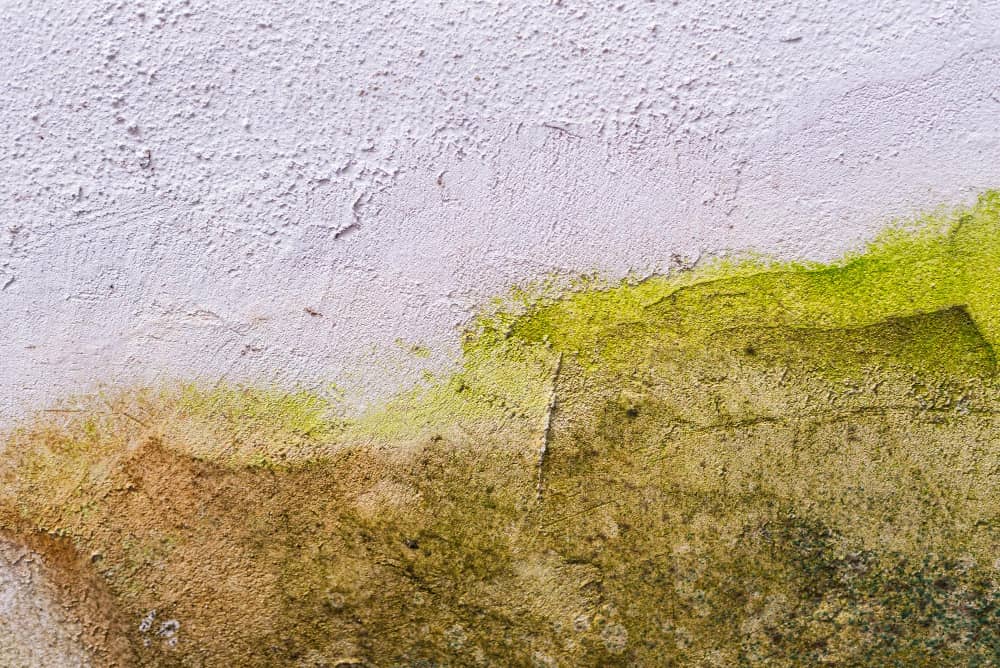
Similarly, condensation can sometimes be mistaken for other forms of damp because both can result in staining, mould or deteriorated finishes.
This is why homeowners should look for a clear connection between the survey findings and the proposed solution. If a recommendation is made, you should be able to understand why that particular approach has been suggested.
For example, if the survey identifies defective pointing and damaged guttering as likely contributors to moisture penetration, those issues should feature in the proposed remedial plan. If the evidence points towards condensation, improving ventilation and moisture management may be more appropriate than extensive structural work.
Which Survey Details Should You Check?
Not all survey reports are equally useful. Before making a decision, look for practical information that allows you to understand the condition of the property.
| Survey detail | Why it matters |
| Location of affected areas | Shows where moisture has actually been identified |
| Moisture readings | Provides supporting evidence when interpreted correctly |
| Visible symptoms | Helps establish the pattern and extent of the issue |
| External inspection findings | Can reveal defects allowing water into the property |
| Internal inspection findings | Helps identify affected walls, floors, ceilings or finishes |
| Timber observations | Important where joists, floors or other timber may be affected |
| Likely cause | Connects the evidence with the diagnosis |
| Recommended work | Explains what action is considered appropriate |
| Limitations or further checks | Highlights areas requiring additional investigation |
A useful report should leave you with fewer questions, not more. If you cannot understand why a particular treatment has been proposed, it is reasonable to ask for clarification before approving the work.
How Can You Compare Damp Proofing Recommendations?
Comparing quotations purely by price can be misleading. Two contractors may recommend different scopes of work because they have interpreted the property differently.
When reviewing proposals for damp proofing north london homeowners should consider:
- The diagnosis – Does the proposed work address an identified cause?
- The scope – Is it clear which walls, rooms or areas are included?
- Preparation work – Are removal of damaged finishes, drying periods or other preparatory tasks explained?
- Materials and systems – Is the proposed approach clearly described?
- Making good – Does the quotation explain what happens after remedial work?
- Additional repairs – Are external or plumbing-related defects identified separately?
- Access requirements – Could furniture removal, floor lifting or other access affect the work?
- Guarantees and documentation – Are any guarantees clearly explained rather than simply mentioned?
This approach gives you a much better basis for comparison than choosing the lowest figure.
If you have already received a quotation and are unsure what is included, our team can help you understand the proposed scope and identify questions worth asking before work begins.
What best describes you?

Homeowner

Tenant

Management/Lettings Agent

Potential Buyer

Other
It just takes 60 Second
And then you can book a free consultation
What Are Warning Signs in a Damp Assessment?
A homeowner should be cautious if a recommendation appears to jump immediately from a visible symptom to an expensive treatment without explaining the cause.
Some questions worth asking include:
- What evidence supports the diagnosis?
- Were both internal and external areas considered?
- Could a plumbing or drainage issue be responsible?
- Has condensation been considered?
- Are there defects that should be repaired before remedial treatment?
- Which parts of the property require treatment?
- What happens after the initial work has been completed?
Another useful check is whether the recommended work is proportionate to the evidence. A small isolated area of moisture may require a very different response from widespread damp affecting several rooms.
A clear survey should help you understand that distinction.
When Is a Second Opinion Worth Considering?
A second opinion can be useful when the diagnosis is unclear, recommendations vary significantly between contractors or the proposed work is substantial.
This does not necessarily mean that the first assessment is wrong. Different surveyors may focus on different potential causes, particularly in older buildings where several moisture-related issues can exist at the same time.
For a damp survey north london homeowners can benefit from asking for an explanation of the evidence behind the diagnosis, especially where extensive remedial work is being considered.
A second assessment may also be sensible when previous treatment has failed. In that situation, simply repeating the same approach without understanding why the original work did not resolve the problem may not provide the best outcome.
A Typical North London Property Scenario
Consider a period terrace with staining appearing along the lower section of an internal wall. The homeowner assumes that rising damp is responsible and obtains several recommendations.
During a more detailed assessment, the visible staining is considered alongside the external wall, nearby rainwater goods, ventilation and internal conditions. The inspection identifies a combination of localised external moisture penetration and poor ventilation rather than a single cause.
Instead of immediately treating the entire wall, the remedial plan can be based on the findings. External defects can be addressed, ventilation improved and the affected internal finishes dealt with as appropriate.
The lesson is simple: the visible patch was real, but it did not necessarily identify the cause by itself.
How Should You Use a Survey When Making Your Final Decision?
The survey should become the starting point for your decision rather than a document that sits alongside the quotation.
Before agreeing to work, check that:
- The reported problem matches what you can see at the property.
- The proposed treatment relates directly to the findings.
- Any necessary preliminary repairs are identified.
- The areas included in the quotation are clearly defined.
- You understand what is and is not included.
- You have had the opportunity to ask questions about uncertain findings.
- Any guarantees or aftercare arrangements have been explained.
Good damp proofing north london decisions are based on evidence, scope and understanding rather than price alone.
It is also worth remembering that older homes can behave differently from modern construction. Solid walls, suspended timber floors, previous alterations and historic repairs can all influence how moisture moves through a building. A sensible assessment takes those factors into account.
Final thoughts
A good damp proofing decision starts with understanding the problem. Survey findings, building condition and the proposed scope should all fit together logically. If they do, comparing quotations becomes much easier because you are assessing like-for-like work rather than simply comparing prices.
For homeowners dealing with unexplained moisture, the aim should be a clear diagnosis and a proportionate solution. Anke Damp Proofing can provide practical guidance based on the condition of the property, helping you understand the available options before deciding how to proceed.
If you would like tailored advice about damp affecting your property, speak to the Anke Damp Proofing team to arrange the appropriate assessment or request a bespoke quote.
Related articles

What best describes you?
Homeowner
Tenant
Management/Lettings Agent
Potential Buyer
Other
At a glance
Rising damp, penetrating damp, condensation and plumbing leaks can all produce symptoms that appear similar at first glance.
That is why good survey evidence matters before any treatment is agreed. A useful assessment should explain what has been found, why it is happening and what work, if any, is appropriate. For homeowners comparing damp proofing options, understanding the evidence behind a recommendation can make the decision much clearer.
If you are unsure what the signs around your property mean, contact Anke Damp Proofing to discuss the next appropriate step rather than committing to treatment based on symptoms alone.
What Should a Damp Survey Actually Tell You?
A damp survey should do more than confirm that moisture is present. Moisture readings are useful, but they need to be considered alongside the construction, condition and location of the affected area.
A well-prepared assessment should help answer questions such as:
- Where has moisture been detected?
- How extensive is the affected area?
- Is the pattern consistent with rising, penetrating or condensation-related damp?
- Could rainwater goods, external defects or plumbing be contributing?
- Are timber elements showing signs of deterioration?
- Is there evidence that previous remedial work has failed or become defective?
- What work is actually recommended?
The important point is context. A high moisture reading on its own does not automatically identify the source of damp. The surveyor should interpret the findings rather than simply presenting a series of measurements.
Why Does Survey Evidence Matter Before Choosing Treatment?
The right treatment depends on the cause of the problem. If water is entering through a defective external wall, for example, installing an internal damp proofing system without addressing the external defect may leave the underlying issue unresolved.
Similarly, condensation can sometimes be mistaken for other forms of damp because both can result in staining, mould or deteriorated finishes.
This is why homeowners should look for a clear connection between the survey findings and the proposed solution. If a recommendation is made, you should be able to understand why that particular approach has been suggested.
For example, if the survey identifies defective pointing and damaged guttering as likely contributors to moisture penetration, those issues should feature in the proposed remedial plan. If the evidence points towards condensation, improving ventilation and moisture management may be more appropriate than extensive structural work.
Which Survey Details Should You Check?
Not all survey reports are equally useful. Before making a decision, look for practical information that allows you to understand the condition of the property.
| Survey detail | Why it matters |
| Location of affected areas | Shows where moisture has actually been identified |
| Moisture readings | Provides supporting evidence when interpreted correctly |
| Visible symptoms | Helps establish the pattern and extent of the issue |
| External inspection findings | Can reveal defects allowing water into the property |
| Internal inspection findings | Helps identify affected walls, floors, ceilings or finishes |
| Timber observations | Important where joists, floors or other timber may be affected |
| Likely cause | Connects the evidence with the diagnosis |
| Recommended work | Explains what action is considered appropriate |
| Limitations or further checks | Highlights areas requiring additional investigation |
A useful report should leave you with fewer questions, not more. If you cannot understand why a particular treatment has been proposed, it is reasonable to ask for clarification before approving the work.
How Can You Compare Damp Proofing Recommendations?
Comparing quotations purely by price can be misleading. Two contractors may recommend different scopes of work because they have interpreted the property differently.
When reviewing proposals for damp proofing north london homeowners should consider:
- The diagnosis – Does the proposed work address an identified cause?
- The scope – Is it clear which walls, rooms or areas are included?
- Preparation work – Are removal of damaged finishes, drying periods or other preparatory tasks explained?
- Materials and systems – Is the proposed approach clearly described?
- Making good – Does the quotation explain what happens after remedial work?
- Additional repairs – Are external or plumbing-related defects identified separately?
- Access requirements – Could furniture removal, floor lifting or other access affect the work?
- Guarantees and documentation – Are any guarantees clearly explained rather than simply mentioned?
This approach gives you a much better basis for comparison than choosing the lowest figure.
If you have already received a quotation and are unsure what is included, our team can help you understand the proposed scope and identify questions worth asking before work begins.
What best describes you?
Homeowner
Tenant
Management/Lettings Agent
Potential Buyer
Other
It just takes 60 Second
And then you can book a free consultation
What Are Warning Signs in a Damp Assessment?
A homeowner should be cautious if a recommendation appears to jump immediately from a visible symptom to an expensive treatment without explaining the cause.
Some questions worth asking include:
- What evidence supports the diagnosis?
- Were both internal and external areas considered?
- Could a plumbing or drainage issue be responsible?
- Has condensation been considered?
- Are there defects that should be repaired before remedial treatment?
- Which parts of the property require treatment?
- What happens after the initial work has been completed?
Another useful check is whether the recommended work is proportionate to the evidence. A small isolated area of moisture may require a very different response from widespread damp affecting several rooms.
A clear survey should help you understand that distinction.
When Is a Second Opinion Worth Considering?
A second opinion can be useful when the diagnosis is unclear, recommendations vary significantly between contractors or the proposed work is substantial.
This does not necessarily mean that the first assessment is wrong. Different surveyors may focus on different potential causes, particularly in older buildings where several moisture-related issues can exist at the same time.
For a damp survey north london homeowners can benefit from asking for an explanation of the evidence behind the diagnosis, especially where extensive remedial work is being considered.
A second assessment may also be sensible when previous treatment has failed. In that situation, simply repeating the same approach without understanding why the original work did not resolve the problem may not provide the best outcome.
A Typical North London Property Scenario
Consider a period terrace with staining appearing along the lower section of an internal wall. The homeowner assumes that rising damp is responsible and obtains several recommendations.
During a more detailed assessment, the visible staining is considered alongside the external wall, nearby rainwater goods, ventilation and internal conditions. The inspection identifies a combination of localised external moisture penetration and poor ventilation rather than a single cause.
Instead of immediately treating the entire wall, the remedial plan can be based on the findings. External defects can be addressed, ventilation improved and the affected internal finishes dealt with as appropriate.
The lesson is simple: the visible patch was real, but it did not necessarily identify the cause by itself.
How Should You Use a Survey When Making Your Final Decision?
The survey should become the starting point for your decision rather than a document that sits alongside the quotation.
Before agreeing to work, check that:
- The reported problem matches what you can see at the property.
- The proposed treatment relates directly to the findings.
- Any necessary preliminary repairs are identified.
- The areas included in the quotation are clearly defined.
- You understand what is and is not included.
- You have had the opportunity to ask questions about uncertain findings.
- Any guarantees or aftercare arrangements have been explained.
Good damp proofing north london decisions are based on evidence, scope and understanding rather than price alone.
It is also worth remembering that older homes can behave differently from modern construction. Solid walls, suspended timber floors, previous alterations and historic repairs can all influence how moisture moves through a building. A sensible assessment takes those factors into account.
Final thoughts
A good damp proofing decision starts with understanding the problem. Survey findings, building condition and the proposed scope should all fit together logically. If they do, comparing quotations becomes much easier because you are assessing like-for-like work rather than simply comparing prices.
For homeowners dealing with unexplained moisture, the aim should be a clear diagnosis and a proportionate solution. Anke Damp Proofing can provide practical guidance based on the condition of the property, helping you understand the available options before deciding how to proceed.
If you would like tailored advice about damp affecting your property, speak to the Anke Damp Proofing team to arrange the appropriate assessment or request a bespoke quote.
Related articles
What best describes you?
Homeowner
Tenant
Management/Lettings Agent
Potential Buyer