

Structural Waterproof Membrane Installation in Ealing: Expert Guide
Water ingress in basements and below-ground rooms is a common issue, particularly in older properties.

Why you can trust our content
At a glance
Surface damp treatments often fail when water pressure builds up against walls and floors. In these situations, a more robust solution is required.
This guide explains when structural waterproof membrane installation is appropriate, how systems work, and what homeowners in Ealing should expect from professional installation.
What is structural waterproof membrane installation?
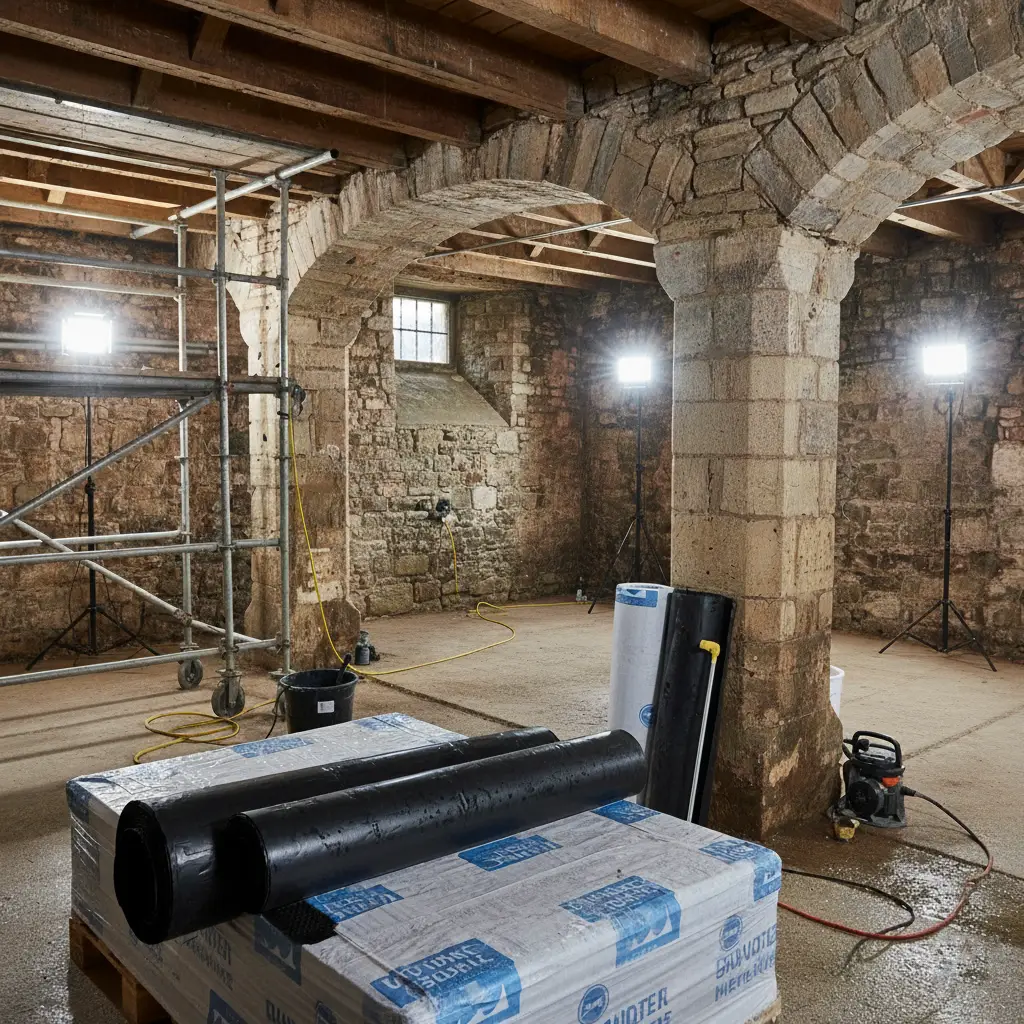
Structural waterproof membranes are specialist systems designed to manage water entering a building below ground level. Rather than attempting to block moisture entirely, membranes create a controlled cavity that channels water safely to drainage points.
They are commonly installed in:
- Basements and cellars
- Lower ground floor rooms
- Properties with high external ground levels
- Homes with recurring water ingress
When installed correctly, these systems provide long-term protection and allow spaces to remain dry and usable.
When is a waterproof membrane the right solution?
Not all damp issues require membrane systems. They are typically recommended when traditional methods are no longer effective.
A membrane system may be suitable if:
- Water is penetrating through walls or floors
- Previous tanking systems have failed
- The space is being converted into a habitable room
- Groundwater pressure is present
A professional assessment ensures structural waterproof membrane installation is appropriate for the property.
How do waterproof membrane systems work?
Membrane systems use studded plastic sheets fixed to walls and floors. These create a gap that allows moisture to flow behind the membrane without affecting the internal space.
Key components include:
- Wall and floor membranes
- Sealed joints and fixings
- Perimeter drainage channels
- Sump and pump systems where required
These systems are commonly installed as part of structural waterproofing services ealing for below-ground environments.
What types of waterproof membranes are available?
Different membranes are designed for specific applications. Choosing the correct system is essential for long-term performance.
What best describes you?

Homeowner

Tenant

Management/Lettings Agent

Potential Buyer

Other
It just takes 60 Second
And then you can book a free consultation
Wall membranes
Used to manage moisture entering through masonry walls.
Floor membranes
Installed beneath finishes to prevent moisture rising into living spaces.
Combined systems
Wall and floor membranes used together for full protection.
Professional installers will recommend the most suitable configuration following a site survey.
How much does membrane installation cost?
Costs vary depending on room size, access, and drainage requirements. The table below provides realistic guidance for Ealing properties.
| System Type | Typical Cost Range | Suitable For |
| Wall membrane only | £90 – £140 per m² | Light to moderate water ingress |
| Floor membrane only | £100 – £160 per m² | Rising moisture through floors |
| Full membrane system | £140 – £220 per m² | Basements and conversions |
A detailed survey ensures pricing is accurate and tailored to the property.
What should be included in a professional installation quote?
A clear quote helps homeowners understand exactly what work is being carried out and why.
A reliable quote should include:
- Survey findings and moisture risks
- Membrane type and layout
- Drainage and pump requirements
- Installation timeframe
- Making good after works
Reputable providers of structural waterproofing services ealing will always explain recommendations clearly.
How long does installation usually take?
Installation times depend on the size and complexity of the area.
Typical timescales include:
- Small rooms: 2–3 days
- Full basements: 5–10 days
- Complex drainage systems: up to 2 weeks
Most disruption occurs during preparation, with minimal maintenance required once installed.
Are waterproof membrane systems guaranteed?
Yes. Professionally installed systems usually come with long-term guarantees, provided maintenance guidelines are followed.
Guarantees often cover:
- Materials
- Installation workmanship
- System performance
This reassurance is particularly important for habitable spaces and basement conversions.
Example scenario: Ealing basement upgrade
A mid-terrace home in Ealing planned to convert an existing cellar into a utility and storage space. Persistent moisture had previously caused damage to finishes.
A full structural waterproof membrane installation was completed, including wall and floor membranes with perimeter drainage. The space is now dry, compliant, and suitable for long-term use.
Related articles

What best describes you?
Homeowner
Tenant
Management/Lettings Agent
Potential Buyer
Other
At a glance
Surface damp treatments often fail when water pressure builds up against walls and floors. In these situations, a more robust solution is required.
This guide explains when structural waterproof membrane installation is appropriate, how systems work, and what homeowners in Ealing should expect from professional installation.
What is structural waterproof membrane installation?
Structural waterproof membranes are specialist systems designed to manage water entering a building below ground level. Rather than attempting to block moisture entirely, membranes create a controlled cavity that channels water safely to drainage points.
They are commonly installed in:
- Basements and cellars
- Lower ground floor rooms
- Properties with high external ground levels
- Homes with recurring water ingress
When installed correctly, these systems provide long-term protection and allow spaces to remain dry and usable.
When is a waterproof membrane the right solution?
Not all damp issues require membrane systems. They are typically recommended when traditional methods are no longer effective.
A membrane system may be suitable if:
- Water is penetrating through walls or floors
- Previous tanking systems have failed
- The space is being converted into a habitable room
- Groundwater pressure is present
A professional assessment ensures structural waterproof membrane installation is appropriate for the property.
How do waterproof membrane systems work?
Membrane systems use studded plastic sheets fixed to walls and floors. These create a gap that allows moisture to flow behind the membrane without affecting the internal space.
Key components include:
- Wall and floor membranes
- Sealed joints and fixings
- Perimeter drainage channels
- Sump and pump systems where required
These systems are commonly installed as part of structural waterproofing services ealing for below-ground environments.
What types of waterproof membranes are available?
Different membranes are designed for specific applications. Choosing the correct system is essential for long-term performance.
What best describes you?
Homeowner
Tenant
Management/Lettings Agent
Potential Buyer
Other
It just takes 60 Second
And then you can book a free consultation
Wall membranes
Used to manage moisture entering through masonry walls.
Floor membranes
Installed beneath finishes to prevent moisture rising into living spaces.
Combined systems
Wall and floor membranes used together for full protection.
Professional installers will recommend the most suitable configuration following a site survey.
How much does membrane installation cost?
Costs vary depending on room size, access, and drainage requirements. The table below provides realistic guidance for Ealing properties.
| System Type | Typical Cost Range | Suitable For |
| Wall membrane only | £90 – £140 per m² | Light to moderate water ingress |
| Floor membrane only | £100 – £160 per m² | Rising moisture through floors |
| Full membrane system | £140 – £220 per m² | Basements and conversions |
A detailed survey ensures pricing is accurate and tailored to the property.
What should be included in a professional installation quote?
A clear quote helps homeowners understand exactly what work is being carried out and why.
A reliable quote should include:
- Survey findings and moisture risks
- Membrane type and layout
- Drainage and pump requirements
- Installation timeframe
- Making good after works
Reputable providers of structural waterproofing services ealing will always explain recommendations clearly.
How long does installation usually take?
Installation times depend on the size and complexity of the area.
Typical timescales include:
- Small rooms: 2–3 days
- Full basements: 5–10 days
- Complex drainage systems: up to 2 weeks
Most disruption occurs during preparation, with minimal maintenance required once installed.
Are waterproof membrane systems guaranteed?
Yes. Professionally installed systems usually come with long-term guarantees, provided maintenance guidelines are followed.
Guarantees often cover:
- Materials
- Installation workmanship
- System performance
This reassurance is particularly important for habitable spaces and basement conversions.
Example scenario: Ealing basement upgrade
A mid-terrace home in Ealing planned to convert an existing cellar into a utility and storage space. Persistent moisture had previously caused damage to finishes.
A full structural waterproof membrane installation was completed, including wall and floor membranes with perimeter drainage. The space is now dry, compliant, and suitable for long-term use.
Related articles
What best describes you?
Homeowner
Tenant
Management/Lettings Agent
Potential Buyer