
What Is Structural Waterproofing and Why It Matters for Barnet Homes
What Is Structural Waterproofing and Why It Matters for Barnet Homes Water penetration is one of the most damaging threats…

Why you can trust our content
Dry Rot vs Wet Rot: Symptoms, Prevention & Expert Solutions
What Is Structural Waterproofing and Why It Matters for Barnet Homes
Water penetration is one of the most damaging threats to a property. For Barnet homeowners, structural waterproofing offers a reliable solution to protect walls, basements, and foundations from moisture.
In this guide, we’ll explain what structural waterproofing involves, why it’s essential, and how professional specialists can safeguard your home from long-term damage.
What Is Structural Waterproofing?
Structural waterproofing is the process of making a building’s structure resistant to water ingress. Unlike standard damp proofing, which often focuses on surface treatments, structural waterproofing addresses moisture at the core of walls, floors, and foundations.
This method protects:
- Basements and cellars
- Foundations and load-bearing walls
- Concrete and masonry structures
By tackling the root cause of water ingress, structural waterproofing prevents long-term structural damage, rot, and mould growth.
How Does Structural Waterproofing Differ from Standard Damp Proofing?
While both damp proofing and waterproofing aim to prevent moisture damage, the main differences are:
| Feature | Damp Proofing | Structural Waterproofing |
| Focus | Surface or localized moisture | Entire structural integrity |
| Method | Chemical DPCs, coatings | Membranes, tanking, injection systems |
| Longevity | Moderate | Long-term, more robust |
| Scope | Single walls, basements | Full building protection against water ingress |
Structural waterproofing provides a more comprehensive solution, particularly for properties with persistent moisture problems or older foundations.
Why Is Structural Waterproofing Important for Barnet Homes?
Properties in Barnet can experience water ingress due to:
- Heavy rainfall or high groundwater levels
- Aging masonry or concrete foundations
- Poorly maintained roofs and gutters
- Inadequate ventilation in basements and cellars
Without proper waterproofing, these issues can lead to:
- Structural damage to foundations and walls
- Rot in timber beams and flooring
- Health risks from mould and damp
- Reduced property value
A structural waterproofing specialist can assess these risks and recommend the most suitable solutions for your home.
What Are the Common Structural Waterproofing Methods?
Several methods are employed depending on the property and severity of water ingress:
- Tankings and Membranes – Protective layers applied to walls and floors to block water.
- Cavity Drain Systems – Channels water away from walls and floors into drainage systems.
- Injection Systems – Chemical injections to fill cracks and prevent water penetration.
- Waterproof Coatings – Applied to external walls or internal surfaces for an additional barrier.
- Structural Repairs – Repairing cracks, joints, and masonry to eliminate water pathways.
Each approach is tailored to the property’s needs by a structural waterproofing specialist.
What best describes you?

Homeowner

Tenant

Management/Lettings Agent

Potential Buyer

Other
It just takes 60 Second
And then you can book a free consultation
How Do Experts Assess the Need for Structural Waterproofing?
Professional assessment typically involves:
- Moisture mapping and detection using sensors
- Inspection of walls, floors, and foundations
- Identifying causes of water ingress, including leaks and structural faults
- Creating a bespoke treatment plan
This ensures that the recommended solution is both effective and long-lasting, addressing the underlying causes rather than just the symptoms.
How Much Does Structural Waterproofing Cost in Barnet?
Costs depend on the property size, the chosen method, and the severity of moisture issues. Typical ranges include:
| Method | Approximate Cost | Notes |
| Tanking / Membrane Installation | £1,500–£3,500 | Common for basements |
| Cavity Drain Systems | £2,000–£4,500 | Diverts water to sump pumps |
| Injection Systems | £500–£1,500 | For cracks and minor leaks |
| Full Structural Repairs | £2,000–£5,000+ | For extensive damage |
Working with a structural damp proofing and waterproofing professional ensures a detailed quote and guarantees work is carried out to industry standards.
Can Structural Waterproofing Prevent Other Damp Issues?
Yes. Structural waterproofing not only prevents water ingress but also:
- Reduces risk of mould and condensation
- Protects timber from rot
- Enhances energy efficiency by keeping walls dry
- Maintains property value by preventing long-term damage
For homeowners in Barnet, early intervention is far less costly than repairing severe structural damage later.
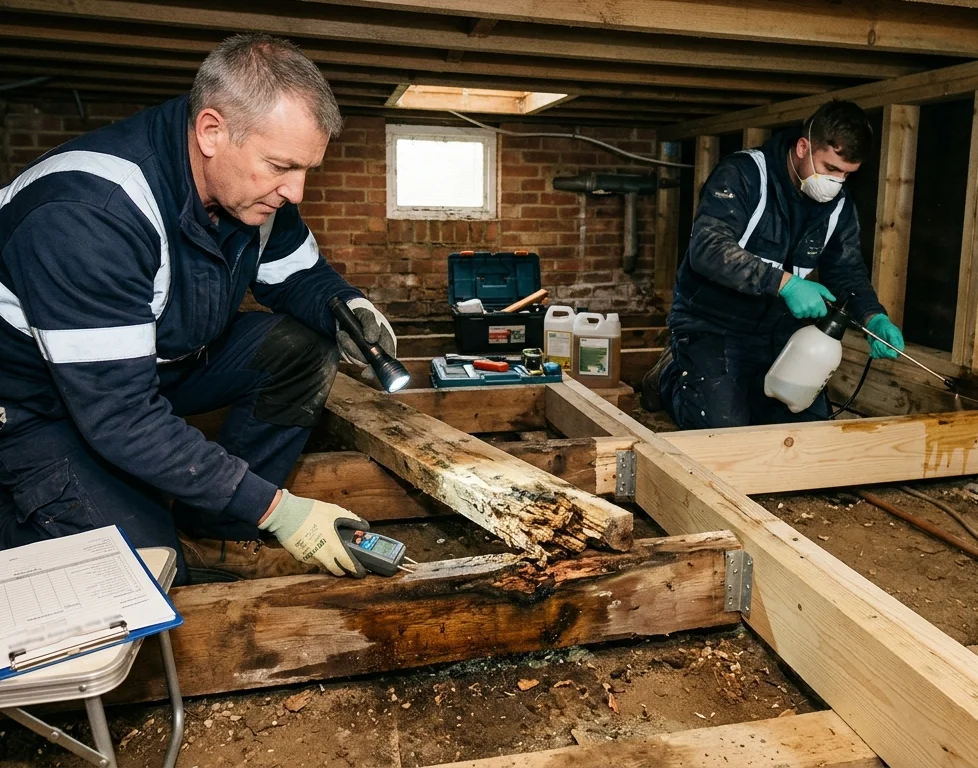
Case Study: Barnet Basement Waterproofing
A Victorian semi-detached home in Barnet had persistent damp in its basement. The solution included:
- Survey by a structural waterproofing specialist
- Installation of a tanking membrane along walls and floors
- Sealing cracks and applying waterproof coatings
- Advice on drainage improvements to prevent recurrence
Result: a dry, usable basement with protection against future water ingress.
Related articles

What best describes you?
Homeowner
Tenant
Management/Lettings Agent
Potential Buyer
Other
Dry Rot vs Wet Rot: Symptoms, Prevention & Expert Solutions
What Is Structural Waterproofing and Why It Matters for Barnet Homes
Water penetration is one of the most damaging threats to a property. For Barnet homeowners, structural waterproofing offers a reliable solution to protect walls, basements, and foundations from moisture.
In this guide, we’ll explain what structural waterproofing involves, why it’s essential, and how professional specialists can safeguard your home from long-term damage.
What Is Structural Waterproofing?
Structural waterproofing is the process of making a building’s structure resistant to water ingress. Unlike standard damp proofing, which often focuses on surface treatments, structural waterproofing addresses moisture at the core of walls, floors, and foundations.
This method protects:
- Basements and cellars
- Foundations and load-bearing walls
- Concrete and masonry structures
By tackling the root cause of water ingress, structural waterproofing prevents long-term structural damage, rot, and mould growth.
How Does Structural Waterproofing Differ from Standard Damp Proofing?
While both damp proofing and waterproofing aim to prevent moisture damage, the main differences are:
| Feature | Damp Proofing | Structural Waterproofing |
| Focus | Surface or localized moisture | Entire structural integrity |
| Method | Chemical DPCs, coatings | Membranes, tanking, injection systems |
| Longevity | Moderate | Long-term, more robust |
| Scope | Single walls, basements | Full building protection against water ingress |
Structural waterproofing provides a more comprehensive solution, particularly for properties with persistent moisture problems or older foundations.
Why Is Structural Waterproofing Important for Barnet Homes?
Properties in Barnet can experience water ingress due to:
- Heavy rainfall or high groundwater levels
- Aging masonry or concrete foundations
- Poorly maintained roofs and gutters
- Inadequate ventilation in basements and cellars
Without proper waterproofing, these issues can lead to:
- Structural damage to foundations and walls
- Rot in timber beams and flooring
- Health risks from mould and damp
- Reduced property value
A structural waterproofing specialist can assess these risks and recommend the most suitable solutions for your home.
What Are the Common Structural Waterproofing Methods?
Several methods are employed depending on the property and severity of water ingress:
- Tankings and Membranes – Protective layers applied to walls and floors to block water.
- Cavity Drain Systems – Channels water away from walls and floors into drainage systems.
- Injection Systems – Chemical injections to fill cracks and prevent water penetration.
- Waterproof Coatings – Applied to external walls or internal surfaces for an additional barrier.
- Structural Repairs – Repairing cracks, joints, and masonry to eliminate water pathways.
Each approach is tailored to the property’s needs by a structural waterproofing specialist.
What best describes you?
Homeowner
Tenant
Management/Lettings Agent
Potential Buyer
Other
It just takes 60 Second
And then you can book a free consultation
How Do Experts Assess the Need for Structural Waterproofing?
Professional assessment typically involves:
- Moisture mapping and detection using sensors
- Inspection of walls, floors, and foundations
- Identifying causes of water ingress, including leaks and structural faults
- Creating a bespoke treatment plan
This ensures that the recommended solution is both effective and long-lasting, addressing the underlying causes rather than just the symptoms.
How Much Does Structural Waterproofing Cost in Barnet?
Costs depend on the property size, the chosen method, and the severity of moisture issues. Typical ranges include:
| Method | Approximate Cost | Notes |
| Tanking / Membrane Installation | £1,500–£3,500 | Common for basements |
| Cavity Drain Systems | £2,000–£4,500 | Diverts water to sump pumps |
| Injection Systems | £500–£1,500 | For cracks and minor leaks |
| Full Structural Repairs | £2,000–£5,000+ | For extensive damage |
Working with a structural damp proofing and waterproofing professional ensures a detailed quote and guarantees work is carried out to industry standards.
Can Structural Waterproofing Prevent Other Damp Issues?
Yes. Structural waterproofing not only prevents water ingress but also:
- Reduces risk of mould and condensation
- Protects timber from rot
- Enhances energy efficiency by keeping walls dry
- Maintains property value by preventing long-term damage
For homeowners in Barnet, early intervention is far less costly than repairing severe structural damage later.
Case Study: Barnet Basement Waterproofing
A Victorian semi-detached home in Barnet had persistent damp in its basement. The solution included:
- Survey by a structural waterproofing specialist
- Installation of a tanking membrane along walls and floors
- Sealing cracks and applying waterproof coatings
- Advice on drainage improvements to prevent recurrence
Result: a dry, usable basement with protection against future water ingress.
Related articles
What best describes you?
Homeowner
Tenant
Management/Lettings Agent
Potential Buyer