

What Good Damp-Proofing Aftercare in North London Should Include Once the Work Is Finished
Damp-proofing work does not necessarily end when the contractor leaves the property. In many cases, the period afterwards is just as important because walls, floors, plaster and timber may still need time to dry and settle.

Why you can trust our content
At a glance
Good aftercare gives homeowners a clearer way to monitor progress. It can help confirm that the original moisture problem has been controlled, identify any unexpected changes and establish when the affected areas are ready for redecoration or other building work.
The right approach depends on what caused the damp in the first place and what remedial measures were carried out. A localised leak, penetrating damp and timber decay will each require different follow-up considerations.
If you have recently completed remedial work and are unsure what should happen next, Anke Damp Proofing can provide practical aftercare guidance based on the condition of the property.
What should good damp-proofing aftercare include?
Good aftercare should provide a clear plan for checking the treated areas, allowing appropriate drying time and identifying anything that needs further attention.
Depending on the work carried out, this may include:
- Checking moisture levels at suitable intervals
- Inspecting affected walls and plaster
- Monitoring previously damp areas for changes
- Checking timber where decay was involved
- Reviewing ventilation
- Looking for signs of renewed water ingress
- Confirming that external defects have been addressed
- Advising when reinstatement or redecoration is appropriate
The purpose is not to create unnecessary work. It is to make sure the remedial process is followed through to a sensible conclusion.
For homeowners comparing local damp proofing experts north london, it is worth asking what happens after the treatment itself. A clear explanation of aftercare can be just as useful as information about the initial work.
Why does drying need to be monitored?
Masonry and other building materials can retain moisture after the original source has been controlled. Depending on the property, drying may take weeks or longer.
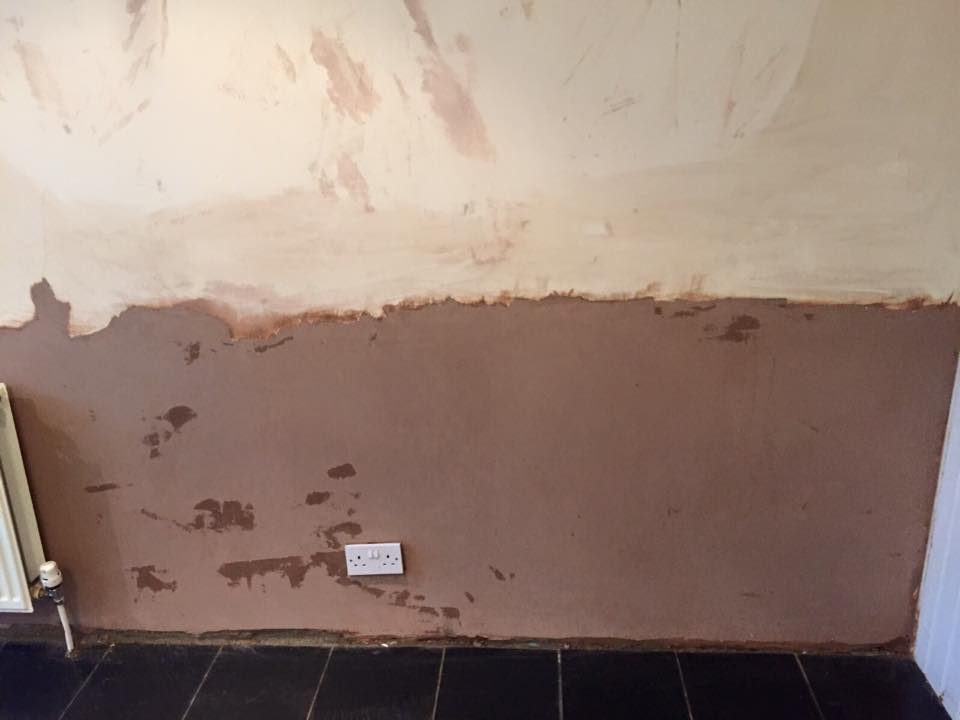
A wall can also appear considerably better before it has reached a stable moisture condition. This is why redecorating based purely on appearance can sometimes be premature.
Monitoring may involve comparing readings from similar locations over time. It can also include visual checks for:
- Fading or returning staining
- Salt deposits
- Flaking paint
- Wallpaper lifting
- Musty smells
- Deteriorating plaster
- Changes around skirting boards
A downward trend in moisture levels combined with stable surfaces can provide useful evidence that the building is drying.
What should homeowners check between inspections?
Homeowners can often spot changes between professional visits. Simple observation can help identify whether a treated area appears stable or whether something new has developed.
Look for changes such as:
| Area | Positive sign | Possible warning sign |
| Wall | Staining fading | New or expanding damp patches |
| Paint | Surface remains stable | Blistering or peeling |
| Plaster | Gradually drying | Crumbling or repeated damage |
| Skirting | Firm and dry | Swelling or softness |
| Timber | Stable condition | New deterioration |
| Smells | Mustiness reducing | Persistent or worsening odour |
| External areas | No obvious leaks | Gutter, roof or pointing defects |
These observations do not replace professional diagnosis, but they can help identify when further attention may be worthwhile.
When should damp-proofing aftercare lead to another inspection?
A follow-up assessment may be appropriate when the property is not progressing as expected.
Examples include:
- Moisture readings remain elevated
- Damp staining returns
- Plaster continues to deteriorate
- Timber remains unusually damp
- New water ingress is discovered
- A musty smell persists
- Previous repairs appear to be failing
- The affected area has not stabilised after a reasonable drying period
A further inspection should investigate the reason for the symptom rather than automatically repeating the original treatment.
This distinction is important because a recurring damp patch does not always mean the original work was unsuccessful. A new leak, ventilation issue or external defect may have developed.
If symptoms persist after treatment, Anke Damp Proofing can review the affected area and help establish whether the issue relates to drying, a new moisture source or further remedial requirements.
What about timber after damp-proofing work?
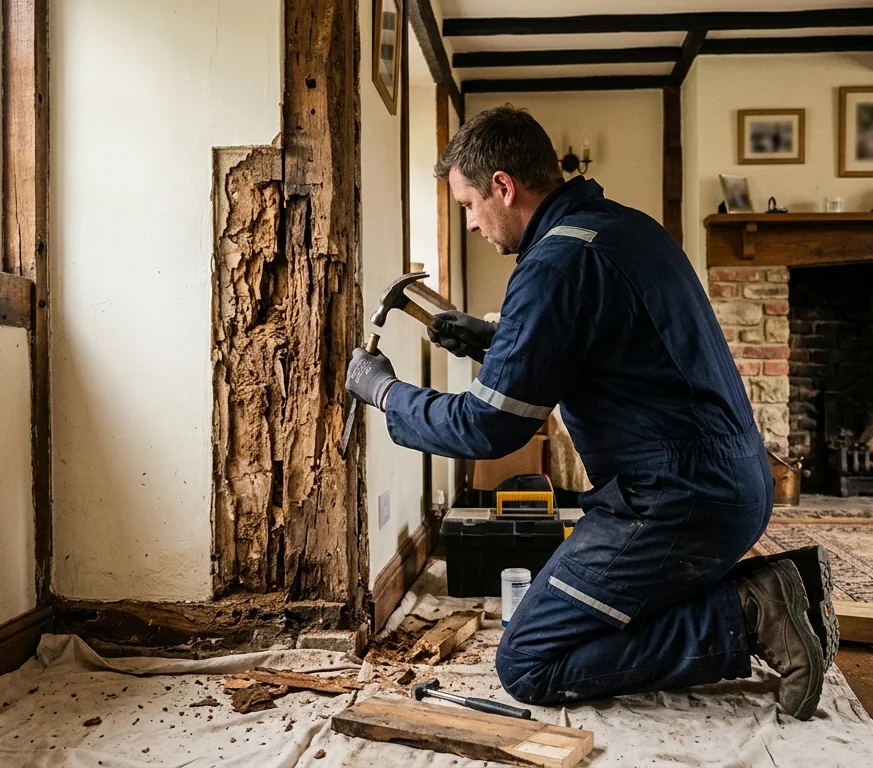
Where timber was affected by moisture or decay, aftercare should include appropriate attention to its condition.
Timber can take time to dry, particularly where it is positioned close to damp masonry or in poorly ventilated areas. The condition of previously affected wood should therefore be considered alongside the moisture conditions around it.
Where timber has already been treated, follow-up checks may consider:
- Current moisture levels.
- Whether the timber remains sound.
- Any visible deterioration.
- Whether nearby moisture sources have been controlled.
- The condition of repaired or replacement timber.
- Whether ventilation is adequate.
This is where local dry rot experts north london may be relevant if a property has previously experienced fungal timber decay.
What best describes you?

Homeowner

Tenant

Management/Lettings Agent

Potential Buyer

Other
It just takes 60 Second
And then you can book a free consultation
Does redecoration form part of aftercare?
Redecoration is often the final visible stage of remedial work, but it should generally happen once the affected materials have reached the condition recommended for reinstatement.
Applying decorative finishes too early can create problems. Paint or wallpaper may fail if the underlying surface remains damp, while impermeable finishes can sometimes make future drying more difficult.
Before decorating, homeowners should establish:
- Whether the affected wall has dried sufficiently
- Whether moisture readings are stable or improving
- Whether staining is continuing
- Whether plaster is suitable for decoration
- Whether any timber requires further attention
- Whether the original moisture source has been controlled
A clear handover or aftercare discussion can make these decisions easier.
How should previous damp-proofing work be documented?
Good records can be particularly valuable when remedial work involves several stages.
Documentation may include:
- Areas treated
- Date of treatment
- Type of remedial work
- Materials or systems used
- Areas where timber was repaired or replaced
- Moisture readings
- Photographs
- Follow-up recommendations
- Drying or monitoring advice
- Any remaining limitations or defects
This information gives the homeowner a reference point if questions arise later.
It can also help another professional understand what has already been done without having to start the investigation from scratch.
What should you ask a damp-proofing company about aftercare?
Before appointing a contractor, it is reasonable to ask what support is available once the main work has finished.
Useful questions include:
- Will the treated areas need a follow-up inspection?
- How should drying progress be monitored?
- When can the area be redecorated?
- What signs should homeowners watch for?
- Will moisture readings be recorded?
- What happens if damp symptoms return?
- Are recommendations provided in writing?
- Is timber inspected where rot has been involved?
The answers can help establish what the overall service involves rather than focusing solely on the initial treatment.
When considering damp proof companies north london, homeowners should look for clear explanations of the process, realistic expectations and appropriate follow-up rather than promises that every problem will disappear immediately.
A typical North London aftercare scenario
Imagine a terraced home where penetrating damp has affected a ground-floor wall. The external defect responsible for the moisture is repaired, damaged internal finishes are addressed and remedial damp work is completed.
The homeowner is then advised to allow the wall to dry before decorating. During the following weeks, staining gradually fades and the surface becomes more stable. A follow-up check confirms that moisture levels are reducing and no new water ingress is evident.
Instead of rushing to cover the wall, the homeowner follows the recommended drying period and only proceeds with redecoration once the relevant checks indicate that the surface is suitable.
This kind of staged approach can make the outcome easier to assess and reduces the risk of hiding a problem beneath a new decorative finish.
What should happen if damp returns?
If moisture reappears, the first step should be to establish why.
The investigation may consider:
- Whether the original moisture source has returned
- Whether a separate leak has developed
- Whether external defects are allowing water ingress
- Whether condensation is contributing to the problem
- Whether the affected materials are still drying
- Whether an earlier repair requires attention
A fresh assessment can distinguish between these possibilities.
Simply applying another treatment without identifying the cause may not address the underlying issue.
How can you choose a suitable aftercare provider?
Experience with the relevant type of building and moisture problem matters. The contractor should be able to explain what has been found, what treatment was undertaken and how progress should be monitored.
A local damp proofing installation company should also be willing to explain the limitations of any treatment and what the homeowner should expect during the drying period.
For properties where timber decay is involved, it is equally important that the condition of affected timber and the surrounding moisture environment are considered rather than focusing only on surface symptoms.
Conclusion: Good Aftercare Completes the Process
Effective damp-proofing should include consideration of what happens after the main remedial work is complete. Drying, monitoring, timber checks and sensible follow-up can all help establish whether the property is progressing as expected.
Homeowners should not feel pressured to redecorate simply because the visible symptoms have improved. Taking time to confirm that moisture is under control can help protect the work already carried out.
For homeowners looking for clear advice after damp or timber treatment, Anke Damp Proofing can provide practical guidance tailored to the property and the remedial work involved. Contact our team to discuss aftercare, arrange a follow-up assessment or request a bespoke quote.
Related articles
What best describes you?
Homeowner
Tenant
Management/Lettings Agent
Potential Buyer
Other
At a glance
Good aftercare gives homeowners a clearer way to monitor progress. It can help confirm that the original moisture problem has been controlled, identify any unexpected changes and establish when the affected areas are ready for redecoration or other building work.
The right approach depends on what caused the damp in the first place and what remedial measures were carried out. A localised leak, penetrating damp and timber decay will each require different follow-up considerations.
If you have recently completed remedial work and are unsure what should happen next, Anke Damp Proofing can provide practical aftercare guidance based on the condition of the property.
What should good damp-proofing aftercare include?
Good aftercare should provide a clear plan for checking the treated areas, allowing appropriate drying time and identifying anything that needs further attention.
Depending on the work carried out, this may include:
- Checking moisture levels at suitable intervals
- Inspecting affected walls and plaster
- Monitoring previously damp areas for changes
- Checking timber where decay was involved
- Reviewing ventilation
- Looking for signs of renewed water ingress
- Confirming that external defects have been addressed
- Advising when reinstatement or redecoration is appropriate
The purpose is not to create unnecessary work. It is to make sure the remedial process is followed through to a sensible conclusion.
For homeowners comparing local damp proofing experts north london, it is worth asking what happens after the treatment itself. A clear explanation of aftercare can be just as useful as information about the initial work.
Why does drying need to be monitored?
Masonry and other building materials can retain moisture after the original source has been controlled. Depending on the property, drying may take weeks or longer.
A wall can also appear considerably better before it has reached a stable moisture condition. This is why redecorating based purely on appearance can sometimes be premature.
Monitoring may involve comparing readings from similar locations over time. It can also include visual checks for:
- Fading or returning staining
- Salt deposits
- Flaking paint
- Wallpaper lifting
- Musty smells
- Deteriorating plaster
- Changes around skirting boards
A downward trend in moisture levels combined with stable surfaces can provide useful evidence that the building is drying.
What should homeowners check between inspections?
Homeowners can often spot changes between professional visits. Simple observation can help identify whether a treated area appears stable or whether something new has developed.
Look for changes such as:
| Area | Positive sign | Possible warning sign |
| Wall | Staining fading | New or expanding damp patches |
| Paint | Surface remains stable | Blistering or peeling |
| Plaster | Gradually drying | Crumbling or repeated damage |
| Skirting | Firm and dry | Swelling or softness |
| Timber | Stable condition | New deterioration |
| Smells | Mustiness reducing | Persistent or worsening odour |
| External areas | No obvious leaks | Gutter, roof or pointing defects |
These observations do not replace professional diagnosis, but they can help identify when further attention may be worthwhile.
When should damp-proofing aftercare lead to another inspection?
A follow-up assessment may be appropriate when the property is not progressing as expected.
Examples include:
- Moisture readings remain elevated
- Damp staining returns
- Plaster continues to deteriorate
- Timber remains unusually damp
- New water ingress is discovered
- A musty smell persists
- Previous repairs appear to be failing
- The affected area has not stabilised after a reasonable drying period
A further inspection should investigate the reason for the symptom rather than automatically repeating the original treatment.
This distinction is important because a recurring damp patch does not always mean the original work was unsuccessful. A new leak, ventilation issue or external defect may have developed.
If symptoms persist after treatment, Anke Damp Proofing can review the affected area and help establish whether the issue relates to drying, a new moisture source or further remedial requirements.
What about timber after damp-proofing work?
Where timber was affected by moisture or decay, aftercare should include appropriate attention to its condition.
Timber can take time to dry, particularly where it is positioned close to damp masonry or in poorly ventilated areas. The condition of previously affected wood should therefore be considered alongside the moisture conditions around it.
Where timber has already been treated, follow-up checks may consider:
- Current moisture levels.
- Whether the timber remains sound.
- Any visible deterioration.
- Whether nearby moisture sources have been controlled.
- The condition of repaired or replacement timber.
- Whether ventilation is adequate.
This is where local dry rot experts north london may be relevant if a property has previously experienced fungal timber decay.
What best describes you?
Homeowner
Tenant
Management/Lettings Agent
Potential Buyer
Other
It just takes 60 Second
And then you can book a free consultation
Does redecoration form part of aftercare?
Redecoration is often the final visible stage of remedial work, but it should generally happen once the affected materials have reached the condition recommended for reinstatement.
Applying decorative finishes too early can create problems. Paint or wallpaper may fail if the underlying surface remains damp, while impermeable finishes can sometimes make future drying more difficult.
Before decorating, homeowners should establish:
- Whether the affected wall has dried sufficiently
- Whether moisture readings are stable or improving
- Whether staining is continuing
- Whether plaster is suitable for decoration
- Whether any timber requires further attention
- Whether the original moisture source has been controlled
A clear handover or aftercare discussion can make these decisions easier.
How should previous damp-proofing work be documented?
Good records can be particularly valuable when remedial work involves several stages.
Documentation may include:
- Areas treated
- Date of treatment
- Type of remedial work
- Materials or systems used
- Areas where timber was repaired or replaced
- Moisture readings
- Photographs
- Follow-up recommendations
- Drying or monitoring advice
- Any remaining limitations or defects
This information gives the homeowner a reference point if questions arise later.
It can also help another professional understand what has already been done without having to start the investigation from scratch.
What should you ask a damp-proofing company about aftercare?
Before appointing a contractor, it is reasonable to ask what support is available once the main work has finished.
Useful questions include:
- Will the treated areas need a follow-up inspection?
- How should drying progress be monitored?
- When can the area be redecorated?
- What signs should homeowners watch for?
- Will moisture readings be recorded?
- What happens if damp symptoms return?
- Are recommendations provided in writing?
- Is timber inspected where rot has been involved?
The answers can help establish what the overall service involves rather than focusing solely on the initial treatment.
When considering damp proof companies north london, homeowners should look for clear explanations of the process, realistic expectations and appropriate follow-up rather than promises that every problem will disappear immediately.
A typical North London aftercare scenario
Imagine a terraced home where penetrating damp has affected a ground-floor wall. The external defect responsible for the moisture is repaired, damaged internal finishes are addressed and remedial damp work is completed.
The homeowner is then advised to allow the wall to dry before decorating. During the following weeks, staining gradually fades and the surface becomes more stable. A follow-up check confirms that moisture levels are reducing and no new water ingress is evident.
Instead of rushing to cover the wall, the homeowner follows the recommended drying period and only proceeds with redecoration once the relevant checks indicate that the surface is suitable.
This kind of staged approach can make the outcome easier to assess and reduces the risk of hiding a problem beneath a new decorative finish.
What should happen if damp returns?
If moisture reappears, the first step should be to establish why.
The investigation may consider:
- Whether the original moisture source has returned
- Whether a separate leak has developed
- Whether external defects are allowing water ingress
- Whether condensation is contributing to the problem
- Whether the affected materials are still drying
- Whether an earlier repair requires attention
A fresh assessment can distinguish between these possibilities.
Simply applying another treatment without identifying the cause may not address the underlying issue.
How can you choose a suitable aftercare provider?
Experience with the relevant type of building and moisture problem matters. The contractor should be able to explain what has been found, what treatment was undertaken and how progress should be monitored.
A local damp proofing installation company should also be willing to explain the limitations of any treatment and what the homeowner should expect during the drying period.
For properties where timber decay is involved, it is equally important that the condition of affected timber and the surrounding moisture environment are considered rather than focusing only on surface symptoms.
Conclusion: Good Aftercare Completes the Process
Effective damp-proofing should include consideration of what happens after the main remedial work is complete. Drying, monitoring, timber checks and sensible follow-up can all help establish whether the property is progressing as expected.
Homeowners should not feel pressured to redecorate simply because the visible symptoms have improved. Taking time to confirm that moisture is under control can help protect the work already carried out.
For homeowners looking for clear advice after damp or timber treatment, Anke Damp Proofing can provide practical guidance tailored to the property and the remedial work involved. Contact our team to discuss aftercare, arrange a follow-up assessment or request a bespoke quote.
Related articles
What best describes you?
Homeowner
Tenant
Management/Lettings Agent
Potential Buyer