
Identifying Dry and Wet Rot in Ealing Homes: Essential Signs
If you spot early signs of timber decay, speak to our team today for a professional survey and tailored advice….

Why you can trust our content

At a glance
If you spot early signs of timber decay, speak to our team today for a professional survey and tailored advice.
Dry & Wet Rot in Ealing: Signs, Causes & Treatments
Timber rot is one of the most serious issues a homeowner can face. In Ealing, older homes and properties with damp conditions are particularly vulnerable to dry rot and wet rot. Left unchecked, these problems can compromise structural integrity and lead to expensive repairs.
This guide explains how to identify both types of rot, what causes them, and how professional experts can help protect your property.
What Is Dry Rot and How Does It Affect Homes?
Dry rot is a type of fungal decay that attacks timber when it absorbs moisture from surrounding materials. Unlike wet rot, dry rot can spread through dry timber, making it particularly dangerous.
Signs of dry rot include:
- Wood that appears cracked or brittle
- Dark, mushroom-like growth on timber or surrounding surfaces
- Shrinking or warping of wooden beams
- A distinctive musty, damp smell
Dry rot often originates in damp areas such as basements, kitchens, or poorly ventilated lofts. Local dry rot experts Ealing can assess the extent of the problem and recommend tailored treatments.
How Does Wet Rot Differ from Dry Rot?
Wet rot is also caused by fungal growth, but it requires consistently damp conditions to thrive. It doesn’t spread as aggressively as dry rot but can still severely damage timber if untreated.
Typical signs include:
- Soft, spongy wood that can be easily compressed
- Dark stains or streaks on timber
- Moist, musty odours
- Slow deterioration in areas prone to water exposure
Because wet rot only develops where timber is constantly wet, controlling moisture is key to prevention. Consulting local wet rot experts Ealing ensures the root cause is addressed alongside timber repair.
What Causes Timber Rot in Ealing Homes?
Several factors contribute to both dry and wet rot:
- Persistent Dampness – Leaks, condensation, or poor ventilation create ideal conditions.
- Faulty Plumbing or Roof Leaks – Water ingress from pipes or roofs can cause wet rot.
- Poor Maintenance – Untreated timber or old repairs can allow fungi to thrive.
- Defective Damp Proofing – Failed or missing damp proof courses allow moisture to penetrate walls.
Addressing these causes early prevents minor issues from escalating into serious structural problems.
How Can Experts Treat Dry and Wet Rot?
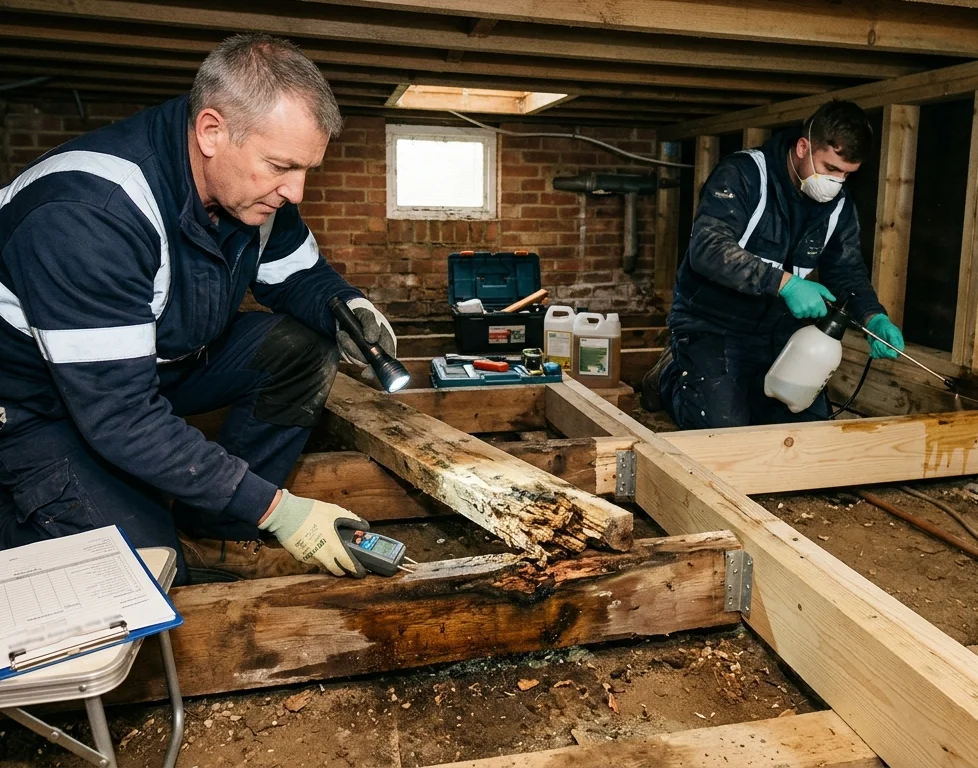
A professional assessment is essential. Local dry rot experts Ealing and local wet rot experts Ealing usually follow these steps:
- Inspect the affected areas and measure moisture levels
- Remove decayed timber and replace it with treated wood
- Treat surrounding timber with antifungal solutions to prevent recurrence
- Repair structural or damp issues contributing to the rot
- Advise on ongoing maintenance to keep timber safe
Can Rot Spread Between Timbers?
Yes, particularly dry rot. It can travel across masonry and affect distant timber, even if the wood itself is dry. Wet rot, on the other hand, spreads only where moisture is present.
| Rot Type | Spread Risk | Common Areas | Treatment Focus |
| Dry Rot | High – can spread through masonry | Loft beams, floor joists, walls | Remove affected timber, antifungal treatment, moisture control |
| Wet Rot | Limited to damp timber | Kitchens, bathrooms, basements | Remove decayed wood, repair leaks, improve ventilation |
What best describes you?

Homeowner

Tenant

Management/Lettings Agent

Potential Buyer

Other
It just takes 60 Second
And then you can book a free consultation
How Can Homeowners Prevent Timber Rot?
Preventative measures are often more effective than repairs:
- Regularly inspect wooden structures for signs of decay
- Ensure proper ventilation in damp-prone areas
- Keep gutters, roofs, and plumbing in good repair
- Install or maintain damp proof courses where necessary
- Treat timber with preservative coatings
Early detection and proactive maintenance reduce the risk of rot spreading and save long-term costs.
What Are the Costs of Treating Dry and Wet Rot in Ealing?
Costs vary depending on property size and severity of damage:
- Small repairs: £300–£800
- Extensive dry rot treatment: £1,000–£3,500
- Wet rot repair: £500–£1,500
A professional survey ensures a detailed quote and effective treatment plan, preventing repeat issues.
Case Study: Ealing Semi-Detached Home
A 1920s semi-detached property in Ealing presented both dry and wet rot in the loft and bathroom joists. The approach included:
- Full timber survey to assess damage
- Removal and replacement of affected timber
- Antifungal treatment on surrounding timbers
- Roof and bathroom leak repairs to prevent moisture ingress
The property was restored to a safe, dry condition, with long-term monitoring recommended.
Related articles

What best describes you?
Homeowner
Tenant
Management/Lettings Agent
Potential Buyer
Other
At a glance
If you spot early signs of timber decay, speak to our team today for a professional survey and tailored advice.
Dry & Wet Rot in Ealing: Signs, Causes & Treatments
Timber rot is one of the most serious issues a homeowner can face. In Ealing, older homes and properties with damp conditions are particularly vulnerable to dry rot and wet rot. Left unchecked, these problems can compromise structural integrity and lead to expensive repairs.
This guide explains how to identify both types of rot, what causes them, and how professional experts can help protect your property.
What Is Dry Rot and How Does It Affect Homes?
Dry rot is a type of fungal decay that attacks timber when it absorbs moisture from surrounding materials. Unlike wet rot, dry rot can spread through dry timber, making it particularly dangerous.
Signs of dry rot include:
- Wood that appears cracked or brittle
- Dark, mushroom-like growth on timber or surrounding surfaces
- Shrinking or warping of wooden beams
- A distinctive musty, damp smell
Dry rot often originates in damp areas such as basements, kitchens, or poorly ventilated lofts. Local dry rot experts Ealing can assess the extent of the problem and recommend tailored treatments.
How Does Wet Rot Differ from Dry Rot?
Wet rot is also caused by fungal growth, but it requires consistently damp conditions to thrive. It doesn’t spread as aggressively as dry rot but can still severely damage timber if untreated.
Typical signs include:
- Soft, spongy wood that can be easily compressed
- Dark stains or streaks on timber
- Moist, musty odours
- Slow deterioration in areas prone to water exposure
Because wet rot only develops where timber is constantly wet, controlling moisture is key to prevention. Consulting local wet rot experts Ealing ensures the root cause is addressed alongside timber repair.
What Causes Timber Rot in Ealing Homes?
Several factors contribute to both dry and wet rot:
- Persistent Dampness – Leaks, condensation, or poor ventilation create ideal conditions.
- Faulty Plumbing or Roof Leaks – Water ingress from pipes or roofs can cause wet rot.
- Poor Maintenance – Untreated timber or old repairs can allow fungi to thrive.
- Defective Damp Proofing – Failed or missing damp proof courses allow moisture to penetrate walls.
Addressing these causes early prevents minor issues from escalating into serious structural problems.
How Can Experts Treat Dry and Wet Rot?
A professional assessment is essential. Local dry rot experts Ealing and local wet rot experts Ealing usually follow these steps:
- Inspect the affected areas and measure moisture levels
- Remove decayed timber and replace it with treated wood
- Treat surrounding timber with antifungal solutions to prevent recurrence
- Repair structural or damp issues contributing to the rot
- Advise on ongoing maintenance to keep timber safe
Can Rot Spread Between Timbers?
Yes, particularly dry rot. It can travel across masonry and affect distant timber, even if the wood itself is dry. Wet rot, on the other hand, spreads only where moisture is present.
| Rot Type | Spread Risk | Common Areas | Treatment Focus |
| Dry Rot | High – can spread through masonry | Loft beams, floor joists, walls | Remove affected timber, antifungal treatment, moisture control |
| Wet Rot | Limited to damp timber | Kitchens, bathrooms, basements | Remove decayed wood, repair leaks, improve ventilation |
What best describes you?
Homeowner
Tenant
Management/Lettings Agent
Potential Buyer
Other
It just takes 60 Second
And then you can book a free consultation
How Can Homeowners Prevent Timber Rot?
Preventative measures are often more effective than repairs:
- Regularly inspect wooden structures for signs of decay
- Ensure proper ventilation in damp-prone areas
- Keep gutters, roofs, and plumbing in good repair
- Install or maintain damp proof courses where necessary
- Treat timber with preservative coatings
Early detection and proactive maintenance reduce the risk of rot spreading and save long-term costs.
What Are the Costs of Treating Dry and Wet Rot in Ealing?
Costs vary depending on property size and severity of damage:
- Small repairs: £300–£800
- Extensive dry rot treatment: £1,000–£3,500
- Wet rot repair: £500–£1,500
A professional survey ensures a detailed quote and effective treatment plan, preventing repeat issues.
Case Study: Ealing Semi-Detached Home
A 1920s semi-detached property in Ealing presented both dry and wet rot in the loft and bathroom joists. The approach included:
- Full timber survey to assess damage
- Removal and replacement of affected timber
- Antifungal treatment on surrounding timbers
- Roof and bathroom leak repairs to prevent moisture ingress
The property was restored to a safe, dry condition, with long-term monitoring recommended.
Related articles
What best describes you?
Homeowner
Tenant
Management/Lettings Agent
Potential Buyer