

Recurring Moisture in West London: When Does a Waterproofing Specialist Need to Review Previous Work?
Moisture returning after damp proofing or waterproofing work can be frustrating, particularly when a property has already undergone treatment. However,…

Why you can trust our content
At a glance
Moisture returning after damp proofing or waterproofing work can be frustrating, particularly when a property has already undergone treatment. However, recurring damp does not automatically mean the original work has failed. Moisture can return because of a new leak, changing ground conditions, damaged finishes, altered drainage or another source that was not present when the first work was completed.
The important question is whether the property needs another general inspection or a more detailed review of the previous waterproofing system. Understanding what should be checked can help property owners avoid unnecessary remedial work and make better decisions when further investigation is recommended.
If moisture has appeared again, Anke Damp Proofing can assess the affected area, consider the likely moisture source and establish whether previous treatment needs to be reviewed.
When should recurring moisture lead to another inspection?
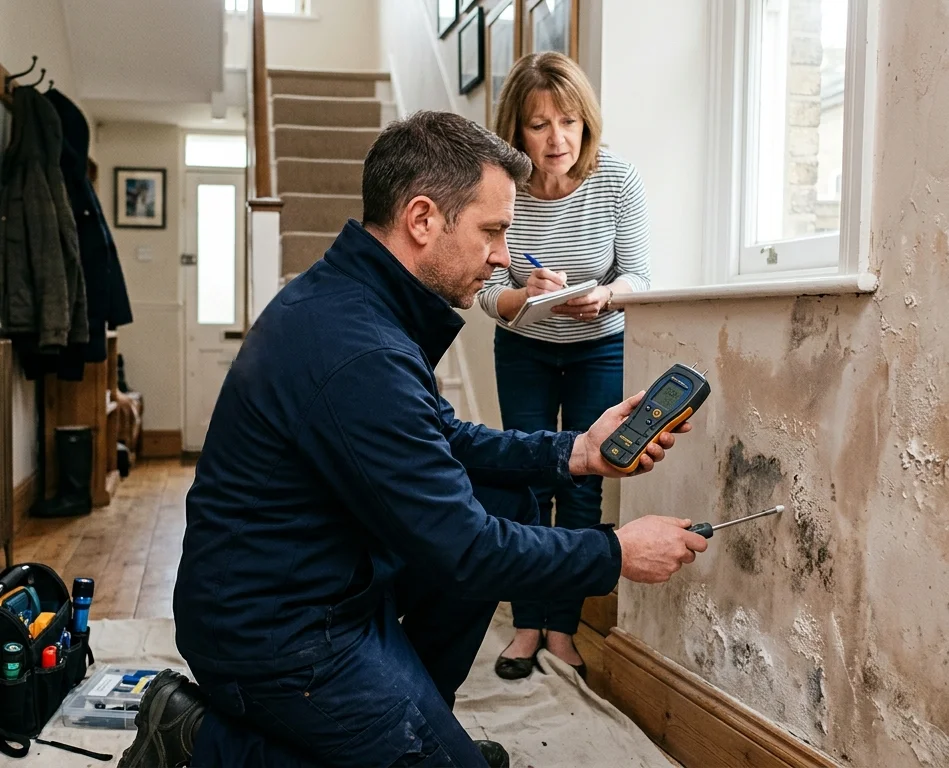
A second inspection may be appropriate when damp marks, staining, mould or musty odours return after an earlier treatment programme.
The timing and location of the recurrence can provide useful information. For example, moisture appearing shortly after heavy rainfall may suggest an external water ingress issue, while isolated staining around a pipe could point towards a plumbing leak rather than a failure of the original damp treatment.
Other warning signs include:
- Damp patches appearing in an area that had previously dried
- White salt deposits returning to masonry
- Timber becoming damp again
- Paint or plaster blistering
- Persistent musty smells
- Water entering a basement or below-ground area
- Mould returning despite previous cleaning
- Moisture readings remaining unusually high
A proper inspection should investigate the cause rather than simply treating the visible symptom.
Could the original damp treatment still be working?
Yes. Recurring moisture does not necessarily mean an existing damp-proofing system has stopped working.
A property can develop a completely separate moisture pathway after previous work. For example, damaged external pointing, defective rainwater goods or a leaking underground pipe can introduce water into an area that was previously unaffected.
The condition of the original system should therefore be assessed alongside the wider building.
An inspection may consider:
| Area checked | What may be reviewed | Why it matters |
|---|---|---|
| Previously treated wall | Moisture readings and visible condition | Helps establish whether moisture is returning through the same area |
| Waterproofing system | Membrane, joints and detailing | Identifies possible damage or defects |
| External walls | Pointing, render and drainage | External water may be entering the structure |
| Floors and junctions | Signs of water movement | Helps identify below-ground or lateral moisture |
| Timber | Moisture content and condition | Indicates whether rot risk remains |
| Plumbing | Visible leaks or staining | Can identify unrelated water sources |
This approach helps distinguish between a problem with previous work and a new source of moisture.
What can cause moisture to return after waterproofing?
There are several possible explanations, and they are not all related to the original installation.
Changes to the building can affect how water behaves. New paving, altered drainage, blocked gutters or changes to external ground levels can create conditions that were not present when the original work took place.
In below-ground areas, water pressure can also be significant. A waterproofing system may need to manage moisture from the surrounding ground, and changes in drainage or water levels can alter the conditions around a structure.
Possible causes include:
- Leaking gutters or downpipes
- Cracked external render or masonry
- Raised external ground levels
- Defective drainage
- Plumbing leaks
- Condensation
- Failed seals or junctions
- Damage caused by later building work
- New water ingress routes
This is why recurring moisture should be investigated systematically before additional treatment is specified.
How can a waterproofing specialist review previous work?
A detailed review should start with the history of the property and the work previously completed.
Where records are available, these can help establish what treatment was installed, which areas were affected and whether any monitoring or maintenance recommendations were provided.
The inspection may then combine visual assessment with moisture measurements and, where appropriate, examination of accessible parts of the waterproofing system.
A specialist may need to establish:
- Where the moisture is currently appearing
- Whether the location matches the original problem
- Whether moisture levels are increasing or reducing
- Whether external conditions have changed
- Whether the original system remains intact
- Whether timber or structural materials have been affected
- Whether further opening-up is justified
The objective is not simply to recommend more work. It is to understand what has changed and whether remedial intervention is actually required.
When might structural waterproofing need further attention?
Structural waterproofing may need review where moisture is entering a below-ground or structurally enclosed area and there is evidence that the existing protection is no longer controlling water effectively.
Potential signs include persistent water staining, damp junctions, visible deterioration around membrane details or water appearing through previously treated areas.
However, the appropriate solution depends on how the system was originally designed and installed.
A review of structural waterproofing services west london may involve examining membrane continuity, junctions, penetrations and areas where later construction work could have disturbed the original detailing.
In some cases, only a local repair may be necessary. In others, more extensive waterproofing work could be considered.
If previous waterproofing work has been followed by recurring moisture, an independent assessment can help establish whether the issue relates to the existing system or another source.
What should a damp proofing quote include when further work is proposed?
A useful damp proofing quote west london should explain more than the total price.
Before agreeing to remedial work, property owners should understand what has been identified, what work is being recommended and why that work is considered necessary.
A detailed quotation may include:
- Inspection findings
- Identified moisture source
- Areas requiring treatment
- Preparation or opening-up requirements
- Waterproofing or damp-proofing materials
- Timber treatment where applicable
- Repairs to damaged areas
- Reinstatement requirements
- Testing or monitoring
- Warranty information
- Any exclusions or additional conditions
If a contractor cannot clearly explain the reason for the proposed work, it may be sensible to seek clarification before proceeding.
The cost should be considered alongside the scope rather than viewed as a standalone figure.
What affects structural waterproofing cost in West London?
There is no single price that applies to every waterproofing project.
The structural waterproofing cost west london property owners encounter can vary considerably depending on the size and condition of the affected area, access, existing construction and the type of remedial work required.
Factors can include:
- Area requiring waterproofing
- Accessibility of walls and floors
- Existing membrane condition
- Amount of preparation required
- Need for local repairs or replacement sections
- Water pressure or drainage conditions
- Timber or masonry damage
- Need for pumps or drainage measures
- Removal and reinstatement of finishes
- Testing and follow-up requirements
A relatively small repair may have very different requirements from a larger below-ground waterproofing project.
For this reason, a site assessment is generally more useful than relying on a generic online estimate.
When could dry rot or wet rot become part of the review?
Recurring moisture can create conditions that increase the risk of timber decay, particularly where timber remains damp for extended periods.
Where timber has been affected, the inspection should establish whether there is active decay, historic damage or simply elevated moisture that needs monitoring.
Dry rot and wet rot have different characteristics and should not automatically be treated in the same way. The source of moisture must also be considered because timber treatment alone will not resolve an ongoing water problem.
Where required, dry rot repair services west london can form part of a wider remedial programme, particularly if previously concealed timber is found to have deteriorated.
Similarly, local wet rot experts west london may be required where timber is showing signs consistent with wet rot and the underlying moisture source needs to be addressed.
Is further waterproofing always necessary when damp returns?
No. Further waterproofing should be based on evidence from the inspection.
For example, if moisture has returned because of a leaking downpipe, replacing a section of waterproofing may not address the actual cause. Similarly, condensation can produce damp-looking surfaces without indicating a structural waterproofing defect.
This is why diagnosis should come before specification.
A sensible assessment should consider whether:
- The original treatment remains intact
- The moisture source is new
- The original problem has returned
- A local repair could resolve the issue
- Monitoring is appropriate
- Further investigation is needed before work can be specified
This can help prevent unnecessary disruption and ensure that any remedial work has a clear purpose.
What should property owners ask before approving remedial work?
Before accepting a quotation, it can be useful to ask several practical questions.
What has caused the recurring moisture? The contractor should explain the evidence behind their diagnosis.
Does the proposed work address the source? Treating symptoms without controlling the underlying moisture pathway may not provide a lasting solution.
Is the existing waterproofing being repaired or replaced? The scope should make this clear.
Will any areas need to be opened up? Some defects cannot be confirmed without accessing concealed construction.
How will the completed work be checked? Depending on the system and project, inspection, testing or monitoring may form part of the process.
What is included in the quotation? Preparation, materials, labour and reinstatement should be clearly explained.
A contractor providing structural waterproofing services west london should be able to discuss these points in straightforward terms.
A typical West London recurring moisture scenario
Consider a property where a below-ground room was previously waterproofed and remained dry for several years. The owner then notices damp staining near one wall following periods of heavy rainfall.
The first step should not necessarily be to assume that the entire waterproofing system has failed.
An inspection could identify a blocked external drain or a change in drainage conditions that is increasing water exposure around the structure. The affected waterproofing detail may then be examined to determine whether it has also been damaged.
If the membrane remains intact and the external drainage issue is responsible, the appropriate remedial work may be quite different from a complete waterproofing replacement.
This illustrates why previous treatment records, current moisture evidence and the condition of the building all matter when deciding what happens next.
How can you choose a contractor to review previous waterproofing work?
Look for a contractor who is prepared to investigate the cause rather than immediately recommend a predetermined treatment.
Useful points to consider include experience with damp, timber decay and waterproofing, the quality of inspection records, clarity of quotations and willingness to explain why particular work has been proposed.
A structural waterproofing specialist should also be able to distinguish between different moisture mechanisms and recognise when further investigation is needed before a repair specification can be confirmed.
For property owners dealing with recurring moisture, a clear diagnostic process can be just as important as the remedial work itself.
Related articles
What best describes you?

Homeowner

Tenant

Management/Lettings Agent

Potential Buyer

Other
At a glance
Moisture returning after damp proofing or waterproofing work can be frustrating, particularly when a property has already undergone treatment. However, recurring damp does not automatically mean the original work has failed. Moisture can return because of a new leak, changing ground conditions, damaged finishes, altered drainage or another source that was not present when the first work was completed.
The important question is whether the property needs another general inspection or a more detailed review of the previous waterproofing system. Understanding what should be checked can help property owners avoid unnecessary remedial work and make better decisions when further investigation is recommended.
If moisture has appeared again, Anke Damp Proofing can assess the affected area, consider the likely moisture source and establish whether previous treatment needs to be reviewed.
When should recurring moisture lead to another inspection?
A second inspection may be appropriate when damp marks, staining, mould or musty odours return after an earlier treatment programme.
The timing and location of the recurrence can provide useful information. For example, moisture appearing shortly after heavy rainfall may suggest an external water ingress issue, while isolated staining around a pipe could point towards a plumbing leak rather than a failure of the original damp treatment.
Other warning signs include:
- Damp patches appearing in an area that had previously dried
- White salt deposits returning to masonry
- Timber becoming damp again
- Paint or plaster blistering
- Persistent musty smells
- Water entering a basement or below-ground area
- Mould returning despite previous cleaning
- Moisture readings remaining unusually high
A proper inspection should investigate the cause rather than simply treating the visible symptom.
Could the original damp treatment still be working?
Yes. Recurring moisture does not necessarily mean an existing damp-proofing system has stopped working.
A property can develop a completely separate moisture pathway after previous work. For example, damaged external pointing, defective rainwater goods or a leaking underground pipe can introduce water into an area that was previously unaffected.
The condition of the original system should therefore be assessed alongside the wider building.
An inspection may consider:
| Area checked | What may be reviewed | Why it matters |
|---|---|---|
| Previously treated wall | Moisture readings and visible condition | Helps establish whether moisture is returning through the same area |
| Waterproofing system | Membrane, joints and detailing | Identifies possible damage or defects |
| External walls | Pointing, render and drainage | External water may be entering the structure |
| Floors and junctions | Signs of water movement | Helps identify below-ground or lateral moisture |
| Timber | Moisture content and condition | Indicates whether rot risk remains |
| Plumbing | Visible leaks or staining | Can identify unrelated water sources |
This approach helps distinguish between a problem with previous work and a new source of moisture.
What can cause moisture to return after waterproofing?
There are several possible explanations, and they are not all related to the original installation.
Changes to the building can affect how water behaves. New paving, altered drainage, blocked gutters or changes to external ground levels can create conditions that were not present when the original work took place.
In below-ground areas, water pressure can also be significant. A waterproofing system may need to manage moisture from the surrounding ground, and changes in drainage or water levels can alter the conditions around a structure.
Possible causes include:
- Leaking gutters or downpipes
- Cracked external render or masonry
- Raised external ground levels
- Defective drainage
- Plumbing leaks
- Condensation
- Failed seals or junctions
- Damage caused by later building work
- New water ingress routes
This is why recurring moisture should be investigated systematically before additional treatment is specified.
How can a waterproofing specialist review previous work?
A detailed review should start with the history of the property and the work previously completed.
Where records are available, these can help establish what treatment was installed, which areas were affected and whether any monitoring or maintenance recommendations were provided.
The inspection may then combine visual assessment with moisture measurements and, where appropriate, examination of accessible parts of the waterproofing system.
A specialist may need to establish:
- Where the moisture is currently appearing
- Whether the location matches the original problem
- Whether moisture levels are increasing or reducing
- Whether external conditions have changed
- Whether the original system remains intact
- Whether timber or structural materials have been affected
- Whether further opening-up is justified
The objective is not simply to recommend more work. It is to understand what has changed and whether remedial intervention is actually required.
When might structural waterproofing need further attention?
Structural waterproofing may need review where moisture is entering a below-ground or structurally enclosed area and there is evidence that the existing protection is no longer controlling water effectively.
Potential signs include persistent water staining, damp junctions, visible deterioration around membrane details or water appearing through previously treated areas.
However, the appropriate solution depends on how the system was originally designed and installed.
A review of structural waterproofing services west london may involve examining membrane continuity, junctions, penetrations and areas where later construction work could have disturbed the original detailing.
In some cases, only a local repair may be necessary. In others, more extensive waterproofing work could be considered.
If previous waterproofing work has been followed by recurring moisture, an independent assessment can help establish whether the issue relates to the existing system or another source.
What should a damp proofing quote include when further work is proposed?
A useful damp proofing quote west london should explain more than the total price.
Before agreeing to remedial work, property owners should understand what has been identified, what work is being recommended and why that work is considered necessary.
A detailed quotation may include:
- Inspection findings
- Identified moisture source
- Areas requiring treatment
- Preparation or opening-up requirements
- Waterproofing or damp-proofing materials
- Timber treatment where applicable
- Repairs to damaged areas
- Reinstatement requirements
- Testing or monitoring
- Warranty information
- Any exclusions or additional conditions
If a contractor cannot clearly explain the reason for the proposed work, it may be sensible to seek clarification before proceeding.
The cost should be considered alongside the scope rather than viewed as a standalone figure.
What affects structural waterproofing cost in West London?
There is no single price that applies to every waterproofing project.
The structural waterproofing cost west london property owners encounter can vary considerably depending on the size and condition of the affected area, access, existing construction and the type of remedial work required.
Factors can include:
- Area requiring waterproofing
- Accessibility of walls and floors
- Existing membrane condition
- Amount of preparation required
- Need for local repairs or replacement sections
- Water pressure or drainage conditions
- Timber or masonry damage
- Need for pumps or drainage measures
- Removal and reinstatement of finishes
- Testing and follow-up requirements
A relatively small repair may have very different requirements from a larger below-ground waterproofing project.
For this reason, a site assessment is generally more useful than relying on a generic online estimate.
When could dry rot or wet rot become part of the review?
Recurring moisture can create conditions that increase the risk of timber decay, particularly where timber remains damp for extended periods.
Where timber has been affected, the inspection should establish whether there is active decay, historic damage or simply elevated moisture that needs monitoring.
Dry rot and wet rot have different characteristics and should not automatically be treated in the same way. The source of moisture must also be considered because timber treatment alone will not resolve an ongoing water problem.
Where required, dry rot repair services west london can form part of a wider remedial programme, particularly if previously concealed timber is found to have deteriorated.
Similarly, local wet rot experts west london may be required where timber is showing signs consistent with wet rot and the underlying moisture source needs to be addressed.
Is further waterproofing always necessary when damp returns?
No. Further waterproofing should be based on evidence from the inspection.
For example, if moisture has returned because of a leaking downpipe, replacing a section of waterproofing may not address the actual cause. Similarly, condensation can produce damp-looking surfaces without indicating a structural waterproofing defect.
This is why diagnosis should come before specification.
A sensible assessment should consider whether:
- The original treatment remains intact
- The moisture source is new
- The original problem has returned
- A local repair could resolve the issue
- Monitoring is appropriate
- Further investigation is needed before work can be specified
This can help prevent unnecessary disruption and ensure that any remedial work has a clear purpose.
What should property owners ask before approving remedial work?
Before accepting a quotation, it can be useful to ask several practical questions.
What has caused the recurring moisture? The contractor should explain the evidence behind their diagnosis.
Does the proposed work address the source? Treating symptoms without controlling the underlying moisture pathway may not provide a lasting solution.
Is the existing waterproofing being repaired or replaced? The scope should make this clear.
Will any areas need to be opened up? Some defects cannot be confirmed without accessing concealed construction.
How will the completed work be checked? Depending on the system and project, inspection, testing or monitoring may form part of the process.
What is included in the quotation? Preparation, materials, labour and reinstatement should be clearly explained.
A contractor providing structural waterproofing services west london should be able to discuss these points in straightforward terms.
A typical West London recurring moisture scenario
Consider a property where a below-ground room was previously waterproofed and remained dry for several years. The owner then notices damp staining near one wall following periods of heavy rainfall.
The first step should not necessarily be to assume that the entire waterproofing system has failed.
An inspection could identify a blocked external drain or a change in drainage conditions that is increasing water exposure around the structure. The affected waterproofing detail may then be examined to determine whether it has also been damaged.
If the membrane remains intact and the external drainage issue is responsible, the appropriate remedial work may be quite different from a complete waterproofing replacement.
This illustrates why previous treatment records, current moisture evidence and the condition of the building all matter when deciding what happens next.
How can you choose a contractor to review previous waterproofing work?
Look for a contractor who is prepared to investigate the cause rather than immediately recommend a predetermined treatment.
Useful points to consider include experience with damp, timber decay and waterproofing, the quality of inspection records, clarity of quotations and willingness to explain why particular work has been proposed.
A structural waterproofing specialist should also be able to distinguish between different moisture mechanisms and recognise when further investigation is needed before a repair specification can be confirmed.
For property owners dealing with recurring moisture, a clear diagnostic process can be just as important as the remedial work itself.
Related articles
What best describes you?
Homeowner
Tenant
Management/Lettings Agent
Potential Buyer