

North London Flats With Damp Corners: How to Read the Room Before Paying for Work
Damp rarely appears without a reason. While a dark corner or patch of peeling paint may seem like a straightforward…

Why you can trust our content
At a glance
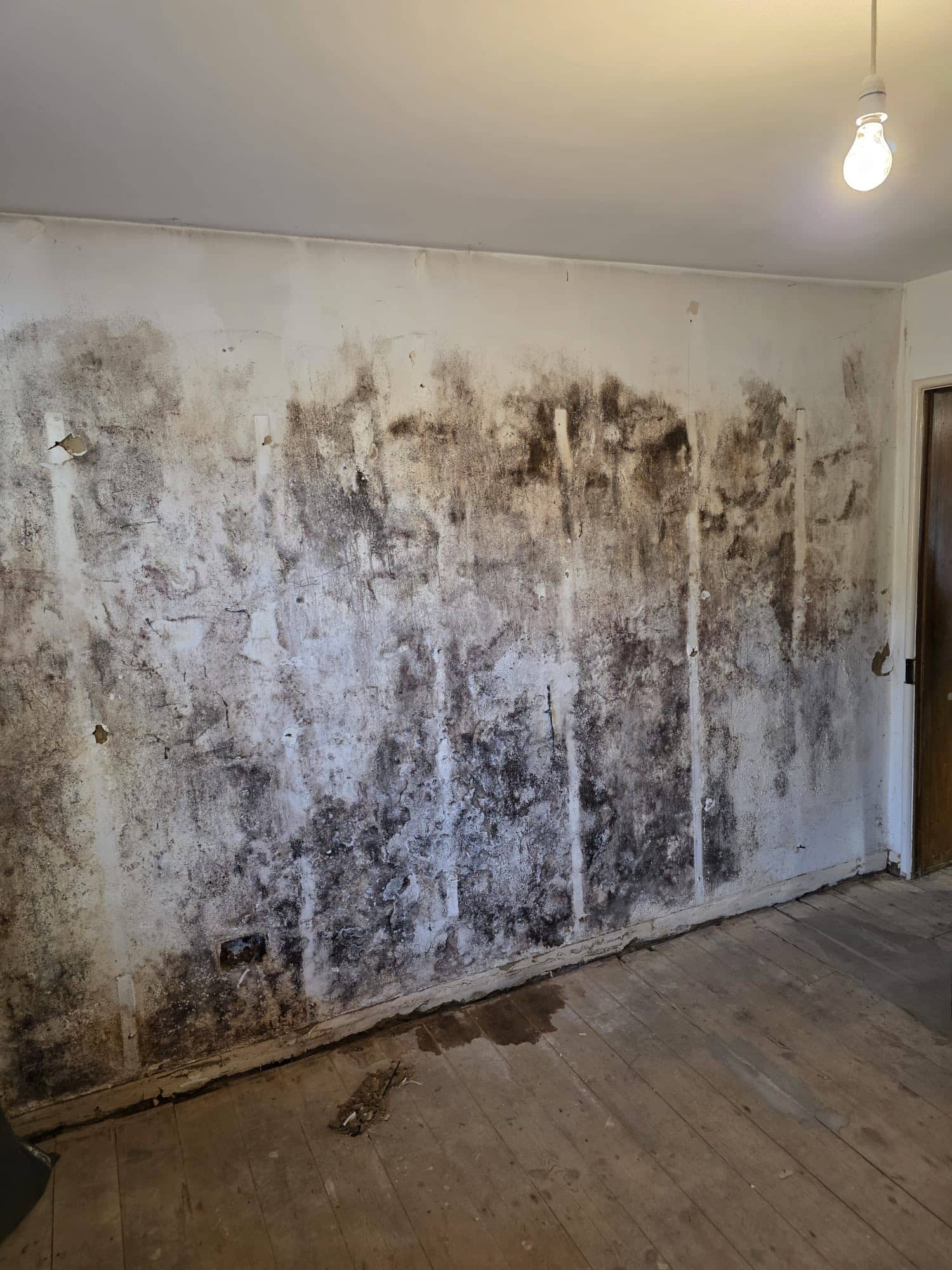
Damp rarely appears without a reason. While a dark corner or patch of peeling paint may seem like a straightforward problem, the visible signs are often only part of the story. In North London flats, damp can develop because of condensation, leaks, poor ventilation, ageing construction materials or defects hidden behind walls and flooring. Treating the symptom without understanding the cause can lead to unnecessary expense and recurring issues.
Knowing what to look for before arranging repairs helps homeowners and landlords make informed decisions. By understanding how different types of damp behave, you can recognise when a property needs further investigation and when simple maintenance may be enough.
If you have noticed unexplained damp patches or musty smells, contact the team at Anke Damp Proofing for professional advice and an assessment tailored to your property.
Why do damp corners appear in North London flats?
Corners are one of the most common places where damp becomes visible because they are often the coldest parts of a room. External walls lose heat more quickly than internal walls, making them more likely to attract condensation. However, damp in corners is not always caused by moisture in the air.
Several factors may be responsible, including:
- Limited airflow behind wardrobes or large furniture
- Blocked air bricks or poor ventilation
- Defective guttering allowing water to penetrate walls
- Cracked external brickwork
- Roof defects above upper-floor flats
- Leaking plumbing hidden within walls
- Bridged damp proof courses in older buildings
Many Victorian and Edwardian flats throughout North London have solid brick walls rather than modern cavity wall construction. These buildings behave differently and require careful diagnosis before any work is recommended.
What should you check before arranging repairs?
Before assuming major treatment is needed, spend a little time observing the pattern of damp throughout your property.
Ask yourself:
- Does the damp appear after heavy rainfall?
- Is it worse during colder months?
- Does it disappear during warmer weather?
- Is there mould growth around windows?
- Does the room feel humid throughout the day?
- Are there plumbing fixtures on the opposite side of the affected wall?
These simple observations provide valuable information that helps determine whether moisture is entering from outside, developing through condensation or coming from an internal leak.
Photographing changes over several weeks can also help identify patterns before arranging professional inspections.
What best describes you?

Homeowner

Tenant

Management/Lettings Agent

Potential Buyer

Other
It just takes 60 Second
And then you can book a free consultation
What does a professional inspection involve?
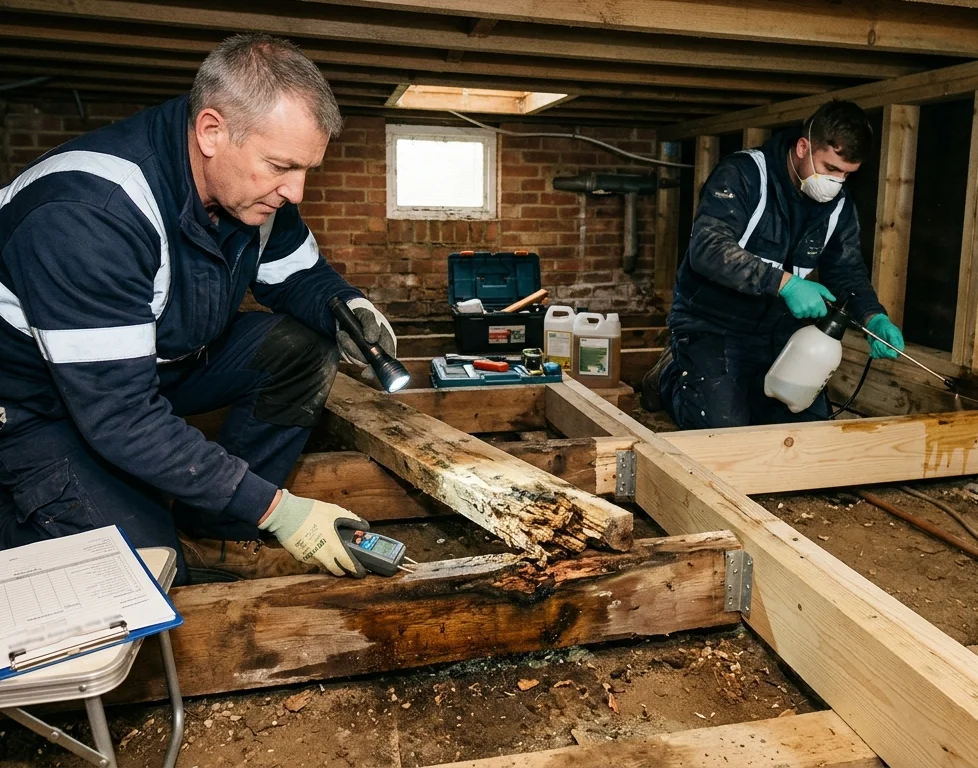
A proper damp survey north london should go far beyond measuring moisture levels on one section of wall.
An experienced surveyor will assess the property as a whole because damp often travels from its original source before becoming visible elsewhere.
A comprehensive inspection may include:
| Area Checked | Why It Matters |
| External walls | Identifies cracks, defective pointing and water penetration |
| Roof and guttering | Finds possible routes for rainwater ingress |
| Ventilation | Assesses airflow and condensation risk |
| Plumbing | Checks for concealed leaks |
| Flooring | Looks for moisture beneath finishes |
| Internal humidity | Helps distinguish condensation from structural moisture |
| Wall construction | Determines how moisture behaves within the building |
Looking at the whole property reduces the risk of recommending unnecessary treatments while ensuring any hidden issues are identified.
Can every damp patch be treated in the same way?
No.
This is one of the biggest misconceptions among property owners. Similar stains can have completely different causes, meaning the correct solution varies considerably.
For example:
- Condensation usually improves through better ventilation and moisture management.
- Penetrating damp requires defects allowing water into the building to be repaired.
- Rising damp needs confirmation through proper investigation before remedial work is considered.
- Plumbing leaks require repair before decorative finishes are replaced.
Applying waterproof coatings or replacing plaster without identifying the moisture source often leads to the same problem returning months later.
Common warning signs homeowners overlook
Many people focus only on visible mould or staining. However, damp often produces smaller warning signs long before major damage appears.
Look out for:
- Paint bubbling in isolated areas
- Wallpaper lifting near external walls
- A persistent earthy or musty smell
- Cold patches that never seem to warm up
- Timber skirting beginning to soften
- White powder deposits on brick or plaster
- Condensation forming repeatedly on windows
Each symptom contributes another piece of the overall picture. Looking at these signs together is usually more informative than considering any one issue in isolation.
If you’re unsure whether your property requires treatment or further investigation, speaking with the specialists at Anke Damp Proofing can help you understand the most appropriate next step before committing to repairs.
Could hidden damp be affecting more than one room?
Yes. Moisture often travels through building materials before becoming visible, meaning the stain you can see is not always where the problem started.
For example, a leaking gutter may allow water into an external wall above a bedroom, but damp may eventually become noticeable in the living room below. Likewise, condensation produced in kitchens or bathrooms can affect colder rooms elsewhere in the flat if ventilation is poor.
This is why homeowners should avoid making assumptions based solely on the location of a stain. A thorough inspection considers how the entire property manages moisture.
A typical example
Imagine a first-floor Victorian conversion in North London where the owner notices black mould forming in the corners of the main bedroom. They initially believe rising damp is responsible because the wall feels cold.
During a professional inspection, however, the survey identifies blocked ventilation, furniture positioned tightly against an external wall, and high indoor humidity caused by everyday activities. No evidence of rising damp is found, meaning improved ventilation and moisture management solve the issue without unnecessary structural work.
Situations like this highlight why accurate diagnosis should always come before treatment.
When should you arrange a professional assessment?
Some signs of damp can be monitored, but others should be investigated promptly to prevent further damage.
Consider arranging a damp survey north london if you notice:
- Damp patches that continue to spread
- Peeling paint returning after redecorating
- Persistent mould despite regular cleaning
- Strong musty odours
- Crumbling plaster or damaged skirting boards
- Moisture appearing after rainfall
- Concerns before buying or selling a property
Early investigation often helps identify smaller maintenance issues before they develop into larger repairs.
Why does diagnosis matter before treatment?
Choosing the correct remedy depends entirely on identifying the true cause of the moisture.
Professional damp proofing north london begins with understanding how water is entering or forming within the property rather than recommending the same solution for every home.
Every flat has its own construction, ventilation and maintenance history. Victorian conversions, purpose-built apartments and modern developments all behave differently, so recommendations should always reflect the individual building rather than following a standard template.
If you are planning renovation work, obtaining a damp proofing quote north london after a detailed inspection helps ensure the proposed work addresses the actual issue rather than simply covering visible damage.
If you would like clear, honest advice about damp affecting your property, contact Anke Damp Proofing. Our team can assess the condition of your home, explain the findings clearly and recommend appropriate solutions based on evidence rather than assumptions.
Conclusion
Damp corners are often the first visible sign that something within a property needs attention, but they rarely tell the whole story on their own. Taking time to understand how moisture behaves, observing patterns and arranging a thorough inspection where necessary can prevent unnecessary expense and help protect your home in the long term.
At Anke Damp Proofing, every property is assessed on its individual condition rather than assumptions. Whether you’re concerned about a small patch of damp or want reassurance before carrying out repairs, our experienced team can provide practical guidance and recommend the most appropriate solution for your home.
Related articles

What best describes you?
Homeowner
Tenant
Management/Lettings Agent
Potential Buyer
Other
At a glance
Damp rarely appears without a reason. While a dark corner or patch of peeling paint may seem like a straightforward problem, the visible signs are often only part of the story. In North London flats, damp can develop because of condensation, leaks, poor ventilation, ageing construction materials or defects hidden behind walls and flooring. Treating the symptom without understanding the cause can lead to unnecessary expense and recurring issues.
Knowing what to look for before arranging repairs helps homeowners and landlords make informed decisions. By understanding how different types of damp behave, you can recognise when a property needs further investigation and when simple maintenance may be enough.
If you have noticed unexplained damp patches or musty smells, contact the team at Anke Damp Proofing for professional advice and an assessment tailored to your property.
Why do damp corners appear in North London flats?
Corners are one of the most common places where damp becomes visible because they are often the coldest parts of a room. External walls lose heat more quickly than internal walls, making them more likely to attract condensation. However, damp in corners is not always caused by moisture in the air.
Several factors may be responsible, including:
- Limited airflow behind wardrobes or large furniture
- Blocked air bricks or poor ventilation
- Defective guttering allowing water to penetrate walls
- Cracked external brickwork
- Roof defects above upper-floor flats
- Leaking plumbing hidden within walls
- Bridged damp proof courses in older buildings
Many Victorian and Edwardian flats throughout North London have solid brick walls rather than modern cavity wall construction. These buildings behave differently and require careful diagnosis before any work is recommended.
What should you check before arranging repairs?
Before assuming major treatment is needed, spend a little time observing the pattern of damp throughout your property.
Ask yourself:
- Does the damp appear after heavy rainfall?
- Is it worse during colder months?
- Does it disappear during warmer weather?
- Is there mould growth around windows?
- Does the room feel humid throughout the day?
- Are there plumbing fixtures on the opposite side of the affected wall?
These simple observations provide valuable information that helps determine whether moisture is entering from outside, developing through condensation or coming from an internal leak.
Photographing changes over several weeks can also help identify patterns before arranging professional inspections.
What best describes you?
Homeowner
Tenant
Management/Lettings Agent
Potential Buyer
Other
It just takes 60 Second
And then you can book a free consultation
What does a professional inspection involve?
A proper damp survey north london should go far beyond measuring moisture levels on one section of wall.
An experienced surveyor will assess the property as a whole because damp often travels from its original source before becoming visible elsewhere.
A comprehensive inspection may include:
| Area Checked | Why It Matters |
| External walls | Identifies cracks, defective pointing and water penetration |
| Roof and guttering | Finds possible routes for rainwater ingress |
| Ventilation | Assesses airflow and condensation risk |
| Plumbing | Checks for concealed leaks |
| Flooring | Looks for moisture beneath finishes |
| Internal humidity | Helps distinguish condensation from structural moisture |
| Wall construction | Determines how moisture behaves within the building |
Looking at the whole property reduces the risk of recommending unnecessary treatments while ensuring any hidden issues are identified.
Can every damp patch be treated in the same way?
No.
This is one of the biggest misconceptions among property owners. Similar stains can have completely different causes, meaning the correct solution varies considerably.
For example:
- Condensation usually improves through better ventilation and moisture management.
- Penetrating damp requires defects allowing water into the building to be repaired.
- Rising damp needs confirmation through proper investigation before remedial work is considered.
- Plumbing leaks require repair before decorative finishes are replaced.
Applying waterproof coatings or replacing plaster without identifying the moisture source often leads to the same problem returning months later.
Common warning signs homeowners overlook
Many people focus only on visible mould or staining. However, damp often produces smaller warning signs long before major damage appears.
Look out for:
- Paint bubbling in isolated areas
- Wallpaper lifting near external walls
- A persistent earthy or musty smell
- Cold patches that never seem to warm up
- Timber skirting beginning to soften
- White powder deposits on brick or plaster
- Condensation forming repeatedly on windows
Each symptom contributes another piece of the overall picture. Looking at these signs together is usually more informative than considering any one issue in isolation.
If you’re unsure whether your property requires treatment or further investigation, speaking with the specialists at Anke Damp Proofing can help you understand the most appropriate next step before committing to repairs.
Could hidden damp be affecting more than one room?
Yes. Moisture often travels through building materials before becoming visible, meaning the stain you can see is not always where the problem started.
For example, a leaking gutter may allow water into an external wall above a bedroom, but damp may eventually become noticeable in the living room below. Likewise, condensation produced in kitchens or bathrooms can affect colder rooms elsewhere in the flat if ventilation is poor.
This is why homeowners should avoid making assumptions based solely on the location of a stain. A thorough inspection considers how the entire property manages moisture.
A typical example
Imagine a first-floor Victorian conversion in North London where the owner notices black mould forming in the corners of the main bedroom. They initially believe rising damp is responsible because the wall feels cold.
During a professional inspection, however, the survey identifies blocked ventilation, furniture positioned tightly against an external wall, and high indoor humidity caused by everyday activities. No evidence of rising damp is found, meaning improved ventilation and moisture management solve the issue without unnecessary structural work.
Situations like this highlight why accurate diagnosis should always come before treatment.
When should you arrange a professional assessment?
Some signs of damp can be monitored, but others should be investigated promptly to prevent further damage.
Consider arranging a damp survey north london if you notice:
- Damp patches that continue to spread
- Peeling paint returning after redecorating
- Persistent mould despite regular cleaning
- Strong musty odours
- Crumbling plaster or damaged skirting boards
- Moisture appearing after rainfall
- Concerns before buying or selling a property
Early investigation often helps identify smaller maintenance issues before they develop into larger repairs.
Why does diagnosis matter before treatment?
Choosing the correct remedy depends entirely on identifying the true cause of the moisture.
Professional damp proofing north london begins with understanding how water is entering or forming within the property rather than recommending the same solution for every home.
Every flat has its own construction, ventilation and maintenance history. Victorian conversions, purpose-built apartments and modern developments all behave differently, so recommendations should always reflect the individual building rather than following a standard template.
If you are planning renovation work, obtaining a damp proofing quote north london after a detailed inspection helps ensure the proposed work addresses the actual issue rather than simply covering visible damage.
If you would like clear, honest advice about damp affecting your property, contact Anke Damp Proofing. Our team can assess the condition of your home, explain the findings clearly and recommend appropriate solutions based on evidence rather than assumptions.
Conclusion
Damp corners are often the first visible sign that something within a property needs attention, but they rarely tell the whole story on their own. Taking time to understand how moisture behaves, observing patterns and arranging a thorough inspection where necessary can prevent unnecessary expense and help protect your home in the long term.
At Anke Damp Proofing, every property is assessed on its individual condition rather than assumptions. Whether you’re concerned about a small patch of damp or want reassurance before carrying out repairs, our experienced team can provide practical guidance and recommend the most appropriate solution for your home.
Related articles
What best describes you?
Homeowner
Tenant
Management/Lettings Agent
Potential Buyer