

Hertfordshire Home Sales With Damp Notes: How to Get Clarity Before Completion
Selling or buying a property can become more complicated when a survey mentions damp. A short note about moisture, staining or damaged plaster can raise questions about repair costs, responsibility and whether completion should go ahead as planned.

Why you can trust our content
At a glance
For sellers, there may be concern that the buyer will ask for a substantial reduction. For buyers, there may be uncertainty about whether the issue is minor or evidence of a more serious building problem.
The important thing is not to make assumptions from a brief survey comment. Before completion, it is worth establishing what has actually been identified, whether the cause is known and what work, if any, is likely to be required.
If damp has been mentioned during a Hertfordshire property transaction, contact Anke Damp Proofing for practical guidance before agreeing to remedial work or changes to the sale price.
What Does a Damp Note in a Home Survey Actually Tell You?
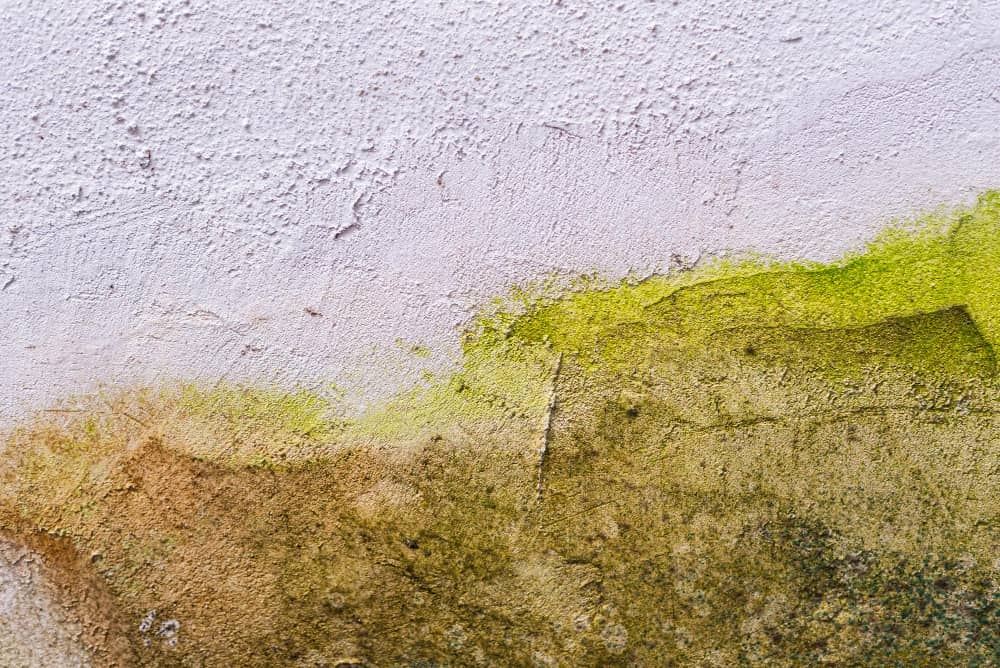
A survey may identify signs such as staining, mould, deteriorated plaster, moisture readings or other indications that further investigation could be necessary.
However, a survey does not always establish the exact cause of the problem. The report may recommend specialist investigation rather than confirming that a particular treatment is required.
This distinction is important.
A statement that damp is present is different from a confirmed diagnosis of why it is present. Moisture can result from several causes, including plumbing leaks, condensation, defective rainwater goods, external water penetration or problems with the building fabric.
Before completion, try to establish:
- Which rooms are affected
- Whether moisture is currently present
- What evidence the surveyor found
- Whether the cause has been confirmed
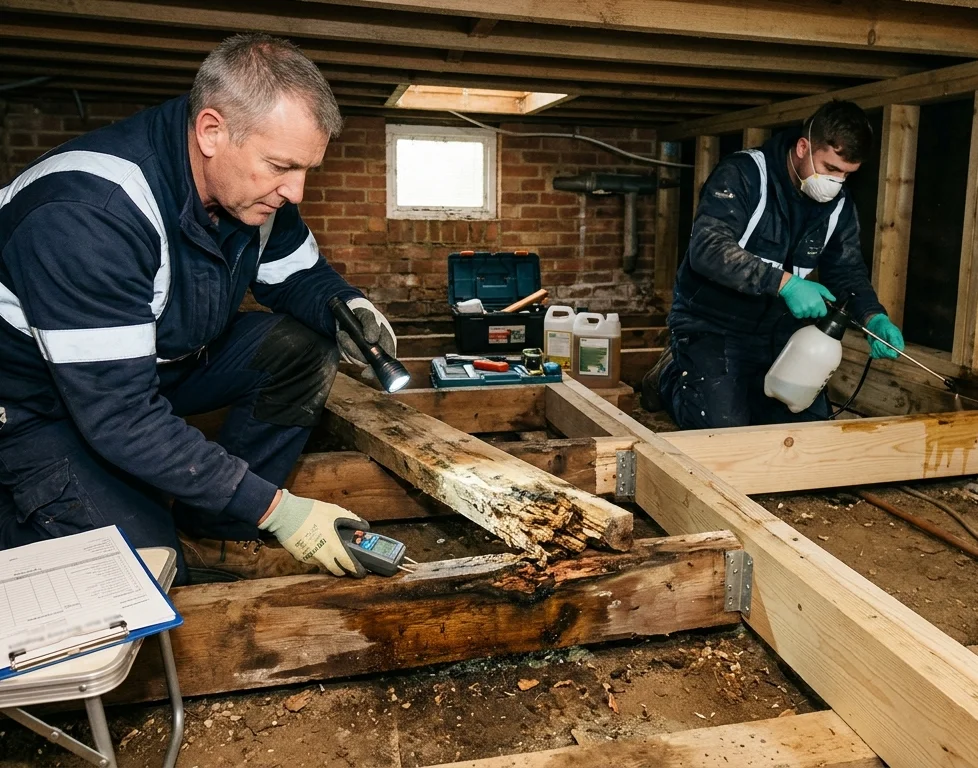
- Whether timber has been affected
- Whether further investigation was recommended
- Whether previous remedial work has been carried out
A clearer understanding of the issue makes conversations between buyers, sellers and professionals much easier.
Should You Arrange a Specialist Damp Survey Before Completion?
Where the survey leaves important questions unanswered, a specialist damp survey hertfordshire can help provide additional information.
The purpose should be to investigate the reported concern and establish the likely cause, extent and appropriate response. It should not simply be treated as a way of producing a document to support a particular negotiating position.
For a buyer, this can help determine whether the property presents a manageable repair or a larger unknown risk. For a seller, it can provide a clearer picture before deciding how to respond to concerns raised by the buyer.
A specialist assessment can be particularly useful where the survey recommends further investigation rather than providing a definitive conclusion.
What Should Sellers Check Before Discussing a Price Reduction?
If you are selling a property and the buyer has raised a damp concern, avoid agreeing to a reduction based purely on an assumed repair cost.
Start by reviewing the relevant section of the survey. Then consider whether you have records of previous work, such as invoices, guarantees, photographs or reports.
You may also want to establish:
- Where the problem is located.
- Whether it is active or historic.
- What is causing the moisture.
- Whether previous repairs addressed the cause.
- What remedial work is actually required.
- Whether a quotation can be obtained.
This approach does not mean the seller must complete all repairs before completion. The buyer may prefer to carry out the work after purchasing the property.
The priority is to make the negotiation better informed.
Can Damp Affect a Property Sale?
Yes, but the impact depends on the nature and extent of the problem.
A small area of moisture caused by a straightforward external defect is very different from widespread damp affecting multiple rooms. The likely disruption and cost of remedial work can also influence how a buyer views the issue.
A buyer may consider:
- The likely cost of repairs
- How long the work could take
- Whether the cause is fully understood
- Whether other parts of the building may be affected
- Whether the issue could interfere with planned renovation work
- Whether there is uncertainty around the final cost
This is why damp proofing hertfordshire should not automatically be assumed to be the solution whenever a survey mentions damp.
The correct response depends on the cause.
What best describes you?

Homeowner

Tenant

Management/Lettings Agent

Potential Buyer

Other
It just takes 60 Second
And then you can book a free consultation
What Could Be Causing the Damp?
Several different issues can produce similar symptoms.
Common possibilities include:
- Leaking plumbing
- Blocked or defective gutters
- Damaged downpipes
- Defective external pointing
- Water entering through walls
- Condensation
- Poor ventilation
- Roof defects
- Localised leaks
- Previous flooding
For example, peeling paint near an external wall could be associated with water penetration, condensation or historic damage. The visible finish alone may not tell you which one is responsible.
A proper assessment considers the location, construction and surrounding conditions rather than treating every damp patch in the same way.
What If the Property Has Already Had Damp Treatment?
Previous remedial work can be useful background information, but it does not automatically confirm that the current property is free from moisture problems.
Ask the seller whether there are records showing:
- When the work was completed
- Which areas were treated
- What issue was identified
- What work was carried out
- Whether a guarantee was provided
- Whether the moisture returned afterwards
Historic staining can sometimes remain after a moisture source has been resolved. Equally, new moisture can develop for an unrelated reason.
A previous treatment record should therefore be considered alongside the current condition of the property.
A Typical Hertfordshire Property Sale Scenario
Imagine a family selling a period property. The buyer’s survey identifies damp staining around part of a ground-floor wall and recommends specialist investigation.
The buyer is concerned that extensive remedial work may be needed and asks for a sizeable price reduction.
Rather than immediately agreeing, the seller arranges an assessment of the affected area. The investigation finds that the moisture is localised and linked to a defect affecting the external part of the building. The recommended work is more limited than the buyer had initially expected.
The information gives both sides a clearer basis for discussion. The seller can consider whether to complete the repair, while the buyer can decide whether the proposed solution and cost are acceptable before completion.
This type of situation shows why clarity can be more useful than speculation.
What Should Buyers Do When a Survey Mentions Damp?
Buyers should take the concern seriously without assuming the worst.
First, read the exact wording of the survey. If the surveyor recommends further investigation, consider obtaining specialist advice before making a final decision.
A buyer may want to understand:
- Is the moisture active?
- Where is it coming from?
- Is the problem isolated?
- Has timber been affected?
- Is structural damage suspected?
- What remedial work is likely?
- Can the work be completed after purchase?
- Is the estimated cost reasonable?
If the seller provides an existing report, review its findings carefully. Where there is significant uncertainty, an independent assessment may provide additional confidence.
If you are buying or selling a Hertfordshire property and need greater clarity about a damp concern, our team can assess the affected areas and explain whether damp proofing hertfordshire may be appropriate.
What Does a Damp Assessment Usually Look At?
The exact scope varies according to the property and the reported concern, but an assessment may consider both internal and external conditions.
| Area | What may be assessed |
| Internal walls | Staining, moisture and damaged finishes |
| External walls | Defects and potential water entry |
| Lower wall areas | Moisture patterns and construction |
| Windows | Condensation, seals and surrounding areas |
| Plumbing | Evidence of leaks |
| Roof and gutters | Potential sources of water |
| Timber | Signs of deterioration where accessible |
| Previous repairs | Condition and relevance of earlier work |
The aim is to establish a clearer picture of the moisture problem rather than simply identifying where a mark appears.
A damp survey hertfordshire arranged specifically in response to a buyer’s or seller’s concern can therefore help reduce uncertainty before completion.
When Should You Request a Damp Proofing Quote?
A quotation is generally more useful once the problem and required scope of work have been established.
If the survey confirms a specific remedial requirement, a damp proofing quote hertfordshire can help the parties understand the likely financial implications.
However, if the survey only says that damp may be present and recommends further investigation, obtaining a treatment quotation immediately may be premature.
When reviewing a quote, check whether it covers:
- Preparation
- Removal of damaged materials
- Remedial treatment
- Associated building repairs
- Reinstatement
- Any follow-up requirements
Different quotations may cover different scopes, so comparing the headline price alone can give a misleading impression.
Should the Seller Repair Damp Before Completion?
There is no universal answer.
Some sellers may prefer to complete the work so the property is presented in a better condition. Others may agree a price adjustment and allow the buyer to arrange the work after completion.
The right option depends on the cause, scope, timescale and preferences of both parties.
If work is undertaken before completion, keep records of what was done and retain relevant documentation. This can provide useful evidence for the buyer and their solicitor.
In some cases, providing a clear report and quotation may be more practical than attempting rushed repairs simply to keep the transaction moving.
How Can Buyers and Sellers Avoid Unnecessary Delays?
Clear communication helps.
Where a survey identifies damp, the parties should establish what information is missing and agree how that information will be obtained.
A practical process could be:
- Review the survey finding.
- Identify the affected area.
- Determine whether further investigation is needed.
- Obtain appropriate specialist advice.
- Establish the likely remedial scope.
- Obtain a quotation if required.
- Discuss the findings with the relevant professionals.
- Decide whether to repair, renegotiate or proceed as planned.
This is generally more constructive than negotiating around an assumed worst-case cost.
Protect the Renovation Before the Finishing Stage
A damp reference in a property survey does not have to derail a sale, but it should not be ignored either. The most useful approach is to establish what has actually been identified, investigate where necessary and understand the likely remedial requirements before making financial decisions.
For buyers, this can reduce uncertainty. For sellers, it can provide a more informed response to concerns raised during the transaction.
If a Hertfordshire property survey has highlighted damp, contact Anke Damp Proofing for practical, property-specific guidance. Our team can help you understand the issue and whether further investigation, damp proofing hertfordshire or another form of remedial work may be appropriate.
Related articles

What best describes you?
Homeowner
Tenant
Management/Lettings Agent
Potential Buyer
Other
At a glance
For sellers, there may be concern that the buyer will ask for a substantial reduction. For buyers, there may be uncertainty about whether the issue is minor or evidence of a more serious building problem.
The important thing is not to make assumptions from a brief survey comment. Before completion, it is worth establishing what has actually been identified, whether the cause is known and what work, if any, is likely to be required.
If damp has been mentioned during a Hertfordshire property transaction, contact Anke Damp Proofing for practical guidance before agreeing to remedial work or changes to the sale price.
What Does a Damp Note in a Home Survey Actually Tell You?
A survey may identify signs such as staining, mould, deteriorated plaster, moisture readings or other indications that further investigation could be necessary.
However, a survey does not always establish the exact cause of the problem. The report may recommend specialist investigation rather than confirming that a particular treatment is required.
This distinction is important.
A statement that damp is present is different from a confirmed diagnosis of why it is present. Moisture can result from several causes, including plumbing leaks, condensation, defective rainwater goods, external water penetration or problems with the building fabric.
Before completion, try to establish:
- Which rooms are affected
- Whether moisture is currently present
- What evidence the surveyor found
- Whether the cause has been confirmed
- Whether timber has been affected
- Whether further investigation was recommended
- Whether previous remedial work has been carried out
A clearer understanding of the issue makes conversations between buyers, sellers and professionals much easier.
Should You Arrange a Specialist Damp Survey Before Completion?
Where the survey leaves important questions unanswered, a specialist damp survey hertfordshire can help provide additional information.
The purpose should be to investigate the reported concern and establish the likely cause, extent and appropriate response. It should not simply be treated as a way of producing a document to support a particular negotiating position.
For a buyer, this can help determine whether the property presents a manageable repair or a larger unknown risk. For a seller, it can provide a clearer picture before deciding how to respond to concerns raised by the buyer.
A specialist assessment can be particularly useful where the survey recommends further investigation rather than providing a definitive conclusion.
What Should Sellers Check Before Discussing a Price Reduction?
If you are selling a property and the buyer has raised a damp concern, avoid agreeing to a reduction based purely on an assumed repair cost.
Start by reviewing the relevant section of the survey. Then consider whether you have records of previous work, such as invoices, guarantees, photographs or reports.
You may also want to establish:
- Where the problem is located.
- Whether it is active or historic.
- What is causing the moisture.
- Whether previous repairs addressed the cause.
- What remedial work is actually required.
- Whether a quotation can be obtained.
This approach does not mean the seller must complete all repairs before completion. The buyer may prefer to carry out the work after purchasing the property.
The priority is to make the negotiation better informed.
Can Damp Affect a Property Sale?
Yes, but the impact depends on the nature and extent of the problem.
A small area of moisture caused by a straightforward external defect is very different from widespread damp affecting multiple rooms. The likely disruption and cost of remedial work can also influence how a buyer views the issue.
A buyer may consider:
- The likely cost of repairs
- How long the work could take
- Whether the cause is fully understood
- Whether other parts of the building may be affected
- Whether the issue could interfere with planned renovation work
- Whether there is uncertainty around the final cost
This is why damp proofing hertfordshire should not automatically be assumed to be the solution whenever a survey mentions damp.
The correct response depends on the cause.
What best describes you?
Homeowner
Tenant
Management/Lettings Agent
Potential Buyer
Other
It just takes 60 Second
And then you can book a free consultation
What Could Be Causing the Damp?
Several different issues can produce similar symptoms.
Common possibilities include:
- Leaking plumbing
- Blocked or defective gutters
- Damaged downpipes
- Defective external pointing
- Water entering through walls
- Condensation
- Poor ventilation
- Roof defects
- Localised leaks
- Previous flooding
For example, peeling paint near an external wall could be associated with water penetration, condensation or historic damage. The visible finish alone may not tell you which one is responsible.
A proper assessment considers the location, construction and surrounding conditions rather than treating every damp patch in the same way.
What If the Property Has Already Had Damp Treatment?
Previous remedial work can be useful background information, but it does not automatically confirm that the current property is free from moisture problems.
Ask the seller whether there are records showing:
- When the work was completed
- Which areas were treated
- What issue was identified
- What work was carried out
- Whether a guarantee was provided
- Whether the moisture returned afterwards
Historic staining can sometimes remain after a moisture source has been resolved. Equally, new moisture can develop for an unrelated reason.
A previous treatment record should therefore be considered alongside the current condition of the property.
A Typical Hertfordshire Property Sale Scenario
Imagine a family selling a period property. The buyer’s survey identifies damp staining around part of a ground-floor wall and recommends specialist investigation.
The buyer is concerned that extensive remedial work may be needed and asks for a sizeable price reduction.
Rather than immediately agreeing, the seller arranges an assessment of the affected area. The investigation finds that the moisture is localised and linked to a defect affecting the external part of the building. The recommended work is more limited than the buyer had initially expected.
The information gives both sides a clearer basis for discussion. The seller can consider whether to complete the repair, while the buyer can decide whether the proposed solution and cost are acceptable before completion.
This type of situation shows why clarity can be more useful than speculation.
What Should Buyers Do When a Survey Mentions Damp?
Buyers should take the concern seriously without assuming the worst.
First, read the exact wording of the survey. If the surveyor recommends further investigation, consider obtaining specialist advice before making a final decision.
A buyer may want to understand:
- Is the moisture active?
- Where is it coming from?
- Is the problem isolated?
- Has timber been affected?
- Is structural damage suspected?
- What remedial work is likely?
- Can the work be completed after purchase?
- Is the estimated cost reasonable?
If the seller provides an existing report, review its findings carefully. Where there is significant uncertainty, an independent assessment may provide additional confidence.
If you are buying or selling a Hertfordshire property and need greater clarity about a damp concern, our team can assess the affected areas and explain whether damp proofing hertfordshire may be appropriate.
What Does a Damp Assessment Usually Look At?
The exact scope varies according to the property and the reported concern, but an assessment may consider both internal and external conditions.
| Area | What may be assessed |
| Internal walls | Staining, moisture and damaged finishes |
| External walls | Defects and potential water entry |
| Lower wall areas | Moisture patterns and construction |
| Windows | Condensation, seals and surrounding areas |
| Plumbing | Evidence of leaks |
| Roof and gutters | Potential sources of water |
| Timber | Signs of deterioration where accessible |
| Previous repairs | Condition and relevance of earlier work |
The aim is to establish a clearer picture of the moisture problem rather than simply identifying where a mark appears.
A damp survey hertfordshire arranged specifically in response to a buyer’s or seller’s concern can therefore help reduce uncertainty before completion.
When Should You Request a Damp Proofing Quote?
A quotation is generally more useful once the problem and required scope of work have been established.
If the survey confirms a specific remedial requirement, a damp proofing quote hertfordshire can help the parties understand the likely financial implications.
However, if the survey only says that damp may be present and recommends further investigation, obtaining a treatment quotation immediately may be premature.
When reviewing a quote, check whether it covers:
- Preparation
- Removal of damaged materials
- Remedial treatment
- Associated building repairs
- Reinstatement
- Any follow-up requirements
Different quotations may cover different scopes, so comparing the headline price alone can give a misleading impression.
Should the Seller Repair Damp Before Completion?
There is no universal answer.
Some sellers may prefer to complete the work so the property is presented in a better condition. Others may agree a price adjustment and allow the buyer to arrange the work after completion.
The right option depends on the cause, scope, timescale and preferences of both parties.
If work is undertaken before completion, keep records of what was done and retain relevant documentation. This can provide useful evidence for the buyer and their solicitor.
In some cases, providing a clear report and quotation may be more practical than attempting rushed repairs simply to keep the transaction moving.
How Can Buyers and Sellers Avoid Unnecessary Delays?
Clear communication helps.
Where a survey identifies damp, the parties should establish what information is missing and agree how that information will be obtained.
A practical process could be:
- Review the survey finding.
- Identify the affected area.
- Determine whether further investigation is needed.
- Obtain appropriate specialist advice.
- Establish the likely remedial scope.
- Obtain a quotation if required.
- Discuss the findings with the relevant professionals.
- Decide whether to repair, renegotiate or proceed as planned.
This is generally more constructive than negotiating around an assumed worst-case cost.
Protect the Renovation Before the Finishing Stage
A damp reference in a property survey does not have to derail a sale, but it should not be ignored either. The most useful approach is to establish what has actually been identified, investigate where necessary and understand the likely remedial requirements before making financial decisions.
For buyers, this can reduce uncertainty. For sellers, it can provide a more informed response to concerns raised during the transaction.
If a Hertfordshire property survey has highlighted damp, contact Anke Damp Proofing for practical, property-specific guidance. Our team can help you understand the issue and whether further investigation, damp proofing hertfordshire or another form of remedial work may be appropriate.
Related articles
What best describes you?
Homeowner
Tenant
Management/Lettings Agent
Potential Buyer