

East London Landlords: Damp Evidence to Gather Before Tenant Reports Escalate
For landlords, a small patch of mould or a damp mark can be easy to dismiss, particularly when it first appears. Yet moisture problems can develop gradually, become more extensive and eventually lead to repeated tenant complaints or more significant property damage.

Why you can trust our content
At a glance
Why Should Landlords Act on Damp Evidence Early?
For landlords, a small patch of mould or a damp mark can be easy to dismiss, particularly when it first appears. Yet moisture problems can develop gradually, become more extensive and eventually lead to repeated tenant complaints or more significant property damage.
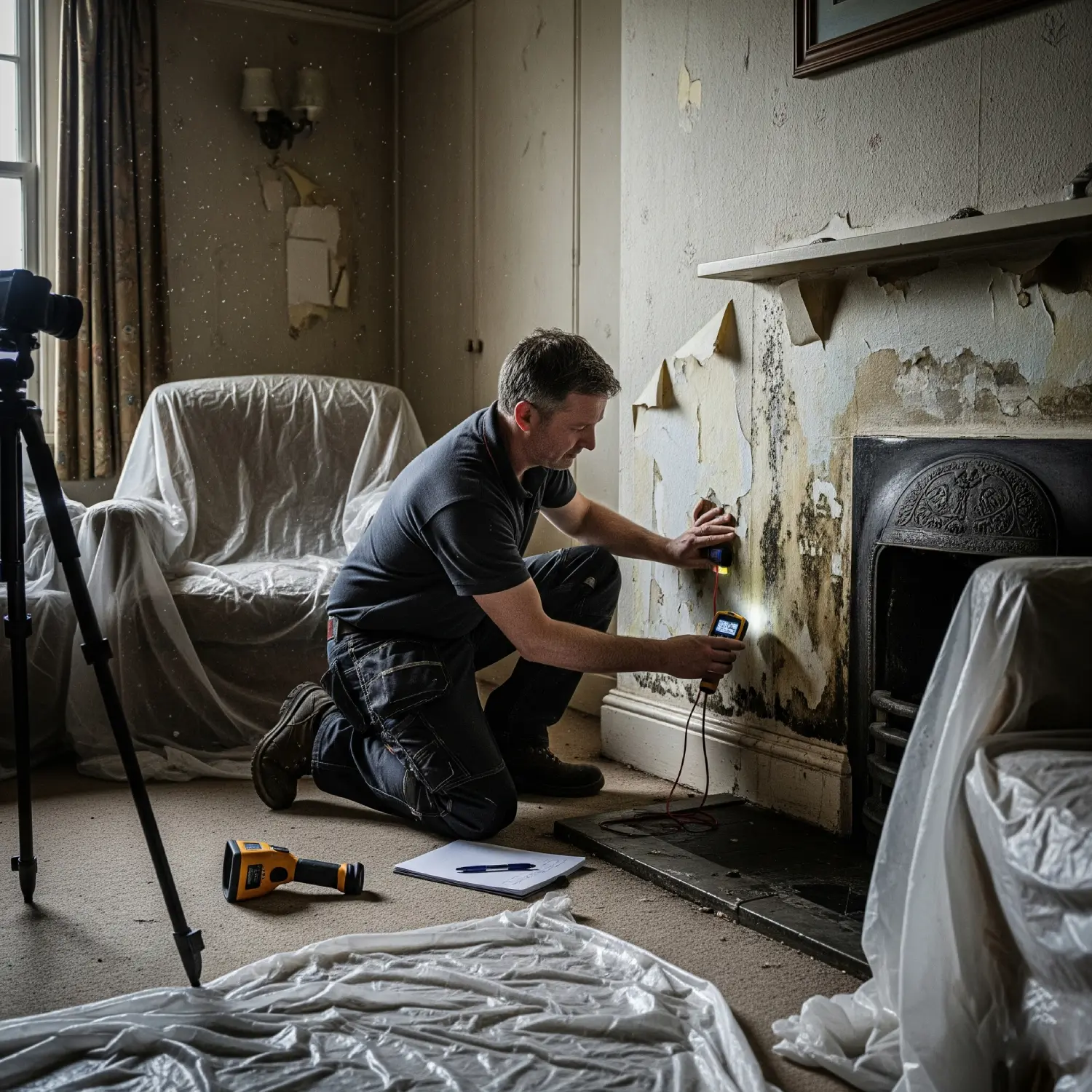
The best approach is to treat early signs as useful information. Photographs, inspection notes, maintenance records and details of previous repairs can help establish what has happened and whether the problem is recurring.
This is particularly important when responsibility for a damp issue is unclear. Condensation, inadequate ventilation, plumbing leaks, defective external elements and moisture entering through the building can all create similar-looking symptoms.
If you manage a rental property with recurring moisture concerns, contact Anke Damp Proofing for practical advice before the issue becomes more disruptive.
What Damp Evidence Should East London Landlords Record?
A good record should explain what was observed, where it was found and what happened afterwards.
Do not rely solely on a tenant’s description or a single photograph. Moisture conditions can change over time, so a useful record should show the progression of the issue where possible.
Landlords should consider recording:
- The date a problem was reported
- The room and exact location affected
- Photographs of visible staining or mould
- Any musty smells or other observations
- Whether the issue appears after rainfall
- Any nearby plumbing or drainage concerns
- Condition of windows and ventilation points
- Previous repairs or treatments
- Dates of inspections
- Contractors or specialists who attended
- Recommendations and completed remedial work
It is also useful to retain copies of invoices, reports and photographs after repairs have been completed.
These records can provide a clearer history if the same issue appears again several months later.
Could a Damp Problem Be Caused by More Than One Factor?
Yes. Moisture problems are not always straightforward.
For example, condensation may be contributing to mould growth in a poorly ventilated bedroom while a separate external defect is allowing moisture to enter a wall. Treating only one factor may leave the underlying problem unresolved.
Common potential causes include:
| Possible cause | Typical signs | What may need checking |
| Condensation | Mould around windows or cold surfaces | Ventilation, heating and moisture production |
| Plumbing leak | Localised staining or wet areas | Pipes, fittings and connections |
| External water ingress | Damp patches after rain | Roofs, walls, windows and drainage |
| Ground-related moisture | Damage near lower walls | Construction and moisture movement |
| Defective gutters | Staining near external walls | Gutters, downpipes and discharge points |
| Poor ventilation | Persistent mould or musty rooms | Extractors, vents and airflow |
These signs are only indicators, not diagnoses. A proper assessment is more useful when the cause is uncertain or the issue keeps returning.
When Should a Landlord Arrange a Damp Survey?
A damp survey east london landlords arrange can be particularly useful when visible symptoms keep returning, when the cause is uncertain or when previous repairs have not produced a lasting improvement.
A survey should not be viewed simply as a document to produce after a dispute begins. It can be a useful preventative step when a property has a history of moisture-related problems.
Before arranging an inspection, gather existing records. Photographs, previous contractor reports and details of repairs can help provide context.
A specialist can then consider the visible symptoms alongside the building’s condition and determine whether further investigation is appropriate.
What Should Landlords Check During Routine Property Inspections?
Routine inspections provide an opportunity to notice changes before they become major issues.
Rather than looking only at whether a room is tidy or in good decorative condition, landlords should pay attention to building-related warning signs.
Look for:
- New staining on walls or ceilings
- Mould around windows
- Damaged paint or plaster
- Swollen skirting boards
- Musty smells
- Water marks near bathrooms and kitchens
- Changes around external walls
- Damaged seals around windows
- Signs of leaking gutters or downpipes
- Areas where moisture has previously been reported
Where appropriate, compare current photographs with previous inspection records. A gradual change may be easier to identify this way than from memory.
Landlords should also distinguish between routine observations and matters requiring specialist assessment. An inspection can identify a concern, but it does not necessarily establish the cause.
If repeated moisture is appearing despite previous maintenance, our team can help determine whether damp proofing east london may be appropriate or whether another cause needs investigating first.
How Can Landlords Respond When a Tenant Reports Damp?
A tenant’s report should be treated as an opportunity to investigate rather than something to dismiss immediately.
Start by recording the date and details of the complaint. Ask where the issue is located, when it was first noticed and whether it changes during wet weather or colder periods.
Photographs can be useful, particularly where an immediate inspection is not possible. However, photographs should not replace an appropriate property inspection where the issue appears persistent or significant.
The response should focus on establishing what is happening and taking proportionate action.
A useful process is:
- Record the tenant’s report.
- Ask for photographs where appropriate.
- Arrange an inspection.
- Document the condition of the affected area.
- Identify possible causes.
- Arrange specialist investigation if necessary.
- Complete appropriate remedial work.
- Keep records of the outcome.
- Follow up to establish whether the issue has improved.
This creates a clearer trail than relying on informal conversations.
What best describes you?

Homeowner

Tenant

Management/Lettings Agent

Potential Buyer

Other
It just takes 60 Second
And then you can book a free consultation
Can Previous Damp Repairs Help Explain a New Complaint?
They can. If the property has already had damp-related work, previous documentation may show what was investigated and what measures were completed.
However, previous treatment should not automatically be assumed to explain a new problem. A building’s moisture conditions can change, and a new leak or external defect may produce symptoms in the same area.
For this reason, damp proofing east london should be based on the current condition of the property rather than simply repeating an old treatment.
Keep previous reports and invoices available so that any new inspection can consider the property’s history.
What If the Cause of Damp Is Still Unclear?
Some cases need further investigation before a suitable solution can be recommended.
For example, if a wall has visible staining but there is no obvious leak, the issue may require examination of internal and external conditions. If mould is repeatedly returning despite cleaning, ventilation and moisture levels may need consideration alongside the building fabric.
A damp survey east london can help provide a structured assessment where the cause is not immediately obvious.
The objective should be to understand the problem rather than select a treatment based purely on the appearance of the affected area.
A Typical East London Rental Property Scenario
Consider a rented terraced property where a tenant reports mould returning in a ground-floor bedroom. The landlord initially arranged cleaning and repainting, but the tenant later reports that the staining has returned.
Instead of repeating the same cosmetic work, the landlord arranges an inspection. Photographs from previous visits are reviewed alongside the current condition of the room. The inspection identifies moisture-related factors that require attention, allowing suitable remedial work to be planned.
The landlord then keeps a record of the findings, work completed and condition of the room afterwards. If the tenant reports another concern in the future, there is a documented history to refer to.
The value of this approach is not simply paperwork. It helps the landlord understand whether the issue has genuinely been resolved.
When Should Landlords Consider Specialist Damp Proofing?
Specialist input can be useful where moisture is persistent, the cause is unclear, previous repairs have failed or there is evidence of deterioration to plaster, masonry or timber.
The purpose should be to establish whether specialist remedial work is actually appropriate.
Not every mould problem requires damp proofing, and not every damp-looking patch has the same cause. Professional assessment can help prevent unnecessary work while ensuring genuine building-related problems are not overlooked.
Where remedial work is recommended, local damp proofing experts east london can provide property-specific guidance rather than relying on a generic approach.
What Records Should Landlords Keep After Remedial Work?
Once work has been completed, update the property’s maintenance file.
Useful records include:
- Date of remedial work
- Description of the original problem
- Photographs before and after
- Inspection or survey findings
- Details of the work completed
- Invoices
- Relevant guarantees or warranties
- Any recommendations for future monitoring
- Follow-up inspection notes
This information can be valuable when managing the property over several years, especially if ownership changes or a different contractor needs to investigate a related concern later.
It also gives landlords a much clearer understanding of the property’s maintenance history.
Build a Clear Record Before a Small Problem Becomes a Bigger One
For landlords, good damp management starts with observation and documentation. Recording early warning signs, responding promptly to tenant reports and investigating recurring moisture can make property maintenance more controlled.
The aim is not to treat every damp symptom in the same way. It is to understand what is happening, identify the appropriate response and keep a reliable record of the work carried out.
If you are managing an East London rental property and want clarity about recurring moisture, contact Anke Damp Proofing. Our team can assess the situation and provide practical guidance on the next appropriate step.
Related articles

What best describes you?
Homeowner
Tenant
Management/Lettings Agent
Potential Buyer
Other
At a glance
Why Should Landlords Act on Damp Evidence Early?
For landlords, a small patch of mould or a damp mark can be easy to dismiss, particularly when it first appears. Yet moisture problems can develop gradually, become more extensive and eventually lead to repeated tenant complaints or more significant property damage.
The best approach is to treat early signs as useful information. Photographs, inspection notes, maintenance records and details of previous repairs can help establish what has happened and whether the problem is recurring.
This is particularly important when responsibility for a damp issue is unclear. Condensation, inadequate ventilation, plumbing leaks, defective external elements and moisture entering through the building can all create similar-looking symptoms.
If you manage a rental property with recurring moisture concerns, contact Anke Damp Proofing for practical advice before the issue becomes more disruptive.
What Damp Evidence Should East London Landlords Record?
A good record should explain what was observed, where it was found and what happened afterwards.
Do not rely solely on a tenant’s description or a single photograph. Moisture conditions can change over time, so a useful record should show the progression of the issue where possible.
Landlords should consider recording:
- The date a problem was reported
- The room and exact location affected
- Photographs of visible staining or mould
- Any musty smells or other observations
- Whether the issue appears after rainfall
- Any nearby plumbing or drainage concerns
- Condition of windows and ventilation points
- Previous repairs or treatments
- Dates of inspections
- Contractors or specialists who attended
- Recommendations and completed remedial work
It is also useful to retain copies of invoices, reports and photographs after repairs have been completed.
These records can provide a clearer history if the same issue appears again several months later.
Could a Damp Problem Be Caused by More Than One Factor?
Yes. Moisture problems are not always straightforward.
For example, condensation may be contributing to mould growth in a poorly ventilated bedroom while a separate external defect is allowing moisture to enter a wall. Treating only one factor may leave the underlying problem unresolved.
Common potential causes include:
| Possible cause | Typical signs | What may need checking |
| Condensation | Mould around windows or cold surfaces | Ventilation, heating and moisture production |
| Plumbing leak | Localised staining or wet areas | Pipes, fittings and connections |
| External water ingress | Damp patches after rain | Roofs, walls, windows and drainage |
| Ground-related moisture | Damage near lower walls | Construction and moisture movement |
| Defective gutters | Staining near external walls | Gutters, downpipes and discharge points |
| Poor ventilation | Persistent mould or musty rooms | Extractors, vents and airflow |
These signs are only indicators, not diagnoses. A proper assessment is more useful when the cause is uncertain or the issue keeps returning.
When Should a Landlord Arrange a Damp Survey?
A damp survey east london landlords arrange can be particularly useful when visible symptoms keep returning, when the cause is uncertain or when previous repairs have not produced a lasting improvement.
A survey should not be viewed simply as a document to produce after a dispute begins. It can be a useful preventative step when a property has a history of moisture-related problems.
Before arranging an inspection, gather existing records. Photographs, previous contractor reports and details of repairs can help provide context.
A specialist can then consider the visible symptoms alongside the building’s condition and determine whether further investigation is appropriate.
What Should Landlords Check During Routine Property Inspections?
Routine inspections provide an opportunity to notice changes before they become major issues.
Rather than looking only at whether a room is tidy or in good decorative condition, landlords should pay attention to building-related warning signs.
Look for:
- New staining on walls or ceilings
- Mould around windows
- Damaged paint or plaster
- Swollen skirting boards
- Musty smells
- Water marks near bathrooms and kitchens
- Changes around external walls
- Damaged seals around windows
- Signs of leaking gutters or downpipes
- Areas where moisture has previously been reported
Where appropriate, compare current photographs with previous inspection records. A gradual change may be easier to identify this way than from memory.
Landlords should also distinguish between routine observations and matters requiring specialist assessment. An inspection can identify a concern, but it does not necessarily establish the cause.
If repeated moisture is appearing despite previous maintenance, our team can help determine whether damp proofing east london may be appropriate or whether another cause needs investigating first.
How Can Landlords Respond When a Tenant Reports Damp?
A tenant’s report should be treated as an opportunity to investigate rather than something to dismiss immediately.
Start by recording the date and details of the complaint. Ask where the issue is located, when it was first noticed and whether it changes during wet weather or colder periods.
Photographs can be useful, particularly where an immediate inspection is not possible. However, photographs should not replace an appropriate property inspection where the issue appears persistent or significant.
The response should focus on establishing what is happening and taking proportionate action.
A useful process is:
- Record the tenant’s report.
- Ask for photographs where appropriate.
- Arrange an inspection.
- Document the condition of the affected area.
- Identify possible causes.
- Arrange specialist investigation if necessary.
- Complete appropriate remedial work.
- Keep records of the outcome.
- Follow up to establish whether the issue has improved.
This creates a clearer trail than relying on informal conversations.
What best describes you?
Homeowner
Tenant
Management/Lettings Agent
Potential Buyer
Other
It just takes 60 Second
And then you can book a free consultation
Can Previous Damp Repairs Help Explain a New Complaint?
They can. If the property has already had damp-related work, previous documentation may show what was investigated and what measures were completed.
However, previous treatment should not automatically be assumed to explain a new problem. A building’s moisture conditions can change, and a new leak or external defect may produce symptoms in the same area.
For this reason, damp proofing east london should be based on the current condition of the property rather than simply repeating an old treatment.
Keep previous reports and invoices available so that any new inspection can consider the property’s history.
What If the Cause of Damp Is Still Unclear?
Some cases need further investigation before a suitable solution can be recommended.
For example, if a wall has visible staining but there is no obvious leak, the issue may require examination of internal and external conditions. If mould is repeatedly returning despite cleaning, ventilation and moisture levels may need consideration alongside the building fabric.
A damp survey east london can help provide a structured assessment where the cause is not immediately obvious.
The objective should be to understand the problem rather than select a treatment based purely on the appearance of the affected area.
A Typical East London Rental Property Scenario
Consider a rented terraced property where a tenant reports mould returning in a ground-floor bedroom. The landlord initially arranged cleaning and repainting, but the tenant later reports that the staining has returned.
Instead of repeating the same cosmetic work, the landlord arranges an inspection. Photographs from previous visits are reviewed alongside the current condition of the room. The inspection identifies moisture-related factors that require attention, allowing suitable remedial work to be planned.
The landlord then keeps a record of the findings, work completed and condition of the room afterwards. If the tenant reports another concern in the future, there is a documented history to refer to.
The value of this approach is not simply paperwork. It helps the landlord understand whether the issue has genuinely been resolved.
When Should Landlords Consider Specialist Damp Proofing?
Specialist input can be useful where moisture is persistent, the cause is unclear, previous repairs have failed or there is evidence of deterioration to plaster, masonry or timber.
The purpose should be to establish whether specialist remedial work is actually appropriate.
Not every mould problem requires damp proofing, and not every damp-looking patch has the same cause. Professional assessment can help prevent unnecessary work while ensuring genuine building-related problems are not overlooked.
Where remedial work is recommended, local damp proofing experts east london can provide property-specific guidance rather than relying on a generic approach.
What Records Should Landlords Keep After Remedial Work?
Once work has been completed, update the property’s maintenance file.
Useful records include:
- Date of remedial work
- Description of the original problem
- Photographs before and after
- Inspection or survey findings
- Details of the work completed
- Invoices
- Relevant guarantees or warranties
- Any recommendations for future monitoring
- Follow-up inspection notes
This information can be valuable when managing the property over several years, especially if ownership changes or a different contractor needs to investigate a related concern later.
It also gives landlords a much clearer understanding of the property’s maintenance history.
Build a Clear Record Before a Small Problem Becomes a Bigger One
For landlords, good damp management starts with observation and documentation. Recording early warning signs, responding promptly to tenant reports and investigating recurring moisture can make property maintenance more controlled.
The aim is not to treat every damp symptom in the same way. It is to understand what is happening, identify the appropriate response and keep a reliable record of the work carried out.
If you are managing an East London rental property and want clarity about recurring moisture, contact Anke Damp Proofing. Our team can assess the situation and provide practical guidance on the next appropriate step.
Related articles
What best describes you?
Homeowner
Tenant
Management/Lettings Agent
Potential Buyer