East London Damp Service Checks: How to Avoid One-Size-Fits-All Treatment
Damp is not a single problem with a single solution. A dark patch on a wall, peeling paint or mould around a window may all be signs that moisture is present, but the reason for that moisture can vary considerably.

Why you can trust our content
At a glance
That matters because treating the visible symptom without understanding the cause can lead to unnecessary work or a problem that returns. A property may have condensation, penetrating damp, plumbing leaks, defects to external walls or a combination of several issues.
For homeowners considering damp treatment, the most useful starting point is therefore evidence. A proper assessment should explain what is happening, why it is happening and which remedial measures are appropriate for the building.
If you are unsure what is causing damp at your property, contact Anke Damp Proofing for practical guidance before committing to a treatment that may not address the underlying issue.
Why Does Damp Need a Property-Specific Assessment?
Every building has its own construction, history and environmental conditions. Two neighbouring houses can experience completely different moisture problems even if they appear similar from the outside.
Factors that can influence damp include:
- The age and construction of the property
- Solid or cavity wall construction
- Condition of external brickwork
- Roofs, gutters and rainwater pipes
- Ground levels around external walls
- Plumbing and drainage
- Ventilation
- Heating patterns
- Previous damp treatment
- Alterations or extensions
This is why good damp proofing east london work should begin with understanding the property rather than automatically selecting a standard treatment.
A diagnosis should be based on the pattern and location of moisture, visible defects and the wider condition of the building.
What Are the Common Causes of Damp?
Several different problems can produce similar symptoms.
Penetrating damp occurs when water gets through the building envelope. Defective pointing, damaged gutters, cracked render or problems around windows can all contribute.
Condensation happens when warm, moisture-laden air meets colder surfaces. Poor ventilation, inadequate extraction and everyday activities such as cooking and drying clothes can increase indoor moisture.
Plumbing leaks can introduce water into walls, ceilings and floors. These can sometimes be hidden behind finishes and may continue until the source is repaired.
Ground-related moisture can affect lower sections of buildings, particularly where external ground levels, drainage or construction details create unfavourable conditions.
The important point is that the treatment should follow the diagnosis. A damp patch does not automatically tell you which category the problem belongs to.
(Link to related blog: Common Causes of Damp in East London Homes)
What Should a Damp Assessment Look At?
A useful assessment should consider both the affected internal areas and potential external causes.
The inspection may include:
| Area checked | What it can help identify |
| Internal walls | Moisture patterns and affected finishes |
| External walls | Cracks, defective pointing and other defects |
| Roof and rainwater goods | Potential sources of water penetration |
| Floors | Moisture affecting lower parts of the building |
| Windows and doors | Possible entry points for rainwater |
| Ventilation | Potential condensation-related issues |
| Plumbing | Leaks or water damage |
| Previous repairs | Whether earlier treatment remains effective |
Moisture readings can provide useful information, but they should not be treated as a diagnosis on their own. The readings need to be interpreted alongside the construction and physical evidence.
How Can You Tell If a Treatment Is Too Generic?
A treatment may deserve closer scrutiny if it is recommended before the property has been properly assessed.
Warning signs can include:
- The same treatment is proposed regardless of the location or severity of the damp.
- The explanation focuses only on moisture readings.
- External defects are not considered.
- Condensation is dismissed without discussion.
- The quotation does not identify the areas requiring treatment.
- There is no explanation of why the proposed system is suitable.
- Previous repairs are not taken into account.
This does not mean a standard system is always inappropriate. Some remedial approaches are widely used because they can be suitable for particular conditions. The important distinction is whether the treatment has been selected because it fits the property.
If you have received a recommendation and are not sure whether it matches the cause of the damp, speak to our team and ask us to explain the reasoning behind the proposed approach.
What Questions Should You Ask a Damp Contractor?
Homeowners do not need to become building specialists to make an informed decision. A few straightforward questions can reveal whether the proposed work has been properly considered.
Ask:
- What is causing the damp?
- What evidence supports that diagnosis?
- Were external areas inspected?
- Could plumbing or drainage be involved?
- Has condensation been considered?
- Which areas actually require treatment?
- What preparation is included?
- Does the proposed work address the moisture source?
- What happens after treatment?
- Are there any exclusions in the quotation?
Clear answers are a positive sign because they show how the recommendation connects to the condition of the building.
For damp proofing services east london homeowners should receive a scope that makes the proposed work understandable rather than simply listing a product or treatment name.
Does Previous Damp Treatment Affect the Next Decision?
Yes. Previous work can provide important information about the property.
If damp has returned after a previous treatment, it is worth finding out exactly what was done and when. There may be an unresolved moisture source, a defect that was not addressed or a treatment that was unsuitable for the original problem.
If possible, keep previous quotations, reports, guarantees and invoices. These documents can help a new contractor understand the history of the property.
Repeatedly applying new treatments without investigating why earlier work failed can make the problem more difficult to understand and potentially increase the overall cost.
What best describes you?

Homeowner

Tenant

Management/Lettings Agent

Potential Buyer

Other
It just takes 60 Second
And then you can book a free consultation
How Should You Compare Different Damp Treatment Quotes?
Price is important, but it should not be the only comparison.
When looking at two or more proposals, compare:
- Diagnosis
- Areas included
- Proposed treatment
- Preparation
- Associated repairs
- Making good
- Materials or systems
- Guarantees
- Exclusions
- Aftercare
A quote that appears more expensive may include necessary work that another contractor has left out. Conversely, a higher price does not automatically mean a better solution.
The goal is to find a proposal that is proportionate to the problem and clearly explains what will be done.
When comparing damp proofing east london options, homeowners should therefore assess the complete scope rather than choosing a contractor solely because the headline figure is lower.
What If Several Damp Problems Exist at Once?
It is possible for more than one moisture issue to affect the same property.
For example, a house might have condensation around cold external walls while also experiencing localised water penetration near a damaged gutter. Treating one issue would not necessarily resolve the other.
A good assessment should distinguish between separate causes where evidence supports them. This can prevent homeowners from expecting one treatment to solve every moisture-related symptom.
The same principle applies to older properties where previous alterations may have changed how moisture moves through walls, floors or ventilation systems.
A Typical East London Home Scenario
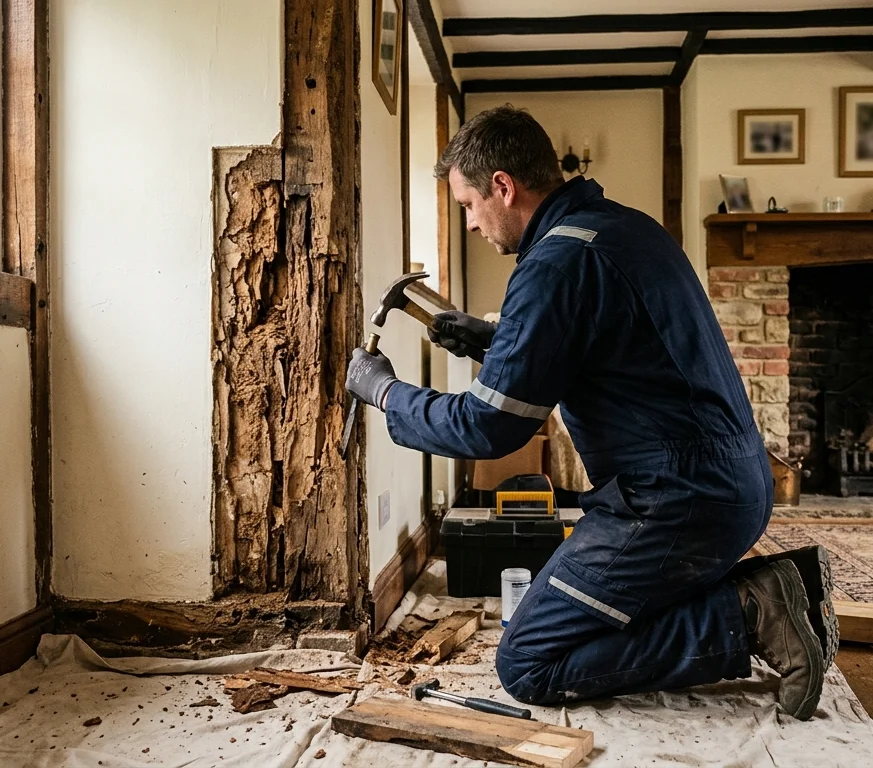
Imagine a period property where the homeowner has noticed peeling paint near the bottom of an internal wall. A previous contractor immediately recommended extensive remedial treatment.
A more detailed inspection considers the internal moisture pattern, external brickwork, nearby rainwater goods and ventilation. It finds that water is entering through a localised external defect rather than confirming the assumed diagnosis.
In this situation, repairing the external defect and allowing the affected area to dry may be more appropriate than applying an extensive internal system. The final solution depends on the evidence rather than the appearance of the wall alone.
What Does a Good Damp Service Look Like?
Good damp proofing services east london properties may require are built around diagnosis, communication and an appropriate scope of work.
You should expect the contractor to explain:
- What has been found
- What has not been confirmed
- What is likely to be causing the moisture
- What work is recommended
- Why that work is suitable
- What other repairs may be necessary
- What the quotation includes
- What happens after the work
You should also feel comfortable asking questions. A homeowner does not need to accept a treatment simply because it has been recommended.
If you want a property-specific assessment rather than a standardised treatment approach, contact Anke Damp Proofing to discuss your damp concerns and the most suitable next step.
How Can Homeowners Avoid Unnecessary Damp Work?
The simplest way is to slow the decision down long enough to understand the evidence.
Before approving treatment, check that:
- The likely cause has been explained.
- The affected areas are clearly identified.
- External and internal conditions have been considered.
- The proposed treatment relates to the diagnosis.
- Any necessary repairs are included or clearly identified.
- The quotation explains what is excluded.
- You understand the expected process.
A sensible assessment can help you avoid paying for work that does not address the actual source of moisture.
When comparing damp proof companies east london homeowners should look for clarity and evidence rather than simply choosing the most familiar treatment.
Final thoughts
A waterproofing quotation should give you confidence because it explains the proposed work clearly, not simply because it contains an attractive price. Understanding the cause of water ingress, the condition of the basement and the practical requirements of the project allows you to compare options more fairly.
When reviewing the structural waterproofing cost east london properties may involve, focus on what is included and whether the proposed solution addresses the conditions found during inspection. A detailed scope can prevent misunderstandings and unexpected additions later.
Anke Damp Proofing can provide practical guidance based on the individual property, helping homeowners understand their waterproofing options before work begins. Taking the time to clarify the scope at the quotation stage can make a significant difference to the confidence you have in the final decision.
Related articles

What best describes you?
Homeowner
Tenant
Management/Lettings Agent
Potential Buyer
Other
At a glance
That matters because treating the visible symptom without understanding the cause can lead to unnecessary work or a problem that returns. A property may have condensation, penetrating damp, plumbing leaks, defects to external walls or a combination of several issues.
For homeowners considering damp treatment, the most useful starting point is therefore evidence. A proper assessment should explain what is happening, why it is happening and which remedial measures are appropriate for the building.
If you are unsure what is causing damp at your property, contact Anke Damp Proofing for practical guidance before committing to a treatment that may not address the underlying issue.
Why Does Damp Need a Property-Specific Assessment?
Every building has its own construction, history and environmental conditions. Two neighbouring houses can experience completely different moisture problems even if they appear similar from the outside.
Factors that can influence damp include:
- The age and construction of the property
- Solid or cavity wall construction
- Condition of external brickwork
- Roofs, gutters and rainwater pipes
- Ground levels around external walls
- Plumbing and drainage
- Ventilation
- Heating patterns
- Previous damp treatment
- Alterations or extensions
This is why good damp proofing east london work should begin with understanding the property rather than automatically selecting a standard treatment.
A diagnosis should be based on the pattern and location of moisture, visible defects and the wider condition of the building.
What Are the Common Causes of Damp?
Several different problems can produce similar symptoms.
Penetrating damp occurs when water gets through the building envelope. Defective pointing, damaged gutters, cracked render or problems around windows can all contribute.
Condensation happens when warm, moisture-laden air meets colder surfaces. Poor ventilation, inadequate extraction and everyday activities such as cooking and drying clothes can increase indoor moisture.
Plumbing leaks can introduce water into walls, ceilings and floors. These can sometimes be hidden behind finishes and may continue until the source is repaired.
Ground-related moisture can affect lower sections of buildings, particularly where external ground levels, drainage or construction details create unfavourable conditions.
The important point is that the treatment should follow the diagnosis. A damp patch does not automatically tell you which category the problem belongs to.
(Link to related blog: Common Causes of Damp in East London Homes)
What Should a Damp Assessment Look At?
A useful assessment should consider both the affected internal areas and potential external causes.
The inspection may include:
| Area checked | What it can help identify |
| Internal walls | Moisture patterns and affected finishes |
| External walls | Cracks, defective pointing and other defects |
| Roof and rainwater goods | Potential sources of water penetration |
| Floors | Moisture affecting lower parts of the building |
| Windows and doors | Possible entry points for rainwater |
| Ventilation | Potential condensation-related issues |
| Plumbing | Leaks or water damage |
| Previous repairs | Whether earlier treatment remains effective |
Moisture readings can provide useful information, but they should not be treated as a diagnosis on their own. The readings need to be interpreted alongside the construction and physical evidence.
How Can You Tell If a Treatment Is Too Generic?
A treatment may deserve closer scrutiny if it is recommended before the property has been properly assessed.
Warning signs can include:
- The same treatment is proposed regardless of the location or severity of the damp.
- The explanation focuses only on moisture readings.
- External defects are not considered.
- Condensation is dismissed without discussion.
- The quotation does not identify the areas requiring treatment.
- There is no explanation of why the proposed system is suitable.
- Previous repairs are not taken into account.
This does not mean a standard system is always inappropriate. Some remedial approaches are widely used because they can be suitable for particular conditions. The important distinction is whether the treatment has been selected because it fits the property.
If you have received a recommendation and are not sure whether it matches the cause of the damp, speak to our team and ask us to explain the reasoning behind the proposed approach.
What Questions Should You Ask a Damp Contractor?
Homeowners do not need to become building specialists to make an informed decision. A few straightforward questions can reveal whether the proposed work has been properly considered.
Ask:
- What is causing the damp?
- What evidence supports that diagnosis?
- Were external areas inspected?
- Could plumbing or drainage be involved?
- Has condensation been considered?
- Which areas actually require treatment?
- What preparation is included?
- Does the proposed work address the moisture source?
- What happens after treatment?
- Are there any exclusions in the quotation?
Clear answers are a positive sign because they show how the recommendation connects to the condition of the building.
For damp proofing services east london homeowners should receive a scope that makes the proposed work understandable rather than simply listing a product or treatment name.
Does Previous Damp Treatment Affect the Next Decision?
Yes. Previous work can provide important information about the property.
If damp has returned after a previous treatment, it is worth finding out exactly what was done and when. There may be an unresolved moisture source, a defect that was not addressed or a treatment that was unsuitable for the original problem.
If possible, keep previous quotations, reports, guarantees and invoices. These documents can help a new contractor understand the history of the property.
Repeatedly applying new treatments without investigating why earlier work failed can make the problem more difficult to understand and potentially increase the overall cost.
What best describes you?
Homeowner
Tenant
Management/Lettings Agent
Potential Buyer
Other
It just takes 60 Second
And then you can book a free consultation
How Should You Compare Different Damp Treatment Quotes?
Price is important, but it should not be the only comparison.
When looking at two or more proposals, compare:
- Diagnosis
- Areas included
- Proposed treatment
- Preparation
- Associated repairs
- Making good
- Materials or systems
- Guarantees
- Exclusions
- Aftercare
A quote that appears more expensive may include necessary work that another contractor has left out. Conversely, a higher price does not automatically mean a better solution.
The goal is to find a proposal that is proportionate to the problem and clearly explains what will be done.
When comparing damp proofing east london options, homeowners should therefore assess the complete scope rather than choosing a contractor solely because the headline figure is lower.
What If Several Damp Problems Exist at Once?
It is possible for more than one moisture issue to affect the same property.
For example, a house might have condensation around cold external walls while also experiencing localised water penetration near a damaged gutter. Treating one issue would not necessarily resolve the other.
A good assessment should distinguish between separate causes where evidence supports them. This can prevent homeowners from expecting one treatment to solve every moisture-related symptom.
The same principle applies to older properties where previous alterations may have changed how moisture moves through walls, floors or ventilation systems.
A Typical East London Home Scenario
Imagine a period property where the homeowner has noticed peeling paint near the bottom of an internal wall. A previous contractor immediately recommended extensive remedial treatment.
A more detailed inspection considers the internal moisture pattern, external brickwork, nearby rainwater goods and ventilation. It finds that water is entering through a localised external defect rather than confirming the assumed diagnosis.
In this situation, repairing the external defect and allowing the affected area to dry may be more appropriate than applying an extensive internal system. The final solution depends on the evidence rather than the appearance of the wall alone.
What Does a Good Damp Service Look Like?
Good damp proofing services east london properties may require are built around diagnosis, communication and an appropriate scope of work.
You should expect the contractor to explain:
- What has been found
- What has not been confirmed
- What is likely to be causing the moisture
- What work is recommended
- Why that work is suitable
- What other repairs may be necessary
- What the quotation includes
- What happens after the work
You should also feel comfortable asking questions. A homeowner does not need to accept a treatment simply because it has been recommended.
If you want a property-specific assessment rather than a standardised treatment approach, contact Anke Damp Proofing to discuss your damp concerns and the most suitable next step.
How Can Homeowners Avoid Unnecessary Damp Work?
The simplest way is to slow the decision down long enough to understand the evidence.
Before approving treatment, check that:
- The likely cause has been explained.
- The affected areas are clearly identified.
- External and internal conditions have been considered.
- The proposed treatment relates to the diagnosis.
- Any necessary repairs are included or clearly identified.
- The quotation explains what is excluded.
- You understand the expected process.
A sensible assessment can help you avoid paying for work that does not address the actual source of moisture.
When comparing damp proof companies east london homeowners should look for clarity and evidence rather than simply choosing the most familiar treatment.
Final thoughts
A waterproofing quotation should give you confidence because it explains the proposed work clearly, not simply because it contains an attractive price. Understanding the cause of water ingress, the condition of the basement and the practical requirements of the project allows you to compare options more fairly.
When reviewing the structural waterproofing cost east london properties may involve, focus on what is included and whether the proposed solution addresses the conditions found during inspection. A detailed scope can prevent misunderstandings and unexpected additions later.
Anke Damp Proofing can provide practical guidance based on the individual property, helping homeowners understand their waterproofing options before work begins. Taking the time to clarify the scope at the quotation stage can make a significant difference to the confidence you have in the final decision.
Related articles
What best describes you?
Homeowner
Tenant
Management/Lettings Agent
Potential Buyer