
Dry Rot Treatment West London: Protecting Structural Timber in 2026
Dry rot is one of the most serious forms of timber decay found in UK properties. In West London, where a mix of older and modern homes exists, untreated dry rot can quickly lead to structural damage if not addressed correctly.

Why you can trust our content

At a glance
Understanding how dry rot develops and how dry rot treatment West London works is essential for protecting your property. Early action and the right expertise can prevent extensive repairs and maintain the integrity of your home.
If you suspect timber decay in your property, you can contact our team at Anke Damp Proofing for expert advice and a professional assessment.
What Is Dry Rot and Why Is It So Serious?
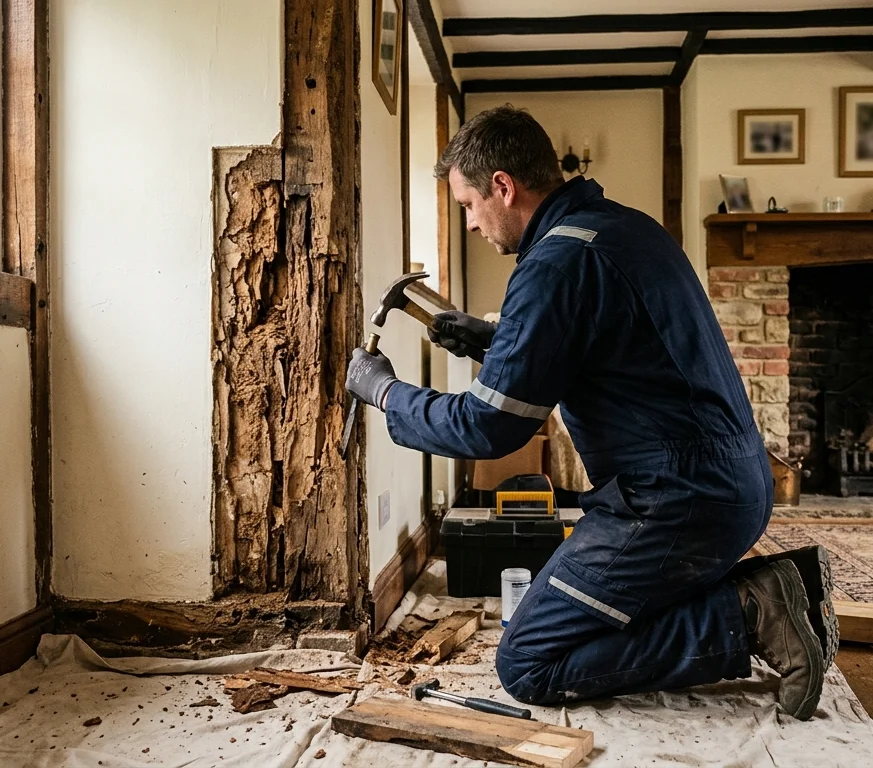
Dry rot is caused by a fungus that thrives in damp conditions and feeds on timber. Unlike wet rot, it can spread beyond the original moisture source, travelling through masonry to reach new timber areas.
This ability to spread makes it particularly destructive, as it can affect large sections of a property if left untreated.
What Are the Signs of Dry Rot?
Recognising the signs early is key to limiting damage.
Common indicators include:
- Cracked or brittle timber
- A dry, crumbly texture in wood
- Fungal growth or spore dust
- Musty or damp odours
- Shrinking or distorted timber
If you notice these signs, it is important to seek dry rot treatment West London as soon as possible.
How Does Dry Rot Spread?
Dry rot spreads through spores that thrive in damp environments. Once established, it can grow across surfaces and penetrate materials to reach new timber sources.
Key factors that contribute to spread include:
- High moisture levels
- Poor ventilation
- Hidden damp areas
- Untreated timber
Controlling these conditions is essential to stopping the fungus from spreading further.
How Is Dry Rot Treated?
Effective treatment requires a comprehensive approach that addresses both the fungus and the conditions that allowed it to develop.
Typical dry rot treatment West London involves:
- Identifying and eliminating the moisture source
- Removing infected and at-risk timber
- Treating surrounding areas with specialist solutions
- Improving ventilation and airflow
Professional dry rot repair services west london ensure that the problem is fully resolved and does not return.
What best describes you?

Homeowner

Tenant

Management/Lettings Agent

Potential Buyer

Other
It just takes 60 Second
And then you can book a free consultation
Why Is Professional Treatment Essential?
Dry rot is not a surface-level issue. Its ability to spread means that incomplete treatment can lead to recurring problems.
Working with local dry rot experts west london ensures:
- Accurate identification of the extent of the issue
- Proper removal of affected materials
- Use of appropriate treatment methods
- Long-term protection of the property
Professional expertise is crucial for effective and lasting results.
What Happens If Dry Rot Is Ignored?
Ignoring dry rot can lead to significant structural damage over time.
Potential consequences include:
- Weakening of floors and joists
- Damage to walls and structural timber
- Increased repair costs
- Reduced property value
Early intervention is always the most cost-effective approach.
Comparing Early vs Late Treatment
| Stage of Treatment | Condition of Timber | Required Work | Cost Impact |
| Early Stage | Localised damage | Targeted repairs | Lower overall cost |
| Advanced Stage | Widespread structural damage | Extensive removal and repairs | Higher overall cost |
Acting early can significantly reduce both disruption and expense.
Case Study: Dry Rot in a West London Property
A homeowner in West London discovered cracking floorboards and a musty smell in their living room. Initial inspection suggested possible dry rot.
A detailed survey confirmed the presence of dry rot affecting several timber joists. A comprehensive treatment plan was implemented, including removal of infected timber, treatment of surrounding areas, and improved ventilation.
By addressing the issue promptly with professional dry rot repair services west london, the homeowner prevented further structural damage and restored the integrity of the property.
How Can You Prevent Dry Rot?
Prevention focuses on controlling moisture and maintaining a dry environment.
Key steps include:
- Fixing leaks and damp issues promptly
- Ensuring proper ventilation throughout the property
- Regularly inspecting timber elements
- Maintaining gutters and external structures
Reducing moisture levels is the most effective way to prevent dry rot from developing.
When Should You Call a Specialist?
It is important to seek professional help as soon as you suspect dry rot.
You should act if:
- Timber appears brittle or damaged
- Musty odours persist
- Damp issues are present alongside timber decay
- Previous treatments have not resolved the problem
Early assessment ensures that the issue is properly diagnosed and treated.
Our team at Anke Damp Proofing can carry out a detailed survey and recommend the most effective treatment for your property.
Conclusion
Dry rot is a serious issue that requires prompt and professional attention. By understanding the signs, causes, and treatment process, homeowners in West London can take the necessary steps to protect their property.
Early intervention, combined with effective treatment and ongoing prevention, ensures that timber structures remain strong and secure. With the right approach, even severe cases can be successfully managed.
If you’re concerned about dry rot, contact Anke Damp Proofing to arrange a survey and receive expert advice tailored to your home.
Related articles

What best describes you?
Homeowner
Tenant
Management/Lettings Agent
Potential Buyer
Other
At a glance
Understanding how dry rot develops and how dry rot treatment West London works is essential for protecting your property. Early action and the right expertise can prevent extensive repairs and maintain the integrity of your home.
If you suspect timber decay in your property, you can contact our team at Anke Damp Proofing for expert advice and a professional assessment.
What Is Dry Rot and Why Is It So Serious?
Dry rot is caused by a fungus that thrives in damp conditions and feeds on timber. Unlike wet rot, it can spread beyond the original moisture source, travelling through masonry to reach new timber areas.
This ability to spread makes it particularly destructive, as it can affect large sections of a property if left untreated.
What Are the Signs of Dry Rot?
Recognising the signs early is key to limiting damage.
Common indicators include:
- Cracked or brittle timber
- A dry, crumbly texture in wood
- Fungal growth or spore dust
- Musty or damp odours
- Shrinking or distorted timber
If you notice these signs, it is important to seek dry rot treatment West London as soon as possible.
How Does Dry Rot Spread?
Dry rot spreads through spores that thrive in damp environments. Once established, it can grow across surfaces and penetrate materials to reach new timber sources.
Key factors that contribute to spread include:
- High moisture levels
- Poor ventilation
- Hidden damp areas
- Untreated timber
Controlling these conditions is essential to stopping the fungus from spreading further.
How Is Dry Rot Treated?
Effective treatment requires a comprehensive approach that addresses both the fungus and the conditions that allowed it to develop.
Typical dry rot treatment West London involves:
- Identifying and eliminating the moisture source
- Removing infected and at-risk timber
- Treating surrounding areas with specialist solutions
- Improving ventilation and airflow
Professional dry rot repair services west london ensure that the problem is fully resolved and does not return.
What best describes you?
Homeowner
Tenant
Management/Lettings Agent
Potential Buyer
Other
It just takes 60 Second
And then you can book a free consultation
Why Is Professional Treatment Essential?
Dry rot is not a surface-level issue. Its ability to spread means that incomplete treatment can lead to recurring problems.
Working with local dry rot experts west london ensures:
- Accurate identification of the extent of the issue
- Proper removal of affected materials
- Use of appropriate treatment methods
- Long-term protection of the property
Professional expertise is crucial for effective and lasting results.
What Happens If Dry Rot Is Ignored?
Ignoring dry rot can lead to significant structural damage over time.
Potential consequences include:
- Weakening of floors and joists
- Damage to walls and structural timber
- Increased repair costs
- Reduced property value
Early intervention is always the most cost-effective approach.
Comparing Early vs Late Treatment
| Stage of Treatment | Condition of Timber | Required Work | Cost Impact |
| Early Stage | Localised damage | Targeted repairs | Lower overall cost |
| Advanced Stage | Widespread structural damage | Extensive removal and repairs | Higher overall cost |
Acting early can significantly reduce both disruption and expense.
Case Study: Dry Rot in a West London Property
A homeowner in West London discovered cracking floorboards and a musty smell in their living room. Initial inspection suggested possible dry rot.
A detailed survey confirmed the presence of dry rot affecting several timber joists. A comprehensive treatment plan was implemented, including removal of infected timber, treatment of surrounding areas, and improved ventilation.
By addressing the issue promptly with professional dry rot repair services west london, the homeowner prevented further structural damage and restored the integrity of the property.
How Can You Prevent Dry Rot?
Prevention focuses on controlling moisture and maintaining a dry environment.
Key steps include:
- Fixing leaks and damp issues promptly
- Ensuring proper ventilation throughout the property
- Regularly inspecting timber elements
- Maintaining gutters and external structures
Reducing moisture levels is the most effective way to prevent dry rot from developing.
When Should You Call a Specialist?
It is important to seek professional help as soon as you suspect dry rot.
You should act if:
- Timber appears brittle or damaged
- Musty odours persist
- Damp issues are present alongside timber decay
- Previous treatments have not resolved the problem
Early assessment ensures that the issue is properly diagnosed and treated.
Our team at Anke Damp Proofing can carry out a detailed survey and recommend the most effective treatment for your property.
Conclusion
Dry rot is a serious issue that requires prompt and professional attention. By understanding the signs, causes, and treatment process, homeowners in West London can take the necessary steps to protect their property.
Early intervention, combined with effective treatment and ongoing prevention, ensures that timber structures remain strong and secure. With the right approach, even severe cases can be successfully managed.
If you’re concerned about dry rot, contact Anke Damp Proofing to arrange a survey and receive expert advice tailored to your home.
Related articles
What best describes you?
Homeowner
Tenant
Management/Lettings Agent
Potential Buyer