

Damp Returning After Treatment in North London: Budgeting for Reinspection and Corrective Work
When damp returns after treatment, the first reaction is often to assume that the original work has failed. In reality,…

Why you can trust our content
At a glance
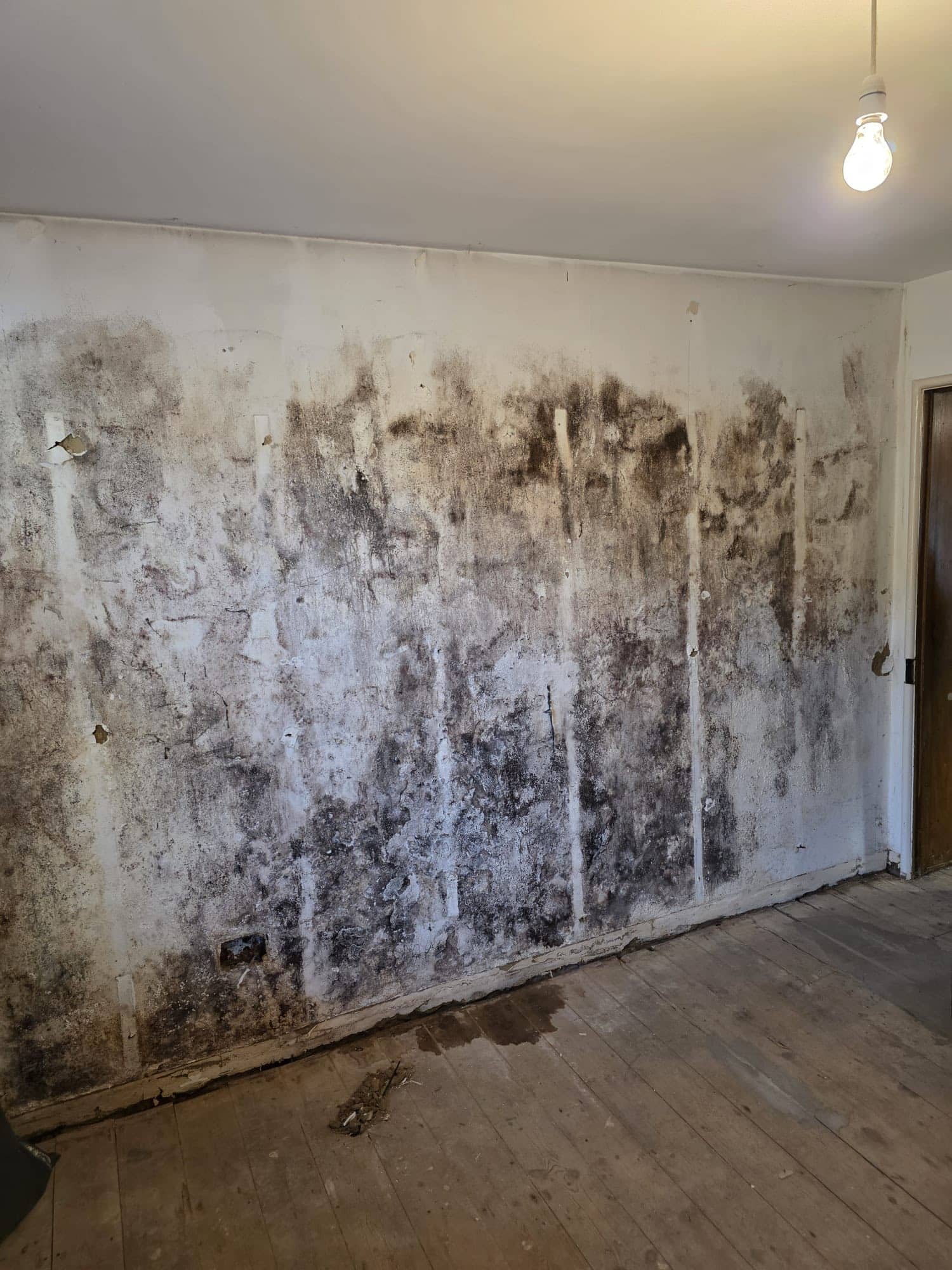
When damp returns after treatment, the first reaction is often to assume that the original work has failed. In reality, recurring moisture can have several possible causes. A new leak, defective drainage, changing external conditions or an unresolved moisture pathway can all produce similar symptoms.
Before budgeting for corrective work, it is therefore important to establish why the damp has returned and whether the original treatment needs to be repaired, extended or replaced.
A follow-up inspection can provide the evidence needed to make that decision. It can also help property owners understand which costs are likely to relate to investigation, treatment, timber repairs, waterproofing or reinstatement.
Anke Damp Proofing can assess recurring moisture, review affected areas and explain what further investigation or remedial work may be appropriate.
Why can damp return after treatment?
Damp can reappear for reasons that are not necessarily connected to the original treatment.
For example, an external drainage problem may develop after the initial work. A leaking gutter or downpipe can introduce water into masonry, while raised external ground levels can increase moisture exposure around walls.
Other potential causes include:
- Plumbing leaks
- Damaged pointing or render
- Blocked or defective drainage
- Water ingress
- Condensation
- Changes to external ground levels
- Damage caused by later building work
- Incomplete resolution of the original moisture source
The visible damp patch is therefore only one part of the investigation.
The first question should be whether the moisture is coming from the same source as before.
What should happen before corrective work is priced?
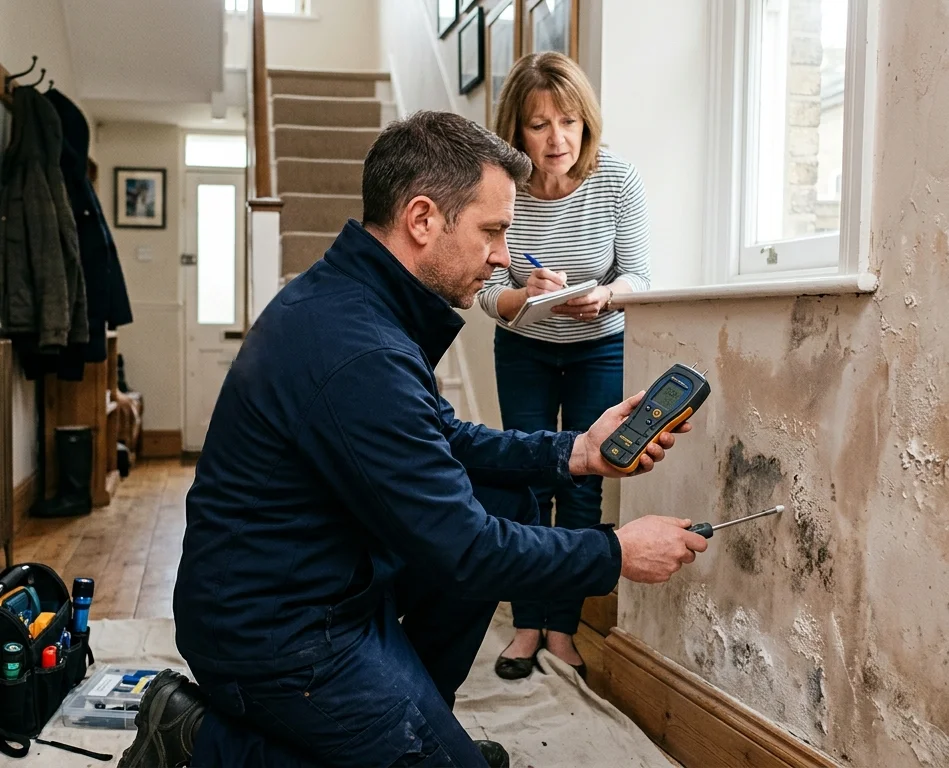
A reinspection should establish the current condition of the affected property.
Where possible, previous reports and treatment records should be reviewed alongside new observations. This can help identify whether the affected area corresponds with the original problem.
An inspection may include:
| Area | What may be assessed | Purpose |
|---|---|---|
| Previously treated walls | Moisture readings and visible staining | Establish current moisture levels |
| Timber | Moisture content and decay | Identify possible rot-related damage |
| Waterproofing | Membranes and junctions | Check for damage or deterioration |
| External areas | Drainage, pointing and rainwater goods | Identify external moisture sources |
| Floors | Dampness and water movement | Assess possible below-ground moisture |
| Internal finishes | Blistering, salts and mould | Identify signs of continuing moisture |
This information can then be used to decide whether corrective work is justified.
How much should you budget for a damp proofing quote in North London?
A damp proofing quote north london property owners receive can vary depending on the type and extent of the problem.
There is a major difference between correcting a localised moisture source and carrying out extensive remedial work throughout several rooms.
Factors that can affect the quotation include:
- Size of the affected area
- Type and source of moisture
- Accessibility
- Preparation required
- Existing treatment condition
- Removal of damaged finishes
- Materials required
- Timber repairs
- Waterproofing requirements
- Reinstatement work
- Testing and follow-up monitoring
The quotation should therefore be considered as a description of a specific remedial project rather than a standard price for "damp treatment".
Does a reinspection always mean more treatment is needed?
No. A reinspection may show that the original treatment is still functioning and that the current moisture has another cause.
For example, if moisture has entered through a damaged external pipe, repairing the pipe may be more relevant than replacing an existing damp-proofing system.
Similarly, if moisture readings are gradually reducing and the property is still within the expected drying period, further treatment may not be appropriate.
The purpose of the inspection is to determine what is happening now, not simply to repeat previous work.
A measured approach can help distinguish between ongoing moisture, normal drying and a genuinely new or recurring defect.
When could timber repairs form part of corrective work?
Timber should receive particular attention where damp has been present for a prolonged period.
Persistent moisture can create conditions suitable for timber decay. The extent of any damage may not always be visible initially, particularly where timber is concealed behind finishes or within floors and walls.
Signs that warrant further investigation can include:
- Soft or weakened timber
- Discolouration
- Fungal growth
- Crumbling timber
- Persistent musty odours
- Elevated moisture readings
- Timber that remains damp after surrounding masonry has dried
Where decay is confirmed, dry rot repair services north london may form part of the corrective programme.
The quotation should identify the affected timber and explain whether treatment, local repair or replacement is proposed.
What if the problem is wet rot rather than damp?
Wet rot is associated with damp timber, so identifying and controlling the moisture source is central to addressing the problem.
Where timber remains exposed to persistent moisture, repairs may not provide a durable result unless the underlying conditions are also corrected.
An inspection by local wet rot experts north london may consider the timber’s condition, moisture levels and surrounding construction.
The work required can vary from addressing the source of water and treating affected timber to replacing sections that are too deteriorated to retain.
This is another reason why a corrective quotation should explain the complete scope rather than listing only a timber treatment product.
When might structural waterproofing be included?
Structural waterproofing may become relevant where recurring moisture is entering below-ground or structurally enclosed areas.
This can include basements, cellars and other areas where water pressure or groundwater creates conditions that ordinary surface treatments cannot adequately control.
A review may consider:
- Existing membrane condition
- Wall and floor junctions
- Penetrations and service entries
- Signs of water pressure
- Drainage arrangements
- Previous waterproofing details
- Damage from later construction
Where further intervention is justified, structural waterproofing services north london can be designed around the actual moisture pathway and construction of the building.
What affects structural waterproofing cost in North London?
The structural waterproofing cost north london property owners face can vary substantially.
The price is influenced by the scale of the area, accessibility and the condition of the existing structure. A localised membrane repair may have very different requirements from a larger basement waterproofing project.
Other factors can include:
- Extent of water ingress
- Existing membrane or coating
- Substrate preparation
- Junction and penetration details
- Drainage requirements
- Access limitations
- Removal of existing finishes
- Reinstatement
- Testing and follow-up work
This makes it difficult to use a generic online figure as a reliable project budget.
A site assessment can provide a more useful basis for understanding what work may actually be required.
How should you think about the average cost of damp proofing?
Searches for the average cost of damp proofing can provide broad information, but averages should be treated carefully.
Different damp problems require different investigation and treatment methods. The size of the property alone does not determine the cost.
For example, a localised wall issue caused by an identifiable moisture source may require a very different solution from widespread damp affecting several areas and associated timber.
When researching costs, consider whether a published figure includes:
- Inspection
- Diagnosis
- Preparation
- Treatment
- Materials
- Timber repairs
- Waterproofing
- Plaster or finish removal
- Reinstatement
- Follow-up checks
A low headline figure may not represent the total cost of a complete remedial project.
What should a corrective quotation explain?
A corrective quotation should make the relationship between the identified problem and proposed work clear.
Ideally, the document should state which areas were inspected, what was found and what treatment is recommended.
It should also explain whether the quotation includes preparation and reinstatement, as these can represent a significant part of the overall project.
Before accepting a quote, property owners may wish to check:
- What caused the damp to return?
- Which areas require work?
- Is existing treatment being repaired or replaced?
- Are timber repairs included?
- Is waterproofing required?
- What preparation is included?
- Will damaged finishes be reinstated?
- Are testing or follow-up visits included?
- Are there exclusions or potential additional costs?
A clear scope makes it easier to compare quotations based on the actual work involved.
Could the cheapest corrective option create further problems?
A lower initial price does not necessarily mean the underlying problem has been fully addressed.
If a moisture source remains active, simply treating the visible surface may leave the property vulnerable to further damp. Similarly, replacing damaged timber without correcting persistent moisture can leave new timber exposed to similar conditions.
Corrective work should therefore be proportionate to the diagnosis.
The objective is not to specify the most extensive treatment possible. It is to identify the work required to address the actual cause and condition of the building.
If damp has returned after previous treatment, a professional reinspection can help establish whether further work is necessary and what should be included in any corrective quotation.
A typical North London recurring damp scenario
Imagine a property where damp treatment was completed several months earlier. The affected wall initially appeared to improve, but staining begins to return during periods of heavy rain.
A follow-up assessment finds that the original treated area is not showing signs of widespread failure. Instead, a defective rainwater connection is allowing water to reach the external wall.
Once the external defect is addressed, moisture levels can be monitored to determine whether the wall begins drying normally.
If timber damage is subsequently identified, a separate repair may be required. The important point is that the corrective programme follows the evidence rather than automatically repeating the original treatment.
How can property owners prepare for a reinspection?
Having previous documentation available can make a follow-up assessment more useful.
Useful information can include the original survey, treatment report, photographs, quotation, warranty information and details of any changes made to the property since the work was completed.
Property owners can also note:
- When the damp first returned
- Whether it changes after rainfall
- Which rooms are affected
- Whether staining is spreading
- Whether mould or odours have appeared
- Whether any plumbing or building work has taken place
- Whether the affected area was previously treated
These details can help provide a clearer history of the problem.
Related articles

What best describes you?

Homeowner

Tenant

Management/Lettings Agent

Potential Buyer

Other
At a glance
When damp returns after treatment, the first reaction is often to assume that the original work has failed. In reality, recurring moisture can have several possible causes. A new leak, defective drainage, changing external conditions or an unresolved moisture pathway can all produce similar symptoms.
Before budgeting for corrective work, it is therefore important to establish why the damp has returned and whether the original treatment needs to be repaired, extended or replaced.
A follow-up inspection can provide the evidence needed to make that decision. It can also help property owners understand which costs are likely to relate to investigation, treatment, timber repairs, waterproofing or reinstatement.
Anke Damp Proofing can assess recurring moisture, review affected areas and explain what further investigation or remedial work may be appropriate.
Why can damp return after treatment?
Damp can reappear for reasons that are not necessarily connected to the original treatment.
For example, an external drainage problem may develop after the initial work. A leaking gutter or downpipe can introduce water into masonry, while raised external ground levels can increase moisture exposure around walls.
Other potential causes include:
- Plumbing leaks
- Damaged pointing or render
- Blocked or defective drainage
- Water ingress
- Condensation
- Changes to external ground levels
- Damage caused by later building work
- Incomplete resolution of the original moisture source
The visible damp patch is therefore only one part of the investigation.
The first question should be whether the moisture is coming from the same source as before.
What should happen before corrective work is priced?
A reinspection should establish the current condition of the affected property.
Where possible, previous reports and treatment records should be reviewed alongside new observations. This can help identify whether the affected area corresponds with the original problem.
An inspection may include:
| Area | What may be assessed | Purpose |
|---|---|---|
| Previously treated walls | Moisture readings and visible staining | Establish current moisture levels |
| Timber | Moisture content and decay | Identify possible rot-related damage |
| Waterproofing | Membranes and junctions | Check for damage or deterioration |
| External areas | Drainage, pointing and rainwater goods | Identify external moisture sources |
| Floors | Dampness and water movement | Assess possible below-ground moisture |
| Internal finishes | Blistering, salts and mould | Identify signs of continuing moisture |
This information can then be used to decide whether corrective work is justified.
How much should you budget for a damp proofing quote in North London?
A damp proofing quote north london property owners receive can vary depending on the type and extent of the problem.
There is a major difference between correcting a localised moisture source and carrying out extensive remedial work throughout several rooms.
Factors that can affect the quotation include:
- Size of the affected area
- Type and source of moisture
- Accessibility
- Preparation required
- Existing treatment condition
- Removal of damaged finishes
- Materials required
- Timber repairs
- Waterproofing requirements
- Reinstatement work
- Testing and follow-up monitoring
The quotation should therefore be considered as a description of a specific remedial project rather than a standard price for "damp treatment".
Does a reinspection always mean more treatment is needed?
No. A reinspection may show that the original treatment is still functioning and that the current moisture has another cause.
For example, if moisture has entered through a damaged external pipe, repairing the pipe may be more relevant than replacing an existing damp-proofing system.
Similarly, if moisture readings are gradually reducing and the property is still within the expected drying period, further treatment may not be appropriate.
The purpose of the inspection is to determine what is happening now, not simply to repeat previous work.
A measured approach can help distinguish between ongoing moisture, normal drying and a genuinely new or recurring defect.
When could timber repairs form part of corrective work?
Timber should receive particular attention where damp has been present for a prolonged period.
Persistent moisture can create conditions suitable for timber decay. The extent of any damage may not always be visible initially, particularly where timber is concealed behind finishes or within floors and walls.
Signs that warrant further investigation can include:
- Soft or weakened timber
- Discolouration
- Fungal growth
- Crumbling timber
- Persistent musty odours
- Elevated moisture readings
- Timber that remains damp after surrounding masonry has dried
Where decay is confirmed, dry rot repair services north london may form part of the corrective programme.
The quotation should identify the affected timber and explain whether treatment, local repair or replacement is proposed.
What if the problem is wet rot rather than damp?
Wet rot is associated with damp timber, so identifying and controlling the moisture source is central to addressing the problem.
Where timber remains exposed to persistent moisture, repairs may not provide a durable result unless the underlying conditions are also corrected.
An inspection by local wet rot experts north london may consider the timber’s condition, moisture levels and surrounding construction.
The work required can vary from addressing the source of water and treating affected timber to replacing sections that are too deteriorated to retain.
This is another reason why a corrective quotation should explain the complete scope rather than listing only a timber treatment product.
When might structural waterproofing be included?
Structural waterproofing may become relevant where recurring moisture is entering below-ground or structurally enclosed areas.
This can include basements, cellars and other areas where water pressure or groundwater creates conditions that ordinary surface treatments cannot adequately control.
A review may consider:
- Existing membrane condition
- Wall and floor junctions
- Penetrations and service entries
- Signs of water pressure
- Drainage arrangements
- Previous waterproofing details
- Damage from later construction
Where further intervention is justified, structural waterproofing services north london can be designed around the actual moisture pathway and construction of the building.
What affects structural waterproofing cost in North London?
The structural waterproofing cost north london property owners face can vary substantially.
The price is influenced by the scale of the area, accessibility and the condition of the existing structure. A localised membrane repair may have very different requirements from a larger basement waterproofing project.
Other factors can include:
- Extent of water ingress
- Existing membrane or coating
- Substrate preparation
- Junction and penetration details
- Drainage requirements
- Access limitations
- Removal of existing finishes
- Reinstatement
- Testing and follow-up work
This makes it difficult to use a generic online figure as a reliable project budget.
A site assessment can provide a more useful basis for understanding what work may actually be required.
How should you think about the average cost of damp proofing?
Searches for the average cost of damp proofing can provide broad information, but averages should be treated carefully.
Different damp problems require different investigation and treatment methods. The size of the property alone does not determine the cost.
For example, a localised wall issue caused by an identifiable moisture source may require a very different solution from widespread damp affecting several areas and associated timber.
When researching costs, consider whether a published figure includes:
- Inspection
- Diagnosis
- Preparation
- Treatment
- Materials
- Timber repairs
- Waterproofing
- Plaster or finish removal
- Reinstatement
- Follow-up checks
A low headline figure may not represent the total cost of a complete remedial project.
What should a corrective quotation explain?
A corrective quotation should make the relationship between the identified problem and proposed work clear.
Ideally, the document should state which areas were inspected, what was found and what treatment is recommended.
It should also explain whether the quotation includes preparation and reinstatement, as these can represent a significant part of the overall project.
Before accepting a quote, property owners may wish to check:
- What caused the damp to return?
- Which areas require work?
- Is existing treatment being repaired or replaced?
- Are timber repairs included?
- Is waterproofing required?
- What preparation is included?
- Will damaged finishes be reinstated?
- Are testing or follow-up visits included?
- Are there exclusions or potential additional costs?
A clear scope makes it easier to compare quotations based on the actual work involved.
Could the cheapest corrective option create further problems?
A lower initial price does not necessarily mean the underlying problem has been fully addressed.
If a moisture source remains active, simply treating the visible surface may leave the property vulnerable to further damp. Similarly, replacing damaged timber without correcting persistent moisture can leave new timber exposed to similar conditions.
Corrective work should therefore be proportionate to the diagnosis.
The objective is not to specify the most extensive treatment possible. It is to identify the work required to address the actual cause and condition of the building.
If damp has returned after previous treatment, a professional reinspection can help establish whether further work is necessary and what should be included in any corrective quotation.
A typical North London recurring damp scenario
Imagine a property where damp treatment was completed several months earlier. The affected wall initially appeared to improve, but staining begins to return during periods of heavy rain.
A follow-up assessment finds that the original treated area is not showing signs of widespread failure. Instead, a defective rainwater connection is allowing water to reach the external wall.
Once the external defect is addressed, moisture levels can be monitored to determine whether the wall begins drying normally.
If timber damage is subsequently identified, a separate repair may be required. The important point is that the corrective programme follows the evidence rather than automatically repeating the original treatment.
How can property owners prepare for a reinspection?
Having previous documentation available can make a follow-up assessment more useful.
Useful information can include the original survey, treatment report, photographs, quotation, warranty information and details of any changes made to the property since the work was completed.
Property owners can also note:
- When the damp first returned
- Whether it changes after rainfall
- Which rooms are affected
- Whether staining is spreading
- Whether mould or odours have appeared
- Whether any plumbing or building work has taken place
- Whether the affected area was previously treated
These details can help provide a clearer history of the problem.
Related articles
What best describes you?
Homeowner
Tenant
Management/Lettings Agent
Potential Buyer