

East London Terraces With Peeling Paint: Damp Clues Most Owners Miss
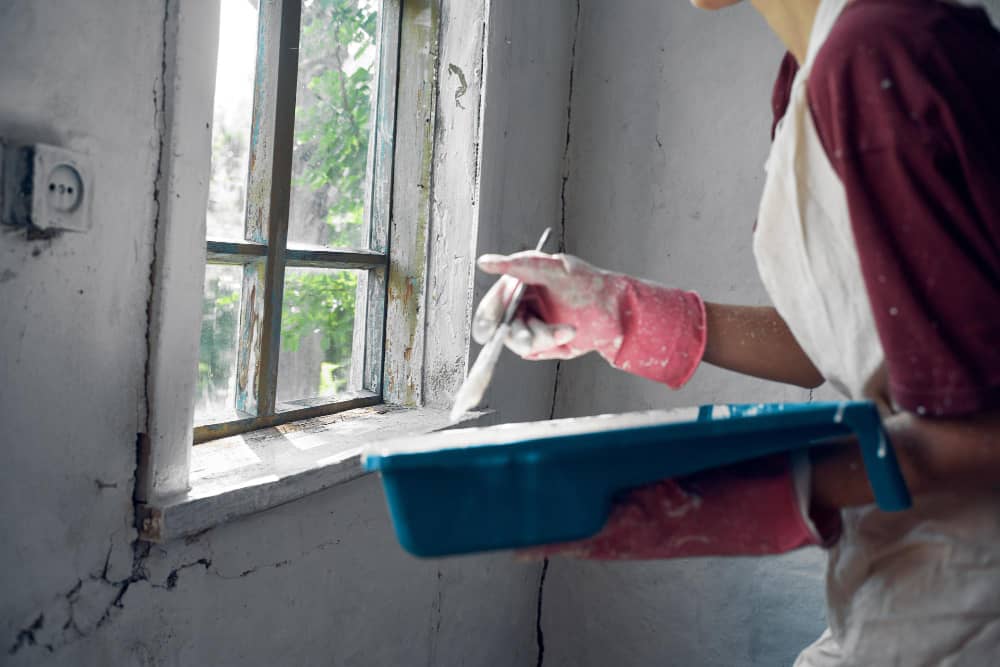
Peeling paint is often dismissed as a decorating issue, especially in older terraced homes where walls have been painted several times over the years.

Why you can trust our content
At a glance
However, when paint begins to blister, crack or lift away from the surface, it can be an early indication that moisture is affecting the building.
Across East London, many terraced properties combine traditional construction with decades of alterations and repairs. While this gives them plenty of character, it also means damp can develop in ways that are not always obvious. Understanding the warning signs before arranging repairs can help homeowners avoid unnecessary expense and tackle the real cause of the problem.
If you’ve noticed peeling paint or unexplained damp patches, contact Anke Damp Proofing for a professional assessment before starting any repair work.
Why does paint start peeling?
Paint normally peels because moisture is trapped beneath the surface. As water moves through plaster or masonry, it weakens the bond between the wall and the paint, causing it to bubble or flake away.
Several issues may contribute to this, including:
- Condensation in poorly ventilated rooms
- Water entering through damaged brickwork
- Leaking gutters or downpipes
- Plumbing defects hidden within walls
- Older damp proof course problems
- Previous repairs that have trapped moisture
Simply repainting the wall may improve its appearance temporarily, but unless the source of moisture is identified, the problem is likely to return.
Could peeling paint be the only warning sign?
Not always.
Visible paint damage often appears after moisture has been present for some time. Other signs may develop first but are easy to overlook during everyday life.
Look out for:
- Wallpaper lifting at the edges
- A musty smell that lingers
- Black mould in corners
- White powder deposits on plaster
- Cold or damp-feeling walls
- Crumbling plaster near skirting boards
When several of these symptoms occur together, they usually indicate that further investigation is worthwhile.
What best describes you?

Homeowner

Tenant

Management/Lettings Agent

Potential Buyer

Other
It just takes 60 Second
And then you can book a free consultation
Professional damp proofing east london starts with identifying the reason moisture is present rather than treating the decoration alone.
What should you check before arranging repairs?
Before contacting a specialist, take a few minutes to observe how the damp behaves.
Ask yourself:
- Does the damage worsen after rainfall?
- Is it limited to one wall?
- Does it appear mainly during winter?
- Are nearby gutters overflowing?
- Is furniture blocking airflow?
- Has the room recently been redecorated?
These simple observations can provide valuable information during a professional inspection.
What happens during a damp survey?
A proper damp survey east london involves much more than checking a stained wall with a moisture meter.
An experienced surveyor will assess how moisture may be entering or forming throughout the property before recommending any treatment.
| Area Inspected | Purpose |
| External walls | Identify cracks and water penetration |
| Roof and guttering | Check for rainwater defects |
| Ventilation | Assess condensation risk |
| Internal humidity | Understand moisture levels |
| Floors and skirting | Look for hidden damp |
| Wall construction | Determine how moisture behaves |
| Plumbing | Identify concealed leaks |
A detailed survey reduces the risk of unnecessary work by ensuring recommendations are based on evidence rather than assumptions.
Are East London terraces more prone to damp?
Many terraced homes were built using traditional materials that manage moisture differently from modern construction.
Solid brick walls, suspended timber floors and ageing mortar joints can all influence how water enters and moves through the building.
This does not mean every terrace has damp problems, but it does mean each property should be assessed individually rather than assuming every stain has the same cause.
Experienced specialists carrying out damp proofing east london understand these differences and adapt their recommendations accordingly.
Can decorating hide a bigger issue?
Yes.
Fresh paint often covers staining for a short time, but if moisture remains within the wall, the damage usually reappears.
A common example is a homeowner who redecorates after noticing peeling paint in a dining room. Within a few months, the new finish begins bubbling again because defective pointing on the external wall is still allowing rainwater to enter.
Situations like this show why diagnosis should always come before cosmetic repairs.
If recurring paint damage or damp patches are causing concern, Anke Damp Proofing can inspect your property and explain the most appropriate next steps.
When should you arrange a professional inspection?
Some signs of damp can be monitored for a short period, but others should be investigated as soon as possible to prevent further damage.
It is sensible to arrange a damp survey east london if you notice:
- Peeling paint returning after redecorating
- Damp patches becoming larger
- Persistent mould despite regular cleaning
- Plaster beginning to crumble
- A musty smell that does not disappear
- Signs of moisture after heavy rainfall
- Concerns before buying or renovating a property
Early investigation often prevents minor defects from developing into more costly repairs.
Why is identifying the source so important?
Visible damage only tells part of the story. Moisture can travel through brickwork, plaster and timber before becoming noticeable, meaning the affected area may not be where the problem began.
For example, a leaking gutter can allow rainwater into an external wall, while the first visible sign may appear several metres away inside the property. Likewise, poor ventilation in one part of the home may contribute to condensation elsewhere.
Professional damp proofing east london focuses on identifying the cause before recommending any remedial work. This approach helps ensure that repairs address the underlying issue rather than simply covering the symptoms.
If you’re planning refurbishment work, obtaining a damp proofing quote east london after a detailed inspection provides a clearer understanding of what work is genuinely required.
What makes a survey-led approach different?
A survey-led approach is based on investigation rather than assumption.
Instead of recommending treatments immediately, experienced specialists will:
- Examine both internal and external areas of the property
- Assess moisture patterns throughout the building
- Consider ventilation and heating
- Check for structural defects that may allow water ingress
- Explain the findings in clear, straightforward language
- Recommend only the work that is appropriate for the property
This process helps homeowners make informed decisions and reduces the likelihood of unnecessary or ineffective repairs.
[CTA 3]
If you’re concerned about peeling paint, damp walls or unexplained moisture in your East London home, contact Anke Damp Proofing. Our experienced team provides detailed inspections and practical advice based on the condition of your property.
Conclusion
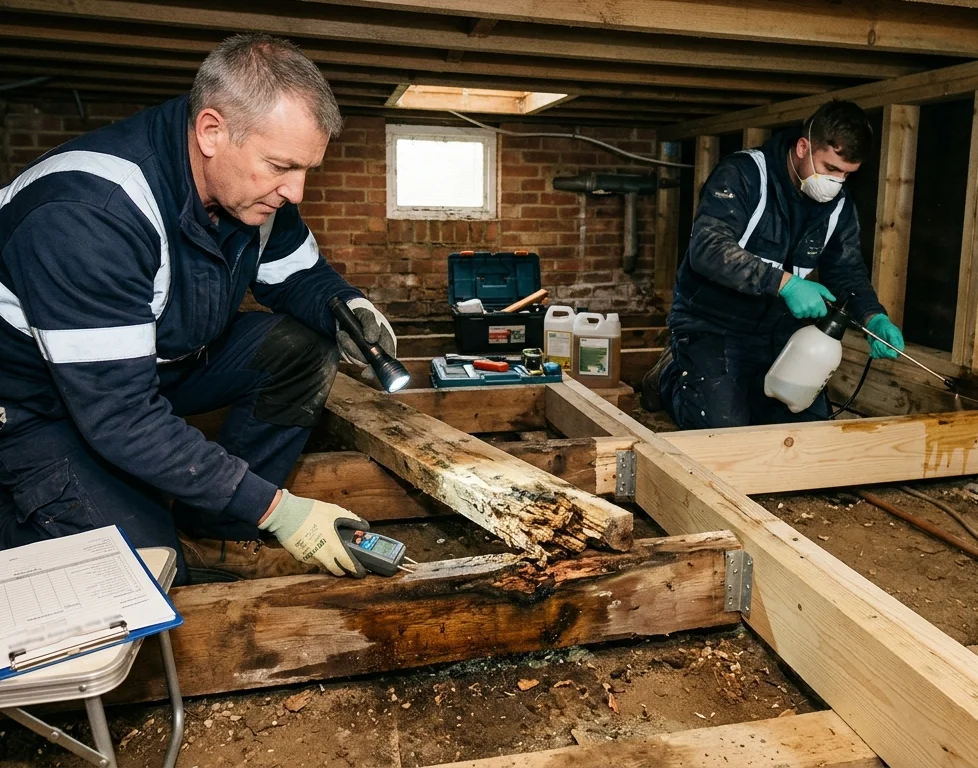
Problems beneath floorboards, inside joists and behind cellar walls are rarely isolated. In many cases, they are signs that moisture has been affecting the building for some time. Taking a methodical approach to investigation helps ensure the real cause is identified before repairs begin.
At Anke Damp Proofing, we carefully assess each property to understand how damp and timber decay are connected. Whether you’re dealing with a suspected rot issue, a damp cellar or concerns about structural timber, our experienced team can provide practical advice and recommend the most appropriate solution for your home.
Related articles
What best describes you?
Homeowner
Tenant
Management/Lettings Agent
Potential Buyer
Other
At a glance
However, when paint begins to blister, crack or lift away from the surface, it can be an early indication that moisture is affecting the building.
Across East London, many terraced properties combine traditional construction with decades of alterations and repairs. While this gives them plenty of character, it also means damp can develop in ways that are not always obvious. Understanding the warning signs before arranging repairs can help homeowners avoid unnecessary expense and tackle the real cause of the problem.
If you’ve noticed peeling paint or unexplained damp patches, contact Anke Damp Proofing for a professional assessment before starting any repair work.
Why does paint start peeling?
Paint normally peels because moisture is trapped beneath the surface. As water moves through plaster or masonry, it weakens the bond between the wall and the paint, causing it to bubble or flake away.
Several issues may contribute to this, including:
- Condensation in poorly ventilated rooms
- Water entering through damaged brickwork
- Leaking gutters or downpipes
- Plumbing defects hidden within walls
- Older damp proof course problems
- Previous repairs that have trapped moisture
Simply repainting the wall may improve its appearance temporarily, but unless the source of moisture is identified, the problem is likely to return.
Could peeling paint be the only warning sign?
Not always.
Visible paint damage often appears after moisture has been present for some time. Other signs may develop first but are easy to overlook during everyday life.
Look out for:
- Wallpaper lifting at the edges
- A musty smell that lingers
- Black mould in corners
- White powder deposits on plaster
- Cold or damp-feeling walls
- Crumbling plaster near skirting boards
When several of these symptoms occur together, they usually indicate that further investigation is worthwhile.
What best describes you?
Homeowner
Tenant
Management/Lettings Agent
Potential Buyer
Other
It just takes 60 Second
And then you can book a free consultation
Professional damp proofing east london starts with identifying the reason moisture is present rather than treating the decoration alone.
What should you check before arranging repairs?
Before contacting a specialist, take a few minutes to observe how the damp behaves.
Ask yourself:
- Does the damage worsen after rainfall?
- Is it limited to one wall?
- Does it appear mainly during winter?
- Are nearby gutters overflowing?
- Is furniture blocking airflow?
- Has the room recently been redecorated?
These simple observations can provide valuable information during a professional inspection.
What happens during a damp survey?
A proper damp survey east london involves much more than checking a stained wall with a moisture meter.
An experienced surveyor will assess how moisture may be entering or forming throughout the property before recommending any treatment.
| Area Inspected | Purpose |
| External walls | Identify cracks and water penetration |
| Roof and guttering | Check for rainwater defects |
| Ventilation | Assess condensation risk |
| Internal humidity | Understand moisture levels |
| Floors and skirting | Look for hidden damp |
| Wall construction | Determine how moisture behaves |
| Plumbing | Identify concealed leaks |
A detailed survey reduces the risk of unnecessary work by ensuring recommendations are based on evidence rather than assumptions.
Are East London terraces more prone to damp?
Many terraced homes were built using traditional materials that manage moisture differently from modern construction.
Solid brick walls, suspended timber floors and ageing mortar joints can all influence how water enters and moves through the building.
This does not mean every terrace has damp problems, but it does mean each property should be assessed individually rather than assuming every stain has the same cause.
Experienced specialists carrying out damp proofing east london understand these differences and adapt their recommendations accordingly.
Can decorating hide a bigger issue?
Yes.
Fresh paint often covers staining for a short time, but if moisture remains within the wall, the damage usually reappears.
A common example is a homeowner who redecorates after noticing peeling paint in a dining room. Within a few months, the new finish begins bubbling again because defective pointing on the external wall is still allowing rainwater to enter.
Situations like this show why diagnosis should always come before cosmetic repairs.
If recurring paint damage or damp patches are causing concern, Anke Damp Proofing can inspect your property and explain the most appropriate next steps.
When should you arrange a professional inspection?
Some signs of damp can be monitored for a short period, but others should be investigated as soon as possible to prevent further damage.
It is sensible to arrange a damp survey east london if you notice:
- Peeling paint returning after redecorating
- Damp patches becoming larger
- Persistent mould despite regular cleaning
- Plaster beginning to crumble
- A musty smell that does not disappear
- Signs of moisture after heavy rainfall
- Concerns before buying or renovating a property
Early investigation often prevents minor defects from developing into more costly repairs.
Why is identifying the source so important?
Visible damage only tells part of the story. Moisture can travel through brickwork, plaster and timber before becoming noticeable, meaning the affected area may not be where the problem began.
For example, a leaking gutter can allow rainwater into an external wall, while the first visible sign may appear several metres away inside the property. Likewise, poor ventilation in one part of the home may contribute to condensation elsewhere.
Professional damp proofing east london focuses on identifying the cause before recommending any remedial work. This approach helps ensure that repairs address the underlying issue rather than simply covering the symptoms.
If you’re planning refurbishment work, obtaining a damp proofing quote east london after a detailed inspection provides a clearer understanding of what work is genuinely required.
What makes a survey-led approach different?
A survey-led approach is based on investigation rather than assumption.
Instead of recommending treatments immediately, experienced specialists will:
- Examine both internal and external areas of the property
- Assess moisture patterns throughout the building
- Consider ventilation and heating
- Check for structural defects that may allow water ingress
- Explain the findings in clear, straightforward language
- Recommend only the work that is appropriate for the property
This process helps homeowners make informed decisions and reduces the likelihood of unnecessary or ineffective repairs.
[CTA 3]
If you’re concerned about peeling paint, damp walls or unexplained moisture in your East London home, contact Anke Damp Proofing. Our experienced team provides detailed inspections and practical advice based on the condition of your property.
Conclusion
Problems beneath floorboards, inside joists and behind cellar walls are rarely isolated. In many cases, they are signs that moisture has been affecting the building for some time. Taking a methodical approach to investigation helps ensure the real cause is identified before repairs begin.
At Anke Damp Proofing, we carefully assess each property to understand how damp and timber decay are connected. Whether you’re dealing with a suspected rot issue, a damp cellar or concerns about structural timber, our experienced team can provide practical advice and recommend the most appropriate solution for your home.
Related articles
What best describes you?
Homeowner
Tenant
Management/Lettings Agent
Potential Buyer