
Wet Rot Company vs Dry Rot Specialist: Understanding the Key Differences
Timber decay is a serious concern in many UK properties, particularly in older homes or buildings exposed to moisture. Two of the most common issues are wet rot and dry rot, and while they may sound similar, they require very different approaches.

Why you can trust our content

At a glance
Understanding who to call and when is essential. Choosing between a wet rot company and a dry rot specialist can make a significant difference in how effectively the problem is treated and how well your property is protected long term.
If you’re unsure which issue you’re dealing with, you can contact our team at Anke Damp Proofing for clear, expert guidance.
What Is the Difference Between Wet Rot and Dry Rot?
Although both forms of decay affect timber, they develop under different conditions and behave in distinct ways.
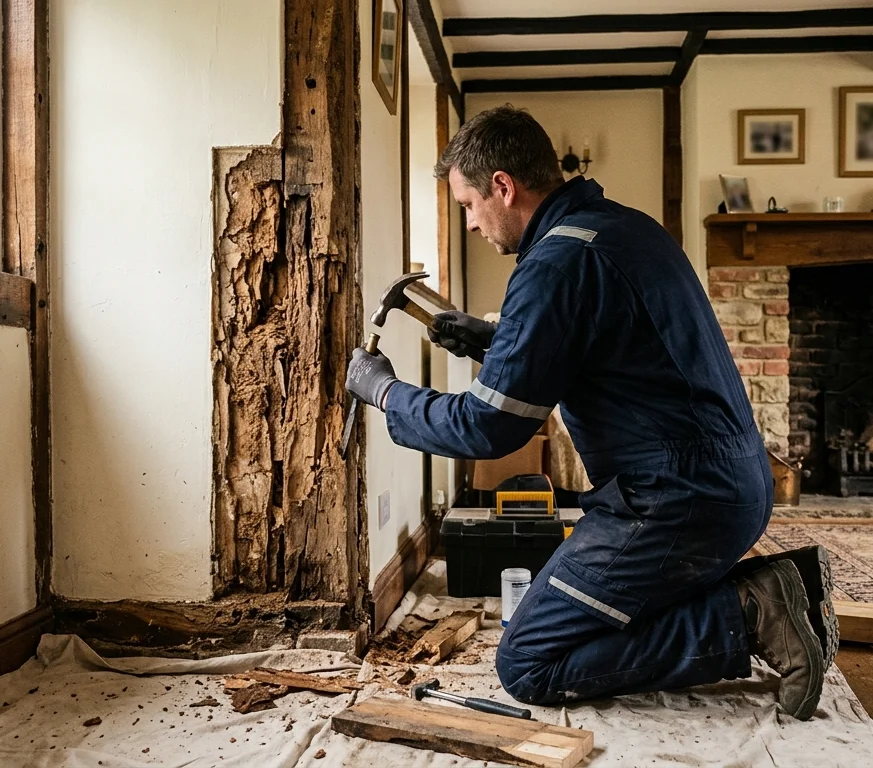
Wet rot occurs when timber is exposed to high levels of moisture over time. It tends to stay localised to the damp area and does not spread aggressively.
Dry rot, on the other hand, is more destructive. It can spread through masonry and affect timber beyond the original source of moisture, making it far more challenging to control.
When Should You Contact a Wet Rot Company?
If the issue is confined to a specific damp area and caused by consistent moisture, a wet rot company is usually the right choice.
Signs of wet rot include:
- Soft or spongy timber
- Darkened wood with cracking
- A damp, musty smell
- Localised damage near leaks or condensation
A wet rot company will focus on eliminating the moisture source and replacing affected timber where necessary.
What Does a Dry Rot Specialist Do Differently?
Dry rot requires a more comprehensive and specialist approach. It is not just about replacing damaged wood, but also stopping the fungus from spreading.
A dry rot specialist will typically:
- Identify the full extent of the outbreak
- Remove infected timber and surrounding materials
- Treat affected masonry with fungicidal solutions
- Improve ventilation to prevent recurrence
Because dry rot can travel beyond visible areas, thorough investigation is essential.
How Do Treatment Approaches Compare?
The treatment methods for wet rot and dry rot differ significantly in scope and complexity.
Wet Rot Treatment
- Address the source of moisture
- Replace damaged timber
- Improve ventilation if needed
What best describes you?

Homeowner

Tenant

Management/Lettings Agent

Potential Buyer

Other
It just takes 60 Second
And then you can book a free consultation
Dry Rot Treatment
- Remove infected and at-risk timber
- Apply chemical treatments
- Improve airflow and reduce humidity
- Repair structural damage where required
In general, dry rot treatments are more invasive due to the nature of the spread.
Is One More Expensive Than the Other?
Cost is often a key concern for homeowners, and understandably so.
The cost to repair dry rot is typically higher than treating wet rot. This is due to the need for extensive investigation, removal of materials, and specialist treatments.
In contrast, the cost to fix wet rot is usually lower, especially if the issue is identified early and remains localised.
However, costs can vary depending on factors such as:
- The extent of the damage
- Accessibility of affected areas
- Structural involvement
- Required repairs and materials
Early detection is always the most cost-effective approach.
Key Differences at a Glance
| Feature | Wet Rot | Dry Rot |
| Cause | Persistent moisture | Moisture with fungal spread |
| Spread | Localised | Can spread across structures |
| Severity | Moderate | High |
| Treatment Complexity | Relatively straightforward | More complex and invasive |
| Specialist Required | Wet rot company | Dry rot specialist |
Understanding these differences helps ensure the correct treatment is applied from the outset.
Can Wet Rot Turn Into Dry Rot?
This is a common misconception. Wet rot and dry rot are caused by different fungi, so one does not turn into the other.
However, both are linked to moisture. If damp conditions persist, your property may become vulnerable to multiple types of decay over time.
This is why addressing the root cause – excess moisture – is always the priority.
What Causes Timber Decay in the First Place?
Both wet rot and dry rot thrive in damp environments, so moisture control is key.
Common causes include:
- Leaking pipes or roofs
- Poor ventilation
- Rising damp
- Condensation buildup
- Faulty guttering
By tackling these issues early, you can significantly reduce the risk of timber decay.
Case Study: Identifying the Right Specialist
A homeowner in Hertfordshire noticed soft floorboards near a bay window. Initially, they feared dry rot due to the visible damage.
After a detailed survey, it was confirmed to be wet rot caused by a leaking external joint. A wet rot company was able to resolve the issue by repairing the source of moisture and replacing the affected timber.
Because the correct diagnosis was made early, the homeowner avoided the higher cost to repair dry rot and unnecessary disruption.
How Do You Choose the Right Professional?
Selecting the right expert is crucial for effective treatment.
Here’s what to look for:
- Proven experience in timber decay treatment
- Clear diagnosis and explanation of the issue
- Transparent pricing and recommendations
- Ability to carry out both investigation and repair
In many cases, starting with a professional survey is the best way to determine whether you need a wet rot company or a dry rot specialist.
You can arrange a timber and damp survey with Anke Damp Proofing to get a clear, accurate diagnosis before committing to any work.
How Can You Prevent Wet and Dry Rot?
Prevention focuses on keeping your property dry and well ventilated.
Simple steps include:
- Regularly inspecting roofs and gutters
- Ensuring proper airflow in kitchens and bathrooms
- Fixing leaks promptly
- Maintaining external brickwork and seals
Routine maintenance can go a long way in protecting timber and avoiding costly repairs.
Conclusion
Understanding the difference between wet rot and dry rot is essential for protecting your property. While both are linked to moisture, their behaviour, impact, and treatment methods vary significantly.
Choosing the right specialist ensures the issue is properly diagnosed and treated, helping to avoid unnecessary costs and disruption. Whether it’s a localised issue or something more extensive, acting early is always the best course of action.
If you suspect timber decay in your home, speak to Anke Damp Proofing for expert advice and a tailored solution that protects your property long term.
Related articles

What best describes you?
Homeowner
Tenant
Management/Lettings Agent
Potential Buyer
Other
At a glance
Understanding who to call and when is essential. Choosing between a wet rot company and a dry rot specialist can make a significant difference in how effectively the problem is treated and how well your property is protected long term.
If you’re unsure which issue you’re dealing with, you can contact our team at Anke Damp Proofing for clear, expert guidance.
What Is the Difference Between Wet Rot and Dry Rot?
Although both forms of decay affect timber, they develop under different conditions and behave in distinct ways.
Wet rot occurs when timber is exposed to high levels of moisture over time. It tends to stay localised to the damp area and does not spread aggressively.
Dry rot, on the other hand, is more destructive. It can spread through masonry and affect timber beyond the original source of moisture, making it far more challenging to control.
When Should You Contact a Wet Rot Company?
If the issue is confined to a specific damp area and caused by consistent moisture, a wet rot company is usually the right choice.
Signs of wet rot include:
- Soft or spongy timber
- Darkened wood with cracking
- A damp, musty smell
- Localised damage near leaks or condensation
A wet rot company will focus on eliminating the moisture source and replacing affected timber where necessary.
What Does a Dry Rot Specialist Do Differently?
Dry rot requires a more comprehensive and specialist approach. It is not just about replacing damaged wood, but also stopping the fungus from spreading.
A dry rot specialist will typically:
- Identify the full extent of the outbreak
- Remove infected timber and surrounding materials
- Treat affected masonry with fungicidal solutions
- Improve ventilation to prevent recurrence
Because dry rot can travel beyond visible areas, thorough investigation is essential.
How Do Treatment Approaches Compare?
The treatment methods for wet rot and dry rot differ significantly in scope and complexity.
Wet Rot Treatment
- Address the source of moisture
- Replace damaged timber
- Improve ventilation if needed
What best describes you?
Homeowner
Tenant
Management/Lettings Agent
Potential Buyer
Other
It just takes 60 Second
And then you can book a free consultation
Dry Rot Treatment
- Remove infected and at-risk timber
- Apply chemical treatments
- Improve airflow and reduce humidity
- Repair structural damage where required
In general, dry rot treatments are more invasive due to the nature of the spread.
Is One More Expensive Than the Other?
Cost is often a key concern for homeowners, and understandably so.
The cost to repair dry rot is typically higher than treating wet rot. This is due to the need for extensive investigation, removal of materials, and specialist treatments.
In contrast, the cost to fix wet rot is usually lower, especially if the issue is identified early and remains localised.
However, costs can vary depending on factors such as:
- The extent of the damage
- Accessibility of affected areas
- Structural involvement
- Required repairs and materials
Early detection is always the most cost-effective approach.
Key Differences at a Glance
| Feature | Wet Rot | Dry Rot |
| Cause | Persistent moisture | Moisture with fungal spread |
| Spread | Localised | Can spread across structures |
| Severity | Moderate | High |
| Treatment Complexity | Relatively straightforward | More complex and invasive |
| Specialist Required | Wet rot company | Dry rot specialist |
Understanding these differences helps ensure the correct treatment is applied from the outset.
Can Wet Rot Turn Into Dry Rot?
This is a common misconception. Wet rot and dry rot are caused by different fungi, so one does not turn into the other.
However, both are linked to moisture. If damp conditions persist, your property may become vulnerable to multiple types of decay over time.
This is why addressing the root cause – excess moisture – is always the priority.
What Causes Timber Decay in the First Place?
Both wet rot and dry rot thrive in damp environments, so moisture control is key.
Common causes include:
- Leaking pipes or roofs
- Poor ventilation
- Rising damp
- Condensation buildup
- Faulty guttering
By tackling these issues early, you can significantly reduce the risk of timber decay.
Case Study: Identifying the Right Specialist
A homeowner in Hertfordshire noticed soft floorboards near a bay window. Initially, they feared dry rot due to the visible damage.
After a detailed survey, it was confirmed to be wet rot caused by a leaking external joint. A wet rot company was able to resolve the issue by repairing the source of moisture and replacing the affected timber.
Because the correct diagnosis was made early, the homeowner avoided the higher cost to repair dry rot and unnecessary disruption.
How Do You Choose the Right Professional?
Selecting the right expert is crucial for effective treatment.
Here’s what to look for:
- Proven experience in timber decay treatment
- Clear diagnosis and explanation of the issue
- Transparent pricing and recommendations
- Ability to carry out both investigation and repair
In many cases, starting with a professional survey is the best way to determine whether you need a wet rot company or a dry rot specialist.
You can arrange a timber and damp survey with Anke Damp Proofing to get a clear, accurate diagnosis before committing to any work.
How Can You Prevent Wet and Dry Rot?
Prevention focuses on keeping your property dry and well ventilated.
Simple steps include:
- Regularly inspecting roofs and gutters
- Ensuring proper airflow in kitchens and bathrooms
- Fixing leaks promptly
- Maintaining external brickwork and seals
Routine maintenance can go a long way in protecting timber and avoiding costly repairs.
Conclusion
Understanding the difference between wet rot and dry rot is essential for protecting your property. While both are linked to moisture, their behaviour, impact, and treatment methods vary significantly.
Choosing the right specialist ensures the issue is properly diagnosed and treated, helping to avoid unnecessary costs and disruption. Whether it’s a localised issue or something more extensive, acting early is always the best course of action.
If you suspect timber decay in your home, speak to Anke Damp Proofing for expert advice and a tailored solution that protects your property long term.
Related articles
What best describes you?
Homeowner
Tenant
Management/Lettings Agent
Potential Buyer