
Dry Rot Treatment North London: Survey Process, Repair Stages & Costs
Discovering timber decay in your home can be unsettling. Floorboards feel springy, skirting boards crumble, or you notice a musty odour that lingers. In some cases, the underlying cause may be dry rot.

Why you can trust our content
At a glance
Dry rot is not simply cosmetic damage. It can weaken structural timbers and spread beyond the original damp source if left untreated. Understanding the survey process, repair stages and likely costs helps homeowners make informed decisions rather than reacting in panic.
Professional dry rot treatment north london focuses on identifying the source, removing infected material and stabilising the structure long-term.
If you suspect timber decay, contact Anke Damp Proofing for a professional inspection and tailored advice.
What is dry rot and why is it serious?
Dry rot is caused by a fungus that thrives in damp, poorly ventilated conditions. It feeds on timber, breaking down its structural strength.
Typical signs include:
- Cracked or cuboidal timber
- Shrinking or splitting skirting boards
- Orange or rust-coloured spore dust
- A musty smell
- Floor movement or weakness
Unlike wet rot, dry rot can travel through masonry to reach new timber sources. This ability to spread makes early dry rot treatment north london essential.
How is dry rot diagnosed?
Does a moisture meter confirm dry rot?
No. While moisture readings are useful, proper diagnosis involves visual inspection and identifying fungal growth patterns.
What does a professional survey involve?
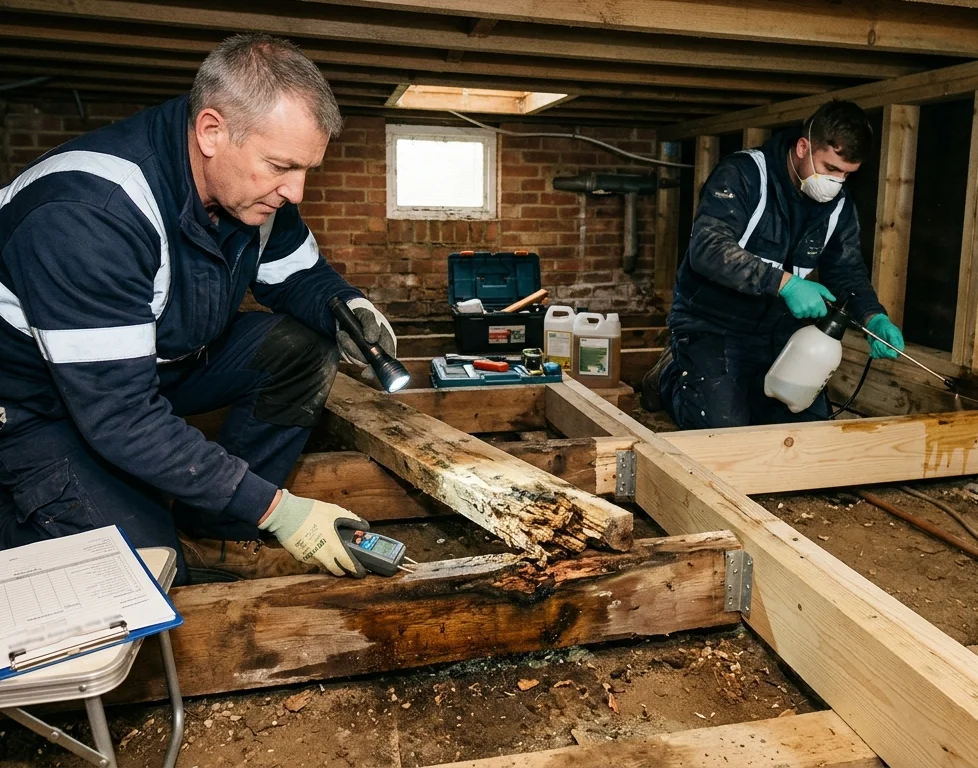
A structured survey usually includes:
- Inspection of affected timbers
- Checking ventilation levels
- Assessing surrounding masonry
- Identifying the moisture source
- Determining the extent of spread
Accurate diagnosis ensures that dry rot repair services north london are proportionate rather than excessive.
What happens during dry rot treatment?
Treatment generally follows a clear process:
- Identify and eliminate the moisture source
- Remove severely infected timber
- Treat surrounding masonry where necessary
- Replace structural timbers as required
- Improve ventilation to prevent recurrence
The aim is not only to remove visible fungus but to stabilise the building fabric.
Professional dry rot treatment north london always begins with moisture control. Without addressing the underlying damp, recurrence is possible.
How extensive can dry rot damage become?
Left untreated, dry rot can spread across floor joists, staircases and even roof timbers.
However, early detection limits structural impact. In many cases, damage is localised to one area, particularly in properties where moisture has recently developed.
Working with local dry rot experts north london ensures that the scope of repair reflects the actual extent of damage rather than worst-case assumptions.
How much does dry rot repair cost in 2026?
Costs depend on:
- Severity of timber decay
- Size of affected area
- Structural involvement
- Need for plaster or flooring reinstatement
- Access limitations
Below is a general guide for residential projects.
| Severity | Typical Scope | Approximate Cost Range |
| Localised outbreak | Limited timber replacement | £1,000 – £2,500 |
| Moderate spread | Joist replacement and treatment | £2,500 – £6,000 |
| Structural involvement | Extensive timber repair | £6,000 – £15,000+ |
Transparent dry rot repair services north london should outline exactly what is included in the quotation.
Can dry rot come back after treatment?
What causes recurrence?
Dry rot reappears if moisture remains present. Common contributing factors include:
- Poor ventilation
- External leaks
- Blocked gutters
- Bridged damp proof courses
Does treatment guarantee prevention?
Properly specified dry rot treatment north london, combined with moisture control, significantly reduces the risk of recurrence. Ongoing maintenance further protects the property.
What best describes you?

Homeowner

Tenant

Management/Lettings Agent

Potential Buyer

Other
It just takes 60 Second
And then you can book a free consultation
Example: North London terrace property
A homeowner in a Victorian terrace notices sagging floorboards in the reception room.
Survey findings reveal:
- Blocked air bricks reducing subfloor ventilation
- Moisture build-up beneath suspended timber floors
- Localised fungal growth on joists
Treatment involves clearing ventilation pathways, replacing affected joists and treating adjacent areas.
Because the issue was caught early, structural damage remained contained.
How long does dry rot repair take?
Project duration depends on scope.
Minor repairs may take several days, while larger structural replacements can require one to two weeks.
Clear planning and structured work from dry rot repair services north london minimise disruption and ensure safe reinstatement.
If you have concerns about timber decay, contact Anke Damp Proofing to arrange a detailed assessment and structured repair plan.
Should you delay treatment?
Timber decay does not stabilise on its own. The longer moisture remains present, the greater the risk of structural impact.
Early professional dry rot treatment north london limits disruption and prevents escalating repair costs.
If you notice weakened flooring, crumbling timber or unexplained damp odours, it is sensible to seek advice promptly.
What should you look for in a contractor?
When comparing providers, consider whether they:
- Conduct thorough inspections
- Clearly identify the moisture source
- Provide detailed written scopes
- Outline reinstatement works
- Explain ventilation improvements
Choosing experienced dry rot repair services north london ensures that treatment is proportionate and technically sound.
Final thoughts
Dry rot is serious, but manageable when addressed early. Correct identification, moisture control and structured repair are the foundations of successful treatment.
Professional dry rot treatment north london protects structural timbers and preserves long-term property stability.
For expert advice and carefully specified repair solutions in North London, contact Anke Damp Proofing today.
Early intervention protects both your home and your peace of mind.
Related articles

What best describes you?
Homeowner
Tenant
Management/Lettings Agent
Potential Buyer
Other
At a glance
Dry rot is not simply cosmetic damage. It can weaken structural timbers and spread beyond the original damp source if left untreated. Understanding the survey process, repair stages and likely costs helps homeowners make informed decisions rather than reacting in panic.
Professional dry rot treatment north london focuses on identifying the source, removing infected material and stabilising the structure long-term.
If you suspect timber decay, contact Anke Damp Proofing for a professional inspection and tailored advice.
What is dry rot and why is it serious?
Dry rot is caused by a fungus that thrives in damp, poorly ventilated conditions. It feeds on timber, breaking down its structural strength.
Typical signs include:
- Cracked or cuboidal timber
- Shrinking or splitting skirting boards
- Orange or rust-coloured spore dust
- A musty smell
- Floor movement or weakness
Unlike wet rot, dry rot can travel through masonry to reach new timber sources. This ability to spread makes early dry rot treatment north london essential.
How is dry rot diagnosed?
Does a moisture meter confirm dry rot?
No. While moisture readings are useful, proper diagnosis involves visual inspection and identifying fungal growth patterns.
What does a professional survey involve?
A structured survey usually includes:
- Inspection of affected timbers
- Checking ventilation levels
- Assessing surrounding masonry
- Identifying the moisture source
- Determining the extent of spread
Accurate diagnosis ensures that dry rot repair services north london are proportionate rather than excessive.
What happens during dry rot treatment?
Treatment generally follows a clear process:
- Identify and eliminate the moisture source
- Remove severely infected timber
- Treat surrounding masonry where necessary
- Replace structural timbers as required
- Improve ventilation to prevent recurrence
The aim is not only to remove visible fungus but to stabilise the building fabric.
Professional dry rot treatment north london always begins with moisture control. Without addressing the underlying damp, recurrence is possible.
How extensive can dry rot damage become?
Left untreated, dry rot can spread across floor joists, staircases and even roof timbers.
However, early detection limits structural impact. In many cases, damage is localised to one area, particularly in properties where moisture has recently developed.
Working with local dry rot experts north london ensures that the scope of repair reflects the actual extent of damage rather than worst-case assumptions.
How much does dry rot repair cost in 2026?
Costs depend on:
- Severity of timber decay
- Size of affected area
- Structural involvement
- Need for plaster or flooring reinstatement
- Access limitations
Below is a general guide for residential projects.
| Severity | Typical Scope | Approximate Cost Range |
| Localised outbreak | Limited timber replacement | £1,000 – £2,500 |
| Moderate spread | Joist replacement and treatment | £2,500 – £6,000 |
| Structural involvement | Extensive timber repair | £6,000 – £15,000+ |
Transparent dry rot repair services north london should outline exactly what is included in the quotation.
Can dry rot come back after treatment?
What causes recurrence?
Dry rot reappears if moisture remains present. Common contributing factors include:
- Poor ventilation
- External leaks
- Blocked gutters
- Bridged damp proof courses
Does treatment guarantee prevention?
Properly specified dry rot treatment north london, combined with moisture control, significantly reduces the risk of recurrence. Ongoing maintenance further protects the property.
What best describes you?
Homeowner
Tenant
Management/Lettings Agent
Potential Buyer
Other
It just takes 60 Second
And then you can book a free consultation
Example: North London terrace property
A homeowner in a Victorian terrace notices sagging floorboards in the reception room.
Survey findings reveal:
- Blocked air bricks reducing subfloor ventilation
- Moisture build-up beneath suspended timber floors
- Localised fungal growth on joists
Treatment involves clearing ventilation pathways, replacing affected joists and treating adjacent areas.
Because the issue was caught early, structural damage remained contained.
How long does dry rot repair take?
Project duration depends on scope.
Minor repairs may take several days, while larger structural replacements can require one to two weeks.
Clear planning and structured work from dry rot repair services north london minimise disruption and ensure safe reinstatement.
If you have concerns about timber decay, contact Anke Damp Proofing to arrange a detailed assessment and structured repair plan.
Should you delay treatment?
Timber decay does not stabilise on its own. The longer moisture remains present, the greater the risk of structural impact.
Early professional dry rot treatment north london limits disruption and prevents escalating repair costs.
If you notice weakened flooring, crumbling timber or unexplained damp odours, it is sensible to seek advice promptly.
What should you look for in a contractor?
When comparing providers, consider whether they:
- Conduct thorough inspections
- Clearly identify the moisture source
- Provide detailed written scopes
- Outline reinstatement works
- Explain ventilation improvements
Choosing experienced dry rot repair services north london ensures that treatment is proportionate and technically sound.
Final thoughts
Dry rot is serious, but manageable when addressed early. Correct identification, moisture control and structured repair are the foundations of successful treatment.
Professional dry rot treatment north london protects structural timbers and preserves long-term property stability.
For expert advice and carefully specified repair solutions in North London, contact Anke Damp Proofing today.
Early intervention protects both your home and your peace of mind.
Related articles
What best describes you?
Homeowner
Tenant
Management/Lettings Agent
Potential Buyer