

Structural Waterproof Membrane Installation in Ealing: Expert Advice
If you are considering a basement project or need reliable protection for an existing lower ground room, you can contact…

Why you can trust our content
Quick Guide: Basement Waterproof Membrane Benefits & FAQs in Ealing
If you are considering a basement project or need reliable protection for an existing lower ground room, you can contact Anke Damp Proofing to discuss structural waterproof membrane installation and arrange a detailed survey of your Ealing home.
Structural Waterproof Membrane Installation in Ealing: Expert Advice
Basements, cellars and lower ground rooms can be very useful spaces in an Ealing home, but they often suffer from damp, cold and occasional water ingress.
To achieve a genuinely dry space, you need more than a coat of paint. You need a reliable approach to keeping moisture under control. For many properties, this type of membrane based system offers the best balance of protection, flexibility and practicality.
This guide explains what these systems are, where they are used, how they are designed and installed, and how they can work alongside other remedial measures such as timber repairs.
If you are seeing damp patches, flaking paint or water ingress below ground, you can contact Anke Damp Proofing to arrange a structured survey of your Ealing property.
What is a structural waterproof membrane?
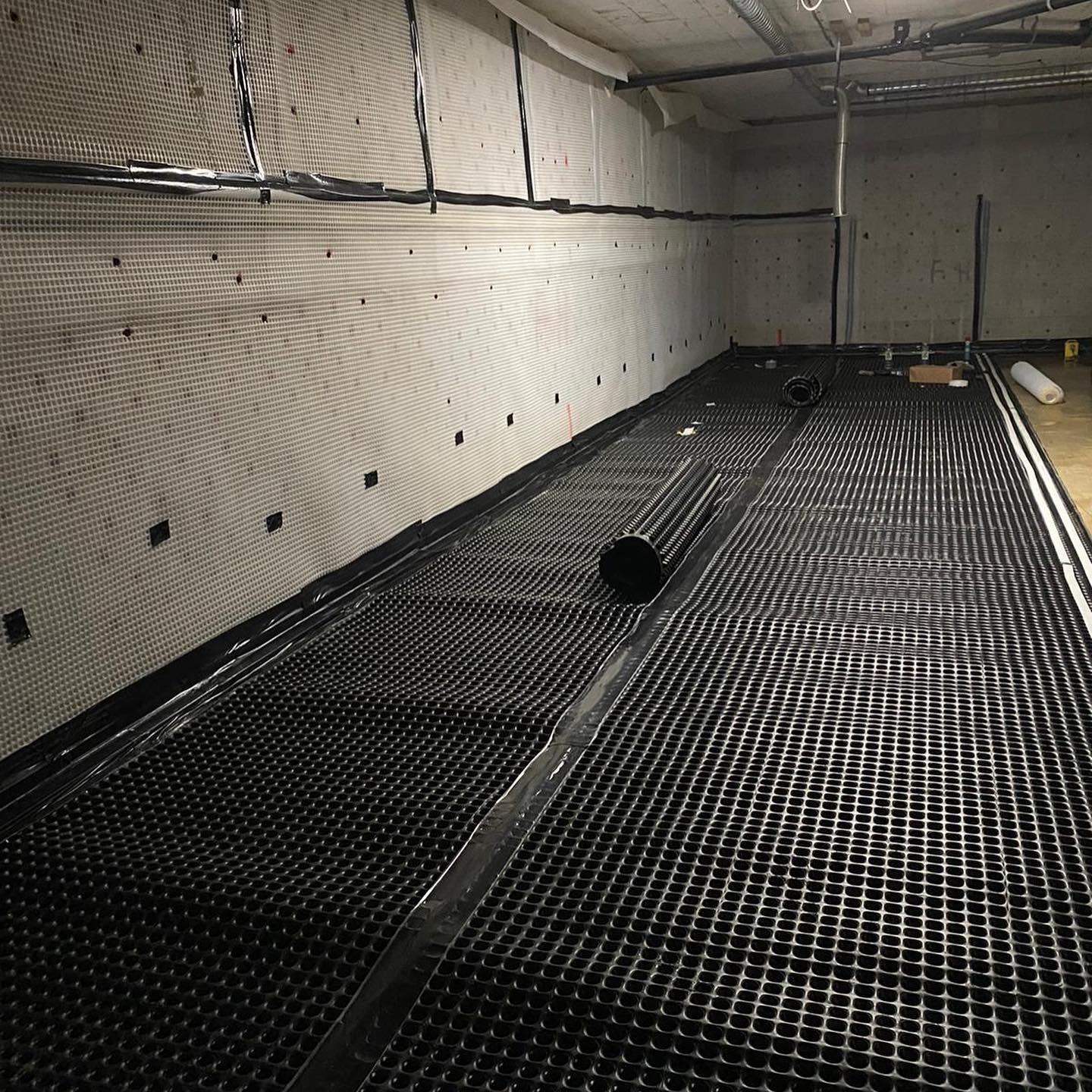
A structural waterproof membrane is a tough, specially designed sheet that is fixed to the inside face of walls and floors that are below or partly below ground. Instead of trying to resist all water at the outer surface, the membrane creates a controlled cavity where moisture can be managed.
In simple terms, it:
- Is fixed to the structure with suitable plugs or fixings
- Creates a small air gap between the membrane and the wall
- Allows any moisture that passes through the structure to drain safely away
- Provides a dry surface to which finishes can be fixed
Rather than forcing water to stay out at all costs, this approach accepts that moisture may reach the structure but ensures it cannot damage internal finishes or stored belongings.
Where is membrane installation used in Ealing homes?
Many Ealing properties, particularly older ones and those with basements or lower ground rooms, are ideal candidates for this type of system.
Typical locations include:
- Full footprint basements that you want to turn into living space
- Semi buried lower ground floors at the back or side of a property
- Cellars used for storage, utility rooms or plant rooms
- Retaining walls where soil is held back against habitable rooms
In parts of West London where ground conditions and rainfall patterns can put steady pressure on basement walls, a well designed membrane system can be an effective way to manage moisture over the long term.
How does a waterproof membrane system work?
Although every project is tailored to the individual property, most membrane systems follow a similar sequence.
- Survey and design
- A detailed inspection identifies damp patterns, construction type and risk level.
- The survey also considers how you plan to use the space and what finishes you want.
- A detailed inspection identifies damp patterns, construction type and risk level.
- Preparation
- Loose plaster and defective finishes are removed where necessary.
- Walls and floors are checked for major defects that need repair before fixing membranes.
- Loose plaster and defective finishes are removed where necessary.
- Membrane fixing
- The membrane is fixed to walls and sometimes floors using proprietary plugs.
- Joints and junctions are sealed so that water cannot bypass the system.
- The membrane is fixed to walls and sometimes floors using proprietary plugs.
- Drainage provision
- Perimeter channels, drainage outlets and sometimes sumps and pumps are installed.
- These elements collect and remove moisture that passes behind the membrane.
- Perimeter channels, drainage outlets and sometimes sumps and pumps are installed.
- Internal finishes
- Studwork, plasterboard, screeds or other finishes are fixed to the inner face.
- Services, heating and insulation are integrated into the new layout.
- Studwork, plasterboard, screeds or other finishes are fixed to the inner face.
When correctly designed, the membrane system allows moisture to be controlled quietly in the background while you enjoy dry, comfortable rooms.
What affects the design and cost?
There is no single approach that suits every home. Several factors influence how the system is designed and what the overall project might involve.
Key considerations include:
- Size and shape of the space – full basements, partial cellars and complex layouts each need specific detailing
- Condition of existing walls and floors – sound masonry usually needs less preparation than heavily damaged or uneven surfaces
- Level of water risk – areas with a history of water ingress or high groundwater may require more robust drainage and pump provision
- Intended use – a simple storage area does not need the same level of finish as a bedroom, home office or living space
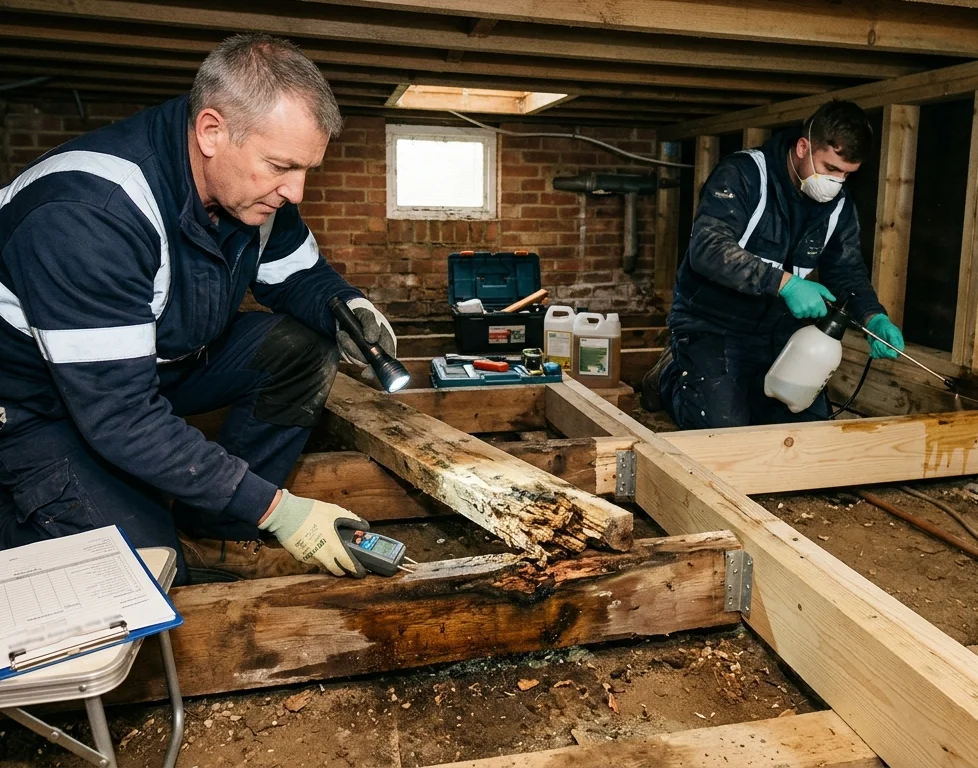
- Integration with other repairs – for example, combining membrane works with timber treatments recommended by local wet rot experts ealing teams
What best describes you?

Homeowner

Tenant

Management/Lettings Agent

Potential Buyer

Other
It just takes 60 Second
And then you can book a free consultation
How does a membrane compare with other waterproofing methods?
Different structural waterproofing approaches all have their place. The table below highlights how membrane systems compare to more traditional cementitious or slurry based solutions.
| Aspect | Membrane Based System | Cementitious / Slurry System |
| Approach | Controls and redirects moisture behind a lining | Tries to block moisture at the surface of the wall |
| Flexibility | Generally more tolerant of minor movement | Can be more prone to cracking if the structure moves |
| Maintenance | Channels and pumps need periodic checks | Less mechanical maintenance but harder to modify |
| Access for future works | Linings can be removed locally if needed | Alterations may mean breaking into treated surfaces |
| Typical use | Habitable basements and conversions | Simpler cellars or areas with lower expectations |
The right choice depends on your property, risk level and long term plans. A specialist should explain the pros and cons in the context of your particular home rather than promoting one system by default.
If you would like help comparing different approaches for your basement or lower ground floor, you can speak to Anke Damp Proofing for tailored, written recommendations.
What should you expect during the project?
Waterproofing work below ground is more involved than redecorating, so it is helpful to know what day to day life might look like while the project is underway.
Typically, you can expect:
- Dust and noise while old finishes are removed and surfaces are prepared
- Temporary loss of access to the rooms being converted
- Protection for stairs, corridors and other routes used by the installation team
- Regular updates on progress and any findings once walls or floors are opened up
Good contractors will plan the sequence carefully, keep you informed and coordinate with other trades so that the work runs as smoothly as possible.
Related articles


What best describes you?
Homeowner
Tenant
Management/Lettings Agent
Potential Buyer
Other
Quick Guide: Basement Waterproof Membrane Benefits & FAQs in Ealing
If you are considering a basement project or need reliable protection for an existing lower ground room, you can contact Anke Damp Proofing to discuss structural waterproof membrane installation and arrange a detailed survey of your Ealing home.
Structural Waterproof Membrane Installation in Ealing: Expert Advice
Basements, cellars and lower ground rooms can be very useful spaces in an Ealing home, but they often suffer from damp, cold and occasional water ingress.
To achieve a genuinely dry space, you need more than a coat of paint. You need a reliable approach to keeping moisture under control. For many properties, this type of membrane based system offers the best balance of protection, flexibility and practicality.
This guide explains what these systems are, where they are used, how they are designed and installed, and how they can work alongside other remedial measures such as timber repairs.
If you are seeing damp patches, flaking paint or water ingress below ground, you can contact Anke Damp Proofing to arrange a structured survey of your Ealing property.
What is a structural waterproof membrane?
A structural waterproof membrane is a tough, specially designed sheet that is fixed to the inside face of walls and floors that are below or partly below ground. Instead of trying to resist all water at the outer surface, the membrane creates a controlled cavity where moisture can be managed.
In simple terms, it:
- Is fixed to the structure with suitable plugs or fixings
- Creates a small air gap between the membrane and the wall
- Allows any moisture that passes through the structure to drain safely away
- Provides a dry surface to which finishes can be fixed
Rather than forcing water to stay out at all costs, this approach accepts that moisture may reach the structure but ensures it cannot damage internal finishes or stored belongings.
Where is membrane installation used in Ealing homes?
Many Ealing properties, particularly older ones and those with basements or lower ground rooms, are ideal candidates for this type of system.
Typical locations include:
- Full footprint basements that you want to turn into living space
- Semi buried lower ground floors at the back or side of a property
- Cellars used for storage, utility rooms or plant rooms
- Retaining walls where soil is held back against habitable rooms
In parts of West London where ground conditions and rainfall patterns can put steady pressure on basement walls, a well designed membrane system can be an effective way to manage moisture over the long term.
How does a waterproof membrane system work?
Although every project is tailored to the individual property, most membrane systems follow a similar sequence.
- Survey and design
- A detailed inspection identifies damp patterns, construction type and risk level.
- The survey also considers how you plan to use the space and what finishes you want.
- A detailed inspection identifies damp patterns, construction type and risk level.
- Preparation
- Loose plaster and defective finishes are removed where necessary.
- Walls and floors are checked for major defects that need repair before fixing membranes.
- Loose plaster and defective finishes are removed where necessary.
- Membrane fixing
- The membrane is fixed to walls and sometimes floors using proprietary plugs.
- Joints and junctions are sealed so that water cannot bypass the system.
- The membrane is fixed to walls and sometimes floors using proprietary plugs.
- Drainage provision
- Perimeter channels, drainage outlets and sometimes sumps and pumps are installed.
- These elements collect and remove moisture that passes behind the membrane.
- Perimeter channels, drainage outlets and sometimes sumps and pumps are installed.
- Internal finishes
- Studwork, plasterboard, screeds or other finishes are fixed to the inner face.
- Services, heating and insulation are integrated into the new layout.
- Studwork, plasterboard, screeds or other finishes are fixed to the inner face.
When correctly designed, the membrane system allows moisture to be controlled quietly in the background while you enjoy dry, comfortable rooms.
What affects the design and cost?
There is no single approach that suits every home. Several factors influence how the system is designed and what the overall project might involve.
Key considerations include:
- Size and shape of the space – full basements, partial cellars and complex layouts each need specific detailing
- Condition of existing walls and floors – sound masonry usually needs less preparation than heavily damaged or uneven surfaces
- Level of water risk – areas with a history of water ingress or high groundwater may require more robust drainage and pump provision
- Intended use – a simple storage area does not need the same level of finish as a bedroom, home office or living space
- Integration with other repairs – for example, combining membrane works with timber treatments recommended by local wet rot experts ealing teams
What best describes you?
Homeowner
Tenant
Management/Lettings Agent
Potential Buyer
Other
It just takes 60 Second
And then you can book a free consultation
How does a membrane compare with other waterproofing methods?
Different structural waterproofing approaches all have their place. The table below highlights how membrane systems compare to more traditional cementitious or slurry based solutions.
| Aspect | Membrane Based System | Cementitious / Slurry System |
| Approach | Controls and redirects moisture behind a lining | Tries to block moisture at the surface of the wall |
| Flexibility | Generally more tolerant of minor movement | Can be more prone to cracking if the structure moves |
| Maintenance | Channels and pumps need periodic checks | Less mechanical maintenance but harder to modify |
| Access for future works | Linings can be removed locally if needed | Alterations may mean breaking into treated surfaces |
| Typical use | Habitable basements and conversions | Simpler cellars or areas with lower expectations |
The right choice depends on your property, risk level and long term plans. A specialist should explain the pros and cons in the context of your particular home rather than promoting one system by default.
If you would like help comparing different approaches for your basement or lower ground floor, you can speak to Anke Damp Proofing for tailored, written recommendations.
What should you expect during the project?
Waterproofing work below ground is more involved than redecorating, so it is helpful to know what day to day life might look like while the project is underway.
Typically, you can expect:
- Dust and noise while old finishes are removed and surfaces are prepared
- Temporary loss of access to the rooms being converted
- Protection for stairs, corridors and other routes used by the installation team
- Regular updates on progress and any findings once walls or floors are opened up
Good contractors will plan the sequence carefully, keep you informed and coordinate with other trades so that the work runs as smoothly as possible.
Related articles
What best describes you?
Homeowner
Tenant
Management/Lettings Agent
Potential Buyer