
Identifying Dry Rot vs Wet Rot: Early Warning Signs for Homeowners
Identifying Dry Rot vs Wet Rot: Early Warning Signs for Homeowners Rot in timber is one of the most common…

Why you can trust our content

Dry Rot vs Wet Rot: Key Differences at a Glance
Identifying Dry Rot vs Wet Rot: Early Warning Signs for Homeowners
Rot in timber is one of the most common and damaging problems affecting homes in the UK — especially in older properties across Watford and St Albans. Left untreated, it can compromise structural integrity, lead to costly repairs, and even impact the safety of your home.
Both dry rot and wet rot occur when excess moisture comes into contact with timber, creating the perfect environment for fungal growth. While they may look similar at first, they differ significantly in cause, spread, and severity.
In this guide, we’ll explain how to distinguish between dry rot and wet rot, the early warning signs to look out for, and the professional treatment solutions available in Watford and St Albans.
What Is Timber Rot and Why Does It Occur?
Timber rot develops when wood is exposed to moisture over time. Fungi feed on the cellulose in the wood, breaking it down and weakening its structure.
Common sources of excess moisture include:
- Leaking roofs, gutters, or downpipes
- Faulty damp proof courses (DPC)
- Poor ventilation
- Rising or penetrating damp
- Plumbing leaks and condensation
Understanding the difference between dry rot and wet rot is vital for early detection and proper treatment.
Dry Rot Explained
Dry rot, caused by the fungus Serpula lacrymans, is the most serious form of timber decay. It has the ability to spread through masonry and plaster in search of moisture, meaning the damage can extend far beyond the original damp area.
Key Characteristics of Dry Rot:
- Appears as a white or grey cotton wool-like growth
- Can develop orange or rust-coloured spore dust
- Causes wood to become dry, brittle, and crumbly
- Often emits a musty, damp odour
- May show deep cuboidal cracking on the timber surface
How Dry Rot Spreads:
Unlike wet rot, dry rot can spread even through non-timber materials. The fungus sends out fine strands, known as mycelium, which travel through brickwork, plaster, and other surfaces. This makes it especially dangerous and harder to control without professional help.
Common Areas Affected by Dry Rot:
- Hidden areas behind skirting boards
- Floor voids and basements
- Roof timbers and loft spaces
- Joists near external walls or leaky gutters
Dry Rot Treatment in Watford:
Professional dry rot treatment in Watford typically involves:
- Identifying the source of moisture and repairing it.
- Removing all infected timber and adjacent plaster or masonry.
- Applying specialist fungicidal treatment to affected areas.
- Replacing structural timber with treated, rot-resistant wood.
Treatments are carried out by qualified damp and timber specialists, ensuring long-term protection for your home.
What best describes you?

Homeowner

Tenant

Management/Lettings Agent

Potential Buyer

Other
It just takes 60 Second
And then you can book a free consultation
Wet Rot Explained
Wet rot, caused by a variety of fungi including Coniophora puteana, requires high levels of moisture to thrive. It tends to remain localised to the damp area and doesn’t spread as aggressively as dry rot. However, it can still cause severe damage if ignored.
Key Characteristics of Wet Rot:
- Timber feels soft or spongy to the touch
- Wood darkens or discolours
- Cracking and crumbling along the grain of the wood
- Black fungal growth may be visible on the surface
- Musty smell in the affected area
How Wet Rot Develops:
Wet rot occurs when moisture levels stay above 20% for prolonged periods. This is often due to leaks, poor drainage, or condensation. Unlike dry rot, it doesn’t spread through masonry, but it will continue to destroy any timber exposed to moisture.
Common Areas Affected by Wet Rot:
- Window frames and sills
- Door frames and external timber
- Attic and roof timbers near leaks
- Wooden floors above damp basements or crawl spaces
Wet Rot Treatment in St Albans:
Professional wet rot treatment in St Albans includes:
- Locating and fixing the moisture source (leaks, faulty flashing, etc.).
- Removing affected timber to prevent further decay.
- Applying preservative treatments to remaining sound wood.
- Improving ventilation to prevent future damp build-up.
This process not only restores structural stability but also helps avoid future recurrence of rot.
Spotting the Early Warning Signs
Early detection can save homeowners thousands of pounds in repair costs. Here’s what to look out for:
Visual Signs:
- Flaking or blistering paint on skirting boards and window sills
- Discoloured or warped wood surfaces
- Crumbling or cracked timber
- Fine white strands (indicative of dry rot mycelium)
Smell:
A strong musty or mushroom-like odour often indicates fungal activity.
Texture:
If wood feels soft or brittle when pressed, this suggests internal decay.
Structural Indicators:
- Floors feeling bouncy or uneven
- Doors and windows sticking due to swollen frames
- Visible fungal growth on walls or ceilings near woodwork
If you notice any of these warning signs, contact a damp and rot specialist immediately.
Dry Rot vs Wet Rot: How to Tell the Difference
| Feature | Dry Rot | Wet Rot |
| Moisture Requirement | Can survive in low moisture | Needs high moisture levels |
| Spread | Travels through masonry and plaster | Confined to damp timber only |
| Appearance | White/grey with orange spore dust | Dark brown or black, soft wood |
| Damage Severity | Severe, structural risk | Moderate, localised damage |
| Treatment | Specialist fungicidal and timber replacement | Timber repair and moisture control |
Both types require professional treatment, but dry rot is typically more urgent due to its invasive nature.
Why Professional Treatment Matters
Attempting to treat rot yourself rarely works long-term. DIY fixes may mask the problem rather than eliminate it.
Benefits of Hiring a Professional:
- Accurate diagnosis of rot type and extent
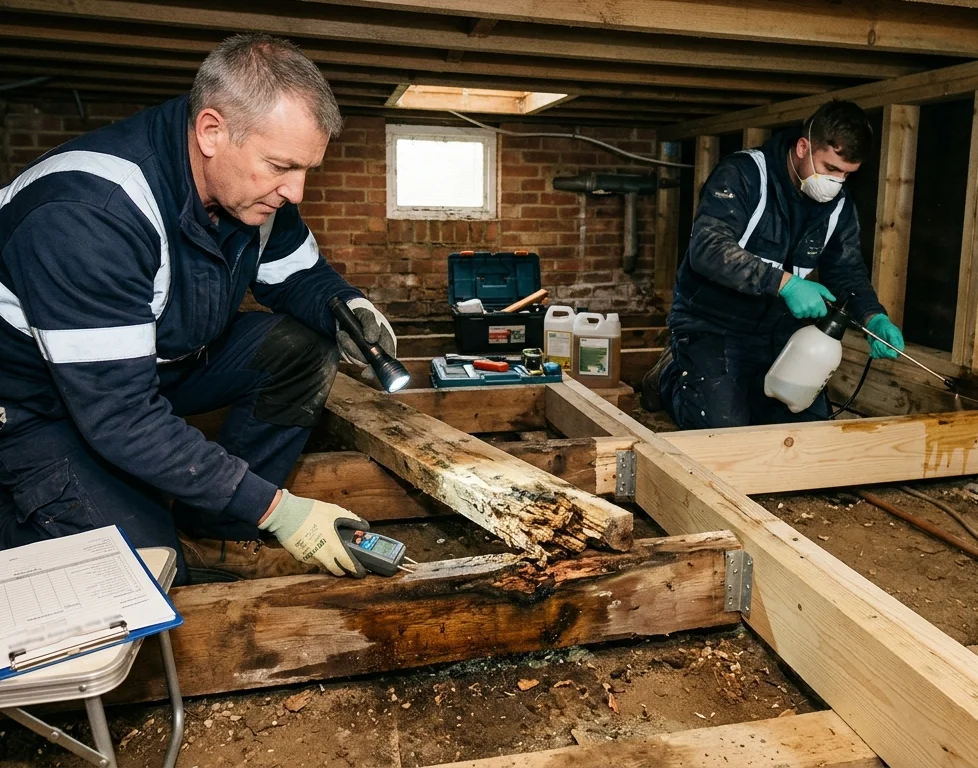
- Advanced moisture detection tools
- Safe removal and disposal of infected materials
- Long-lasting fungicidal treatments
- Structural repairs completed to building regulation standards
At Anke Damp Proofing, our experienced team provides tailored dry rot treatment in Watford and wet rot treatment in St Albans, ensuring the underlying cause is properly addressed.
Preventing Rot in Your Home
While rot is treatable, prevention is always more cost-effective. Here are some practical steps:
- Keep gutters, downpipes, and roofs well maintained
- Ensure your property has adequate ventilation
- Check for leaks around windows, doors, and pipes
- Maintain your damp proof course (DPC)
- Avoid storing damp materials or furniture against walls
- Regularly inspect hidden timber areas such as lofts and basements
Routine maintenance and prompt repairs are key to keeping your home rot-free.
How Much Does Rot Treatment Cost?
Costs vary based on the severity and size of the affected area. On average:
| Treatment Type | Average Cost | Notes |
| Localised wet rot treatment | £300 – £800 | Minor repairs and moisture control |
| Extensive wet rot repair | £1,000 – £2,500 | Structural replacement and preservation |
| Dry rot treatment | £1,500 – £5,000+ | Includes timber removal, fungicide, and plaster repair |
Every property is unique, so obtaining a professional inspection and written quotation is the best way to get an accurate cost estimate.
Related articles

What best describes you?
Homeowner
Tenant
Management/Lettings Agent
Potential Buyer
Other
Dry Rot vs Wet Rot: Key Differences at a Glance
Identifying Dry Rot vs Wet Rot: Early Warning Signs for Homeowners
Rot in timber is one of the most common and damaging problems affecting homes in the UK — especially in older properties across Watford and St Albans. Left untreated, it can compromise structural integrity, lead to costly repairs, and even impact the safety of your home.
Both dry rot and wet rot occur when excess moisture comes into contact with timber, creating the perfect environment for fungal growth. While they may look similar at first, they differ significantly in cause, spread, and severity.
In this guide, we’ll explain how to distinguish between dry rot and wet rot, the early warning signs to look out for, and the professional treatment solutions available in Watford and St Albans.
What Is Timber Rot and Why Does It Occur?
Timber rot develops when wood is exposed to moisture over time. Fungi feed on the cellulose in the wood, breaking it down and weakening its structure.
Common sources of excess moisture include:
- Leaking roofs, gutters, or downpipes
- Faulty damp proof courses (DPC)
- Poor ventilation
- Rising or penetrating damp
- Plumbing leaks and condensation
Understanding the difference between dry rot and wet rot is vital for early detection and proper treatment.
Dry Rot Explained
Dry rot, caused by the fungus Serpula lacrymans, is the most serious form of timber decay. It has the ability to spread through masonry and plaster in search of moisture, meaning the damage can extend far beyond the original damp area.
Key Characteristics of Dry Rot:
- Appears as a white or grey cotton wool-like growth
- Can develop orange or rust-coloured spore dust
- Causes wood to become dry, brittle, and crumbly
- Often emits a musty, damp odour
- May show deep cuboidal cracking on the timber surface
How Dry Rot Spreads:
Unlike wet rot, dry rot can spread even through non-timber materials. The fungus sends out fine strands, known as mycelium, which travel through brickwork, plaster, and other surfaces. This makes it especially dangerous and harder to control without professional help.
Common Areas Affected by Dry Rot:
- Hidden areas behind skirting boards
- Floor voids and basements
- Roof timbers and loft spaces
- Joists near external walls or leaky gutters
Dry Rot Treatment in Watford:
Professional dry rot treatment in Watford typically involves:
- Identifying the source of moisture and repairing it.
- Removing all infected timber and adjacent plaster or masonry.
- Applying specialist fungicidal treatment to affected areas.
- Replacing structural timber with treated, rot-resistant wood.
Treatments are carried out by qualified damp and timber specialists, ensuring long-term protection for your home.
What best describes you?
Homeowner
Tenant
Management/Lettings Agent
Potential Buyer
Other
It just takes 60 Second
And then you can book a free consultation
Wet Rot Explained
Wet rot, caused by a variety of fungi including Coniophora puteana, requires high levels of moisture to thrive. It tends to remain localised to the damp area and doesn’t spread as aggressively as dry rot. However, it can still cause severe damage if ignored.
Key Characteristics of Wet Rot:
- Timber feels soft or spongy to the touch
- Wood darkens or discolours
- Cracking and crumbling along the grain of the wood
- Black fungal growth may be visible on the surface
- Musty smell in the affected area
How Wet Rot Develops:
Wet rot occurs when moisture levels stay above 20% for prolonged periods. This is often due to leaks, poor drainage, or condensation. Unlike dry rot, it doesn’t spread through masonry, but it will continue to destroy any timber exposed to moisture.
Common Areas Affected by Wet Rot:
- Window frames and sills
- Door frames and external timber
- Attic and roof timbers near leaks
- Wooden floors above damp basements or crawl spaces
Wet Rot Treatment in St Albans:
Professional wet rot treatment in St Albans includes:
- Locating and fixing the moisture source (leaks, faulty flashing, etc.).
- Removing affected timber to prevent further decay.
- Applying preservative treatments to remaining sound wood.
- Improving ventilation to prevent future damp build-up.
This process not only restores structural stability but also helps avoid future recurrence of rot.
Spotting the Early Warning Signs
Early detection can save homeowners thousands of pounds in repair costs. Here’s what to look out for:
Visual Signs:
- Flaking or blistering paint on skirting boards and window sills
- Discoloured or warped wood surfaces
- Crumbling or cracked timber
- Fine white strands (indicative of dry rot mycelium)
Smell:
A strong musty or mushroom-like odour often indicates fungal activity.
Texture:
If wood feels soft or brittle when pressed, this suggests internal decay.
Structural Indicators:
- Floors feeling bouncy or uneven
- Doors and windows sticking due to swollen frames
- Visible fungal growth on walls or ceilings near woodwork
If you notice any of these warning signs, contact a damp and rot specialist immediately.
Dry Rot vs Wet Rot: How to Tell the Difference
| Feature | Dry Rot | Wet Rot |
| Moisture Requirement | Can survive in low moisture | Needs high moisture levels |
| Spread | Travels through masonry and plaster | Confined to damp timber only |
| Appearance | White/grey with orange spore dust | Dark brown or black, soft wood |
| Damage Severity | Severe, structural risk | Moderate, localised damage |
| Treatment | Specialist fungicidal and timber replacement | Timber repair and moisture control |
Both types require professional treatment, but dry rot is typically more urgent due to its invasive nature.
Why Professional Treatment Matters
Attempting to treat rot yourself rarely works long-term. DIY fixes may mask the problem rather than eliminate it.
Benefits of Hiring a Professional:
- Accurate diagnosis of rot type and extent
- Advanced moisture detection tools
- Safe removal and disposal of infected materials
- Long-lasting fungicidal treatments
- Structural repairs completed to building regulation standards
At Anke Damp Proofing, our experienced team provides tailored dry rot treatment in Watford and wet rot treatment in St Albans, ensuring the underlying cause is properly addressed.
Preventing Rot in Your Home
While rot is treatable, prevention is always more cost-effective. Here are some practical steps:
- Keep gutters, downpipes, and roofs well maintained
- Ensure your property has adequate ventilation
- Check for leaks around windows, doors, and pipes
- Maintain your damp proof course (DPC)
- Avoid storing damp materials or furniture against walls
- Regularly inspect hidden timber areas such as lofts and basements
Routine maintenance and prompt repairs are key to keeping your home rot-free.
How Much Does Rot Treatment Cost?
Costs vary based on the severity and size of the affected area. On average:
| Treatment Type | Average Cost | Notes |
| Localised wet rot treatment | £300 – £800 | Minor repairs and moisture control |
| Extensive wet rot repair | £1,000 – £2,500 | Structural replacement and preservation |
| Dry rot treatment | £1,500 – £5,000+ | Includes timber removal, fungicide, and plaster repair |
Every property is unique, so obtaining a professional inspection and written quotation is the best way to get an accurate cost estimate.
Related articles
What best describes you?
Homeowner
Tenant
Management/Lettings Agent
Potential Buyer