

Damp Proofing in Barnet: Repair or Replace?
Damp Proofing in Barnet: Repair or Replace? Damp is one of those problems that never seems to stay small for…

Why you can trust our content
How Long Does Damp Proofing Last? Key Factors & Causes
Damp Proofing in Barnet: Repair or Replace?
Damp is one of those problems that never seems to stay small for long. A little flaking paint or a musty smell can quickly turn into stained plaster, damaged skirting and even structural issues if it is not addressed properly.
For homeowners in Barnet, the big question is often this: if there is a damp issue, can you simply repair the affected areas, or do you need a full new system of damp protection?
This guide walks you through how damp proofing Barnet properties is assessed, what a repair usually involves, when replacement is the safer option, and how to make a decision that protects both your home and your budget.
If you are already worried about visible damp, you can contact our team at Anke Damp Proofing to arrange an expert survey of your Barnet home.
What does damp proofing in Barnet actually involve?
Most modern houses have some form of damp proof course or membrane built into the walls and floors. Its job is simple: stop moisture in the ground or external walls from travelling into the internal fabric of your home.
For many older Barnet properties, especially Victorian and Edwardian terraces, the original protection may have broken down or been bridged over time. Effective damp proofing Barnet homeowners can rely on usually includes:
- Identifying the source of moisture, not just the symptoms.
- Checking whether the original damp proof course has failed, been bridged or was never installed.
- Assessing plaster, skirtings and timber for decay or salt contamination.
- Designing a repair or replacement system that deals with the cause, not just the cosmetic damage.
A good survey will give you a clear picture of whether limited repairs are enough or whether more extensive work is needed.
What are the warning signs that repairs might be enough?
In some cases, targeted repairs can be a sensible and cost effective option. Signs that a repair-only approach might work include:
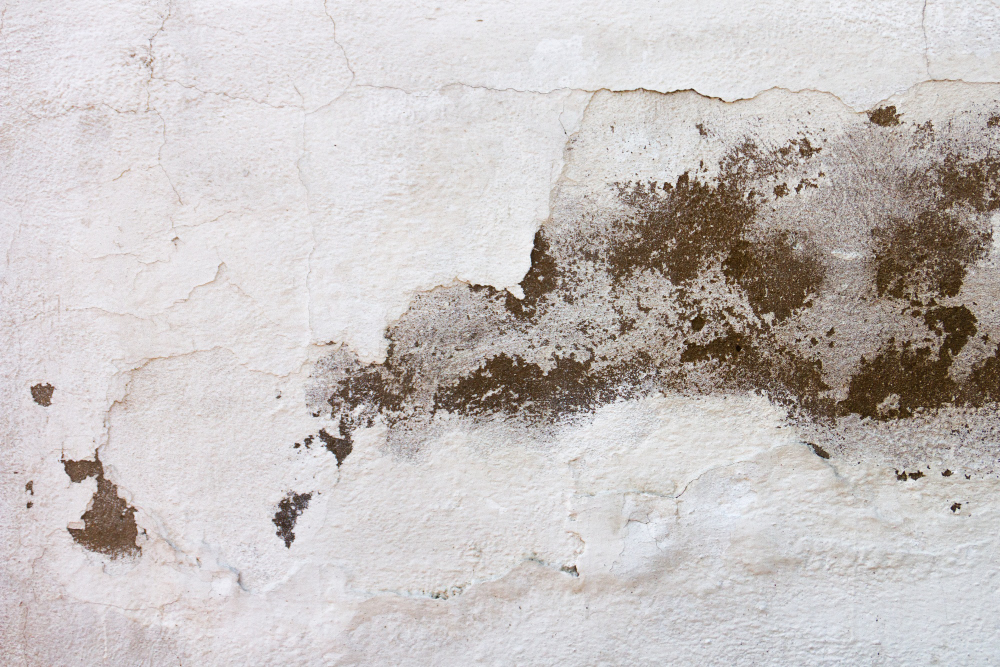
- Damp staining or blistering paint that is limited to a small area.
- No evidence of rotten skirting boards or decayed timbers.
- Readings that show only mild moisture levels around the affected wall.
- No clear evidence of a failed or missing damp proof course elsewhere in the property.
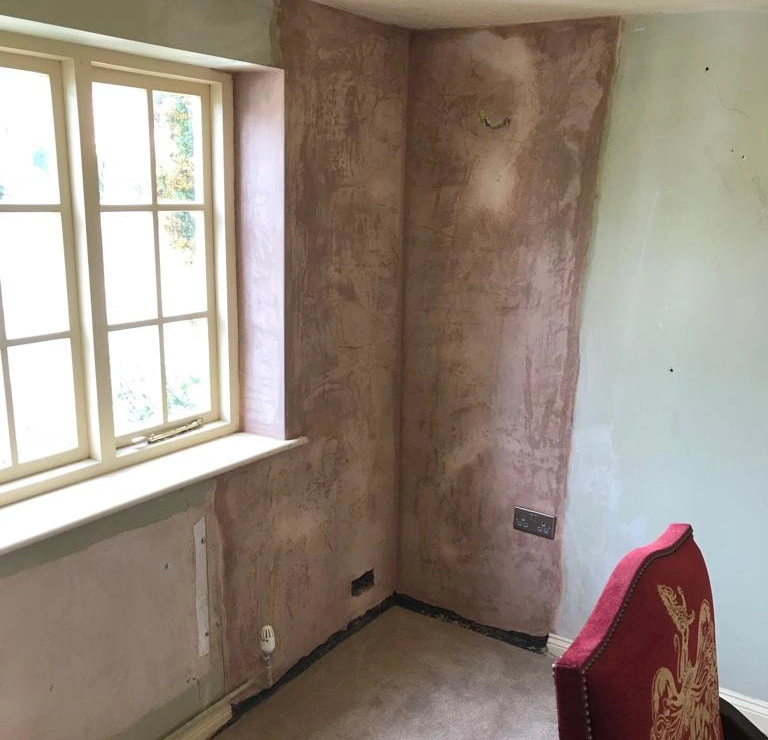
A repair might involve cutting back local plaster, applying a specialist salt resistant render, improving ventilation or dealing with a minor bridging issue such as high external ground levels.
When is full replacement of damp proofing the better option?
The balance shifts towards replacement when the problem is more widespread or has been left for a long time. You will often need a more comprehensive solution if:
- Damp patches run along long sections of ground floor walls.
- There are crumbling skirtings or signs of associated timber decay.
- Electrical sockets and plug tops show corrosion or staining.
- Moisture readings are consistently high across several rooms.
- The original damp proof course has clearly failed or is missing.
In these situations, installing a new system through a local damp proofing installation company becomes the safer long term choice, because patch repairs may simply move the problem elsewhere or delay it rather than solve it.
Repair or replace: how do the options compare?
The table below gives a simple side by side comparison of typical repair versus replacement scenarios. Every property is different, but this gives you a feel for how decisions are usually made.
| Situation | Repair Likely To Be Enough | Replacement More Appropriate |
| Small, isolated damp patch | Yes – local plaster and salt treatment | Unlikely |
| Damp along most of one external wall | Possibly, if bridging is the only cause | Often recommended |
| Multiple rooms affected | Rarely | Yes, usually a new damp proof system |
| No timber decay present | Repair may be suitable | Replacement if readings still very high |
| Visible rot to skirtings or joists | No – needs more than cosmetic repair | New damp proofing and timber treatment |
| Older property with no visible DPC | Limited benefit from local repairs | New damp proofing system is usually required |
A professional surveyor will test walls with moisture meters and inspect external and internal details before advising you.
If you would like a clear recommendation based on proper testing, you can speak to our team at Anke Damp Proofing to arrange a detailed home survey.
(Link to service page: Damp Surveys)
What best describes you?

Homeowner

Tenant

Management/Lettings Agent

Potential Buyer

Other
It just takes 60 Second
And then you can book a free consultation
What factors should guide your decision?
When deciding between repair and replacement, it helps to look at a few key factors together rather than in isolation.
Age and construction of the property
Older brick or solid wall properties in Barnet can behave very differently from newer cavity wall homes. Some houses may never have had a proper damp proof course installed, while others may have concrete floors and cavity walls that respond better to targeted solutions.
Extent and severity of the damp
If damp is localised and relatively mild, repair and monitoring might be the right starting point. Where high readings extend across long sections of wall, or where there is visible timber decay, a more robust system is sensible.
Long term plans for the property
If you plan to stay in your home for many years, investing in a proper replacement can protect future decorating, refurbishment and resale plans. If you are planning short term works only, a carefully designed repair might be acceptable, as long as it does not mask more serious issues.
Independent survey and report
A thorough survey from a local damp proofing installation company should include written findings, photos and, where appropriate, a recommendation for either repair, replacement or a mixture of both. This gives you a record that can also be useful if you later sell the property.
How disruptive is damp proof repair or replacement likely to be?
Many homeowners worry that damp works will turn their house into a building site. In reality, the level of disruption depends on the scope of the job.
- Local repairs
- Usually confined to one wall or small area.
- Furniture moved away and floors protected.
- Old plaster removed, specialist render or board applied, then re-plastered.
- Usually confined to one wall or small area.
- Full replacement or extensive treatment
- Several rooms may need to be cleared in stages.
- Skirtings, plaster and sometimes sections of flooring need to be removed and replaced.
- Work is usually planned in phases so you can still live in the property where possible.
- Several rooms may need to be cleared in stages.
A detailed schedule will help you understand how long each stage should take and which rooms will be affected on each day.
Example: treating a damp ground floor in a Barnet terrace
To make the decision more real, here is a typical scenario our surveyors might see.
A family living in a mid-terrace Barnet property noticed bubbling paint and dark staining along the bottom of their living room and hallway walls. The issue had slowly worsened over two winters. During the survey we found:
- Consistently high moisture readings along two external ground floor walls.
- Damaged skirtings and signs of salt contamination in the plaster.
- No effective damp proof course visible on the outside, and internal plaster taken down to the floor.
In this case, limited repairs would only have tackled surface damage. The recommendation was to install a new damp proof course along the affected walls, remove contaminated plaster to an appropriate height, then re-plaster with a suitable damp resistant system. The family used the opportunity to redecorate and lay new flooring once the walls were fully dry.
Because the work was well planned and phased, they were able to remain in the house and keep disruption manageable.
How can you stop damp returning after the work?
Whether you opt for repair or replacement, aftercare is just as important as the initial work.
Simple but effective steps include:
- Keeping external ground levels slightly below internal floor level.
- Ensuring gutters, downpipes and roof details are in good condition.
- Avoiding blocking air bricks or ventilation points.
- Using appropriate breathable finishes where recommended.
- Allowing adequate drying time before decorating new plaster.
Your installer should also explain how long walls will take to dry and what kind of decoration is suitable in the first year after treatment.
Related articles

What best describes you?
Homeowner
Tenant
Management/Lettings Agent
Potential Buyer
Other
How Long Does Damp Proofing Last? Key Factors & Causes
Damp Proofing in Barnet: Repair or Replace?
Damp is one of those problems that never seems to stay small for long. A little flaking paint or a musty smell can quickly turn into stained plaster, damaged skirting and even structural issues if it is not addressed properly.
For homeowners in Barnet, the big question is often this: if there is a damp issue, can you simply repair the affected areas, or do you need a full new system of damp protection?
This guide walks you through how damp proofing Barnet properties is assessed, what a repair usually involves, when replacement is the safer option, and how to make a decision that protects both your home and your budget.
If you are already worried about visible damp, you can contact our team at Anke Damp Proofing to arrange an expert survey of your Barnet home.
What does damp proofing in Barnet actually involve?
Most modern houses have some form of damp proof course or membrane built into the walls and floors. Its job is simple: stop moisture in the ground or external walls from travelling into the internal fabric of your home.
For many older Barnet properties, especially Victorian and Edwardian terraces, the original protection may have broken down or been bridged over time. Effective damp proofing Barnet homeowners can rely on usually includes:
- Identifying the source of moisture, not just the symptoms.
- Checking whether the original damp proof course has failed, been bridged or was never installed.
- Assessing plaster, skirtings and timber for decay or salt contamination.
- Designing a repair or replacement system that deals with the cause, not just the cosmetic damage.
A good survey will give you a clear picture of whether limited repairs are enough or whether more extensive work is needed.
What are the warning signs that repairs might be enough?
In some cases, targeted repairs can be a sensible and cost effective option. Signs that a repair-only approach might work include:
- Damp staining or blistering paint that is limited to a small area.
- No evidence of rotten skirting boards or decayed timbers.
- Readings that show only mild moisture levels around the affected wall.
- No clear evidence of a failed or missing damp proof course elsewhere in the property.
A repair might involve cutting back local plaster, applying a specialist salt resistant render, improving ventilation or dealing with a minor bridging issue such as high external ground levels.
When is full replacement of damp proofing the better option?
The balance shifts towards replacement when the problem is more widespread or has been left for a long time. You will often need a more comprehensive solution if:
- Damp patches run along long sections of ground floor walls.
- There are crumbling skirtings or signs of associated timber decay.
- Electrical sockets and plug tops show corrosion or staining.
- Moisture readings are consistently high across several rooms.
- The original damp proof course has clearly failed or is missing.
In these situations, installing a new system through a local damp proofing installation company becomes the safer long term choice, because patch repairs may simply move the problem elsewhere or delay it rather than solve it.
Repair or replace: how do the options compare?
The table below gives a simple side by side comparison of typical repair versus replacement scenarios. Every property is different, but this gives you a feel for how decisions are usually made.
| Situation | Repair Likely To Be Enough | Replacement More Appropriate |
| Small, isolated damp patch | Yes – local plaster and salt treatment | Unlikely |
| Damp along most of one external wall | Possibly, if bridging is the only cause | Often recommended |
| Multiple rooms affected | Rarely | Yes, usually a new damp proof system |
| No timber decay present | Repair may be suitable | Replacement if readings still very high |
| Visible rot to skirtings or joists | No – needs more than cosmetic repair | New damp proofing and timber treatment |
| Older property with no visible DPC | Limited benefit from local repairs | New damp proofing system is usually required |
A professional surveyor will test walls with moisture meters and inspect external and internal details before advising you.
If you would like a clear recommendation based on proper testing, you can speak to our team at Anke Damp Proofing to arrange a detailed home survey.
(Link to service page: Damp Surveys)
What best describes you?
Homeowner
Tenant
Management/Lettings Agent
Potential Buyer
Other
It just takes 60 Second
And then you can book a free consultation
What factors should guide your decision?
When deciding between repair and replacement, it helps to look at a few key factors together rather than in isolation.
Age and construction of the property
Older brick or solid wall properties in Barnet can behave very differently from newer cavity wall homes. Some houses may never have had a proper damp proof course installed, while others may have concrete floors and cavity walls that respond better to targeted solutions.
Extent and severity of the damp
If damp is localised and relatively mild, repair and monitoring might be the right starting point. Where high readings extend across long sections of wall, or where there is visible timber decay, a more robust system is sensible.
Long term plans for the property
If you plan to stay in your home for many years, investing in a proper replacement can protect future decorating, refurbishment and resale plans. If you are planning short term works only, a carefully designed repair might be acceptable, as long as it does not mask more serious issues.
Independent survey and report
A thorough survey from a local damp proofing installation company should include written findings, photos and, where appropriate, a recommendation for either repair, replacement or a mixture of both. This gives you a record that can also be useful if you later sell the property.
How disruptive is damp proof repair or replacement likely to be?
Many homeowners worry that damp works will turn their house into a building site. In reality, the level of disruption depends on the scope of the job.
- Local repairs
- Usually confined to one wall or small area.
- Furniture moved away and floors protected.
- Old plaster removed, specialist render or board applied, then re-plastered.
- Usually confined to one wall or small area.
- Full replacement or extensive treatment
- Several rooms may need to be cleared in stages.
- Skirtings, plaster and sometimes sections of flooring need to be removed and replaced.
- Work is usually planned in phases so you can still live in the property where possible.
- Several rooms may need to be cleared in stages.
A detailed schedule will help you understand how long each stage should take and which rooms will be affected on each day.
Example: treating a damp ground floor in a Barnet terrace
To make the decision more real, here is a typical scenario our surveyors might see.
A family living in a mid-terrace Barnet property noticed bubbling paint and dark staining along the bottom of their living room and hallway walls. The issue had slowly worsened over two winters. During the survey we found:
- Consistently high moisture readings along two external ground floor walls.
- Damaged skirtings and signs of salt contamination in the plaster.
- No effective damp proof course visible on the outside, and internal plaster taken down to the floor.
In this case, limited repairs would only have tackled surface damage. The recommendation was to install a new damp proof course along the affected walls, remove contaminated plaster to an appropriate height, then re-plaster with a suitable damp resistant system. The family used the opportunity to redecorate and lay new flooring once the walls were fully dry.
Because the work was well planned and phased, they were able to remain in the house and keep disruption manageable.
How can you stop damp returning after the work?
Whether you opt for repair or replacement, aftercare is just as important as the initial work.
Simple but effective steps include:
- Keeping external ground levels slightly below internal floor level.
- Ensuring gutters, downpipes and roof details are in good condition.
- Avoiding blocking air bricks or ventilation points.
- Using appropriate breathable finishes where recommended.
- Allowing adequate drying time before decorating new plaster.
Your installer should also explain how long walls will take to dry and what kind of decoration is suitable in the first year after treatment.
Related articles
What best describes you?
Homeowner
Tenant
Management/Lettings Agent
Potential Buyer