
Structural Waterproofing Explained for Barnet Homes
Structural Waterproofing Explained for Barnet Homes Lower ground floors, basements and retaining walls often take the brunt of the British…

Why you can trust our content

At a glance
Structural Waterproofing Explained for Barnet Homes
Lower ground floors, basements and retaining walls often take the brunt of the British weather. In parts of Barnet where homes are built into slopes or sit close to the water table, uncontrolled moisture can quickly turn into damaged plaster, mould and even structural issues if it is not managed properly.
That is where structural waterproofing comes in. It is not just about stopping visible leaks. Done properly, it is about controlling how water behaves around your property so it cannot damage the structure or the finishes you live with every day.
In this guide, we will walk through what structural waterproofing actually is, where it is used in Barnet homes, what to expect from a survey, and how different systems are chosen for different situations.
If you are seeing damp patches or leaks in a basement or lower ground space, you can contact Anke Damp Proofing to arrange an expert survey of your Barnet home.
What is structural waterproofing for Barnet homes?
Structural waterproofing is the design and installation of measures that keep water out of the parts of a building that are below or partly below ground. Rather than just treating the surface, it looks at the structure as a whole and how moisture moves through it.
In practical terms, a structural waterproofing specialist considers:
- How groundwater and rainwater reach your walls and floors
- The type and condition of existing masonry or concrete
- How internal finishes and planned use of the space affect the design
- Long term protection, not just short term damp fixes
The goal is to create a controlled environment where moisture is managed safely, even during heavy rain or when the water table rises.
Where is structural waterproofing used in a property?
Many Barnet homes can benefit from proper waterproofing, even if there is no obvious leak yet. Typical areas include:
- Basements and cellars used as storage, living space, offices or bedrooms
- Lower ground floor rooms where external ground levels are higher than the internal floor
- Retaining walls holding back soil against habitable rooms
- Undercrofts and semi-basements in older terraced streets
In these spaces, a combination of soil pressure and moisture can push water through small defects in masonry or concrete. Over time, that can lead to persistent damp, salts and deterioration of finishes.
Many properties need a joined up approach to structural damp proofing and waterproofing so that both walls and floors are protected as part of one system rather than as separate, disconnected repairs.
How does a structural waterproofing specialist assess your home?
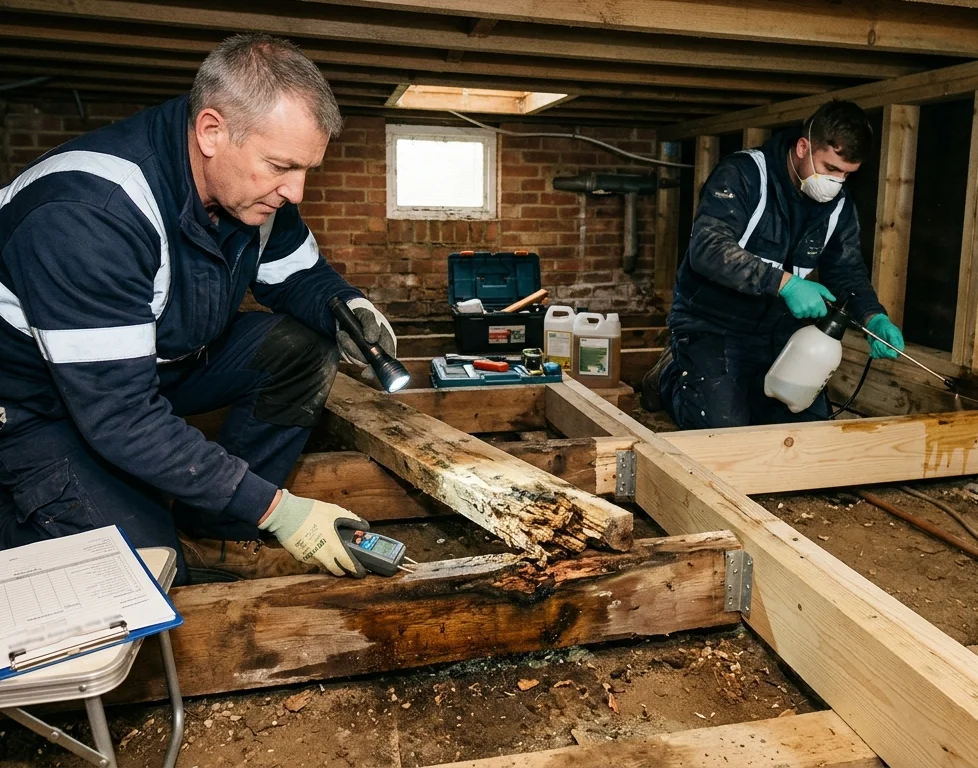
A reliable solution always starts with a thorough survey. When a structural waterproofing specialist visits your home, they will typically:
- Inspect internal walls, floors and ceilings for damp patterns, salts and defects
- Check external ground levels, drainage and any obvious points where water can collect
- Review the type and condition of existing construction, such as brickwork or concrete
- Ask how you use the space now and how you plan to use it in future
- Consider ventilation, heating and insulation, as these all affect moisture behaviour
From there, they produce a design that sets out what type of waterproofing system is appropriate, how it should be installed, and how it can be maintained over time.
If you would like a clear, written plan for dealing with damp in a lower ground area, you can speak to our team at Anke Damp Proofing to arrange a structured survey and specification.
Common waterproofing solutions for basements and lower ground floors
There is no one-size-fits-all answer. The right solution depends on your property, the level of damp risk and how you want to use the space. However, most systems fall into a few broad categories.
| System Type | How It Works | Typical Use Cases |
| Cementitious coatings | Applied directly to walls and floors to resist moisture | Cellars with moderate moisture and sound substrates |
| Cavity drain membranes | Create a ventilated or drained cavity behind finishes | Basements and conversions needing dry, usable rooms |
| Slurry and render systems | Combine waterproof slurries with specialist renders | Lower ground walls affected by penetrating damp |
| Combined wall and floor systems | Integrate wall treatments with floor membranes | Full refurbishments or new basement conversions |
In many cases, the most robust results come from combining methods as part of structural damp proofing and waterproofing, with drainage and ventilation designed into the system from the outset.
What does a typical waterproofing project look like in Barnet?
Every project is different, but a common sequence for upgrading a damp lower ground space might look like this:
- Investigation and preparation
- Strip back finishes to reveal the condition of the structure.
- Improve drainage and fix obvious defects, such as leaking gutters or blocked drains.
- Strip back finishes to reveal the condition of the structure.
- Installation of the waterproofing system
- Apply the chosen membrane, coating or multi-part system to walls and floors.
- Install drainage channels and sumps where needed, particularly with cavity drain systems.
- Apply the chosen membrane, coating or multi-part system to walls and floors.
- Reinstatement of finishes
- Fix suitable linings, plasterboard, screeds or floor finishes over the waterproofing layer.
- Refit electrical, plumbing and heating elements in line with the new layout.
- Fix suitable linings, plasterboard, screeds or floor finishes over the waterproofing layer.
- Testing and handover
- Check that the system is operating as intended, including any pumps or drainage components.
- Provide you with maintenance advice and any guarantee details.
- Check that the system is operating as intended, including any pumps or drainage components.
A well planned project will not only deal with existing damp but also create a reliable, comfortable space that can be used confidently as part of your home.
What best describes you?

Homeowner

Tenant

Management/Lettings Agent

Potential Buyer

Other
It just takes 60 Second
And then you can book a free consultation
How much disruption should you expect?
Structural waterproofing is more involved than simply repainting a wall. Understanding the level of disruption helps you plan ahead.
You can usually expect:
- Noise and dust as old finishes are removed and surfaces are prepared
- Temporary loss of use of the affected rooms while work is in progress
- Short term changes to access where floor levels are being worked on
However, good contractors will:
- Phase the work to keep disruption as low as possible
- Protect routes through the home with coverings and dust control measures
- Keep you updated on progress and any changes to the programme
A clear schedule agreed before work begins makes everything more manageable, especially if you are living in the property while the project is carried out.
Example: turning a damp cellar into a usable room
A Barnet homeowner wanted to turn a damp cellar into a home office. The space had flaking paint, salt deposits on the walls and a cold concrete floor. During the survey, moisture readings confirmed that water was passing through the retaining walls and floor slab.
The agreed solution involved:
- Installing a cavity drain membrane to the walls and floor
- Adding perimeter drainage channels and a sump pump
- Lining the walls with insulated studwork and suitable finishes
- Applying a new floor finish over the membrane system
This design created a controlled environment where any moisture was directed to the drainage system, leaving the internal surfaces dry and comfortable for long term use.
If you are planning a basement conversion or need reliable protection for an existing lower ground space, you can contact Anke Damp Proofing for tailored advice on structural waterproofing in Barnet.
Related articles


What best describes you?
Homeowner
Tenant
Management/Lettings Agent
Potential Buyer
Other
At a glance
Structural Waterproofing Explained for Barnet Homes
Lower ground floors, basements and retaining walls often take the brunt of the British weather. In parts of Barnet where homes are built into slopes or sit close to the water table, uncontrolled moisture can quickly turn into damaged plaster, mould and even structural issues if it is not managed properly.
That is where structural waterproofing comes in. It is not just about stopping visible leaks. Done properly, it is about controlling how water behaves around your property so it cannot damage the structure or the finishes you live with every day.
In this guide, we will walk through what structural waterproofing actually is, where it is used in Barnet homes, what to expect from a survey, and how different systems are chosen for different situations.
If you are seeing damp patches or leaks in a basement or lower ground space, you can contact Anke Damp Proofing to arrange an expert survey of your Barnet home.
What is structural waterproofing for Barnet homes?
Structural waterproofing is the design and installation of measures that keep water out of the parts of a building that are below or partly below ground. Rather than just treating the surface, it looks at the structure as a whole and how moisture moves through it.
In practical terms, a structural waterproofing specialist considers:
- How groundwater and rainwater reach your walls and floors
- The type and condition of existing masonry or concrete
- How internal finishes and planned use of the space affect the design
- Long term protection, not just short term damp fixes
The goal is to create a controlled environment where moisture is managed safely, even during heavy rain or when the water table rises.
Where is structural waterproofing used in a property?
Many Barnet homes can benefit from proper waterproofing, even if there is no obvious leak yet. Typical areas include:
- Basements and cellars used as storage, living space, offices or bedrooms
- Lower ground floor rooms where external ground levels are higher than the internal floor
- Retaining walls holding back soil against habitable rooms
- Undercrofts and semi-basements in older terraced streets
In these spaces, a combination of soil pressure and moisture can push water through small defects in masonry or concrete. Over time, that can lead to persistent damp, salts and deterioration of finishes.
Many properties need a joined up approach to structural damp proofing and waterproofing so that both walls and floors are protected as part of one system rather than as separate, disconnected repairs.
How does a structural waterproofing specialist assess your home?
A reliable solution always starts with a thorough survey. When a structural waterproofing specialist visits your home, they will typically:
- Inspect internal walls, floors and ceilings for damp patterns, salts and defects
- Check external ground levels, drainage and any obvious points where water can collect
- Review the type and condition of existing construction, such as brickwork or concrete
- Ask how you use the space now and how you plan to use it in future
- Consider ventilation, heating and insulation, as these all affect moisture behaviour
From there, they produce a design that sets out what type of waterproofing system is appropriate, how it should be installed, and how it can be maintained over time.
If you would like a clear, written plan for dealing with damp in a lower ground area, you can speak to our team at Anke Damp Proofing to arrange a structured survey and specification.
Common waterproofing solutions for basements and lower ground floors
There is no one-size-fits-all answer. The right solution depends on your property, the level of damp risk and how you want to use the space. However, most systems fall into a few broad categories.
| System Type | How It Works | Typical Use Cases |
| Cementitious coatings | Applied directly to walls and floors to resist moisture | Cellars with moderate moisture and sound substrates |
| Cavity drain membranes | Create a ventilated or drained cavity behind finishes | Basements and conversions needing dry, usable rooms |
| Slurry and render systems | Combine waterproof slurries with specialist renders | Lower ground walls affected by penetrating damp |
| Combined wall and floor systems | Integrate wall treatments with floor membranes | Full refurbishments or new basement conversions |
In many cases, the most robust results come from combining methods as part of structural damp proofing and waterproofing, with drainage and ventilation designed into the system from the outset.
What does a typical waterproofing project look like in Barnet?
Every project is different, but a common sequence for upgrading a damp lower ground space might look like this:
- Investigation and preparation
- Strip back finishes to reveal the condition of the structure.
- Improve drainage and fix obvious defects, such as leaking gutters or blocked drains.
- Strip back finishes to reveal the condition of the structure.
- Installation of the waterproofing system
- Apply the chosen membrane, coating or multi-part system to walls and floors.
- Install drainage channels and sumps where needed, particularly with cavity drain systems.
- Apply the chosen membrane, coating or multi-part system to walls and floors.
- Reinstatement of finishes
- Fix suitable linings, plasterboard, screeds or floor finishes over the waterproofing layer.
- Refit electrical, plumbing and heating elements in line with the new layout.
- Fix suitable linings, plasterboard, screeds or floor finishes over the waterproofing layer.
- Testing and handover
- Check that the system is operating as intended, including any pumps or drainage components.
- Provide you with maintenance advice and any guarantee details.
- Check that the system is operating as intended, including any pumps or drainage components.
A well planned project will not only deal with existing damp but also create a reliable, comfortable space that can be used confidently as part of your home.
What best describes you?
Homeowner
Tenant
Management/Lettings Agent
Potential Buyer
Other
It just takes 60 Second
And then you can book a free consultation
How much disruption should you expect?
Structural waterproofing is more involved than simply repainting a wall. Understanding the level of disruption helps you plan ahead.
You can usually expect:
- Noise and dust as old finishes are removed and surfaces are prepared
- Temporary loss of use of the affected rooms while work is in progress
- Short term changes to access where floor levels are being worked on
However, good contractors will:
- Phase the work to keep disruption as low as possible
- Protect routes through the home with coverings and dust control measures
- Keep you updated on progress and any changes to the programme
A clear schedule agreed before work begins makes everything more manageable, especially if you are living in the property while the project is carried out.
Example: turning a damp cellar into a usable room
A Barnet homeowner wanted to turn a damp cellar into a home office. The space had flaking paint, salt deposits on the walls and a cold concrete floor. During the survey, moisture readings confirmed that water was passing through the retaining walls and floor slab.
The agreed solution involved:
- Installing a cavity drain membrane to the walls and floor
- Adding perimeter drainage channels and a sump pump
- Lining the walls with insulated studwork and suitable finishes
- Applying a new floor finish over the membrane system
This design created a controlled environment where any moisture was directed to the drainage system, leaving the internal surfaces dry and comfortable for long term use.
If you are planning a basement conversion or need reliable protection for an existing lower ground space, you can contact Anke Damp Proofing for tailored advice on structural waterproofing in Barnet.
Related articles
What best describes you?
Homeowner
Tenant
Management/Lettings Agent
Potential Buyer